Barracuda East
0.5427°S 130.2518°E · reef
Barracuda East is the eastern counterpart to Barracuda West in Raja Ampat, West Papua, Indonesia. Together the two sites sit on opposite flanks of the same reef complex, and liveaboard itineraries typically visit both in sequence. Like its companion, Barracuda East is famous for the massive tornadic schools of chevron barracuda (Sphyraena qenie) that gather here.
Overview
The schooling barracuda are the headline attraction: hundreds of silver fish rotating in a tightly packed spiral formation in the mid-water, their flanks catching the light. The eastern aspect of the reef means currents arrive from a different angle than at Barracuda West, influencing exactly how the school positions itself — divers report that the encounter is distinctly different between the two sites despite their proximity.
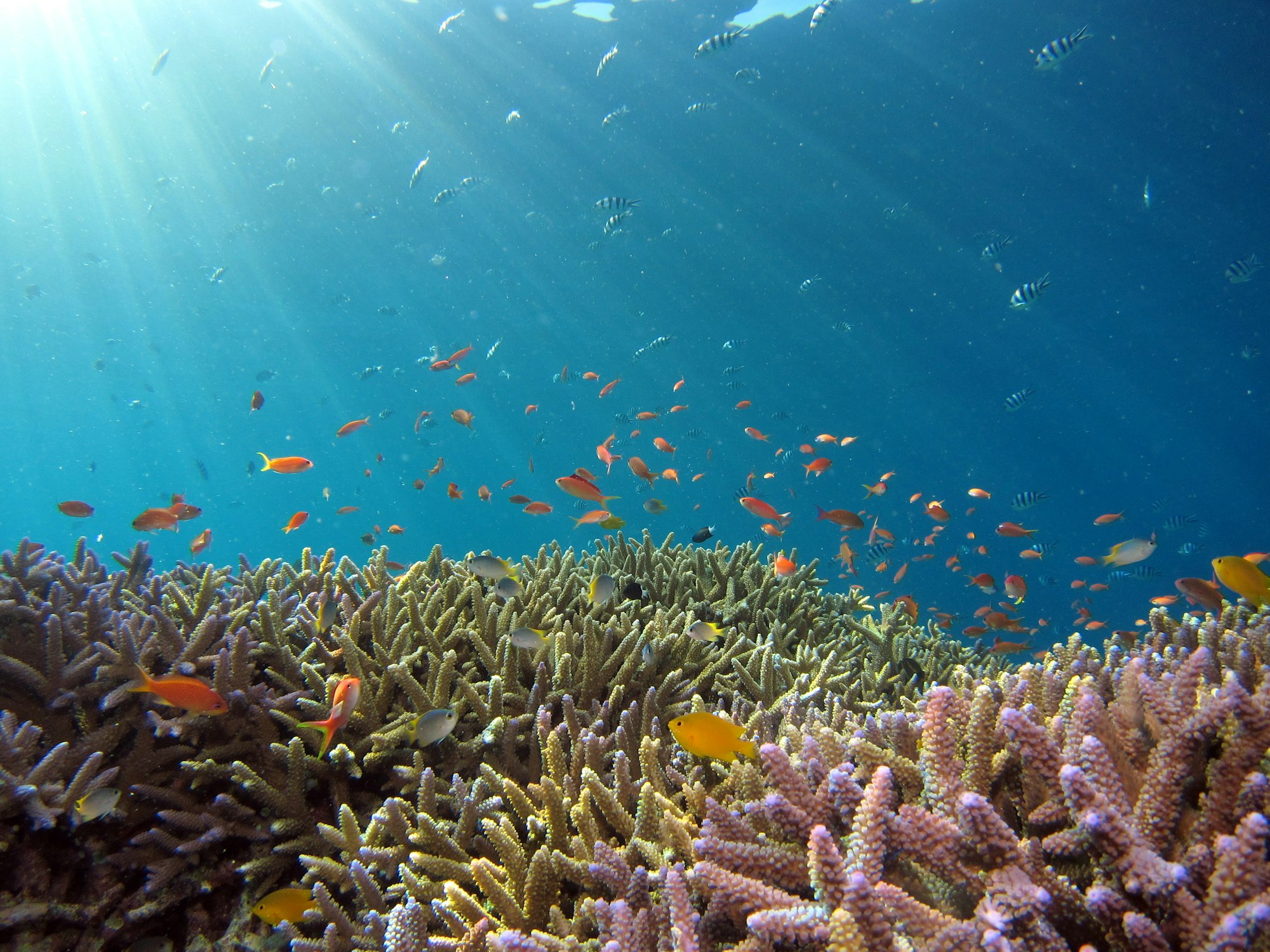
Below and around the barracuda school, the reef provides rich supporting structure. Coral bommies rise from a sandy bottom and the reef slope descends through gorgonian gardens and encrusting growth. Whitetip reef sharks rest in sandy channels, and large schools of surgeonfish and batfish drift along the reef edge. Tuna and Spanish mackerel occasionally make passes through in current-rich conditions.
Visibility runs 15–25 metres. Water temperature stays between 27–30°C. Mild to moderate current is typical.
Marine Life
- Large spiralling schools of chevron barracuda
- Whitetip reef sharks on the sandy bottom
- Surgeonfish, batfish, and fusilier schools
- Gorgonian sea fans and coral bommies
- Occasional tuna and Spanish mackerel
Dive Profile
Divers descend to 15–20 metres to approach the barracuda school from below, maintaining stillness to encourage the school to hold formation. The reef slope and bommies are explored at 10–20 metres. Entry and exit are by boat.
Practical Information
- Depth range: 5–25 m
- Visibility: 15–25 m
- Current: Mild to moderate
- Best time: October–April
- Water temperature: 27–30°C
- Entry: Boat
Sources: Papua Diving - Raja Ampat Dive Sites, Bluewater Dive Travel - Raja Ampat Diving, La Galigo Liveaboard - Top 10 Raja Ampat Dive Sites, Girls That Scuba - Scuba Diving Raja Ampat, PADI - Diving in Raja Ampat. Last updated 2026-04-04.
Sea-surface temperature and wave height from Open-Meteo Marine (ERA5 reanalysis, monthly averages).
264 verified species observations (91 species) logged within ~11 km of this site between 1995 and 2019, from the Ocean Biodiversity Information System.
- Trimma haimassum
- Trimma stobbsi · Stobbs' Pygmy Goby
- Trimma habrum
- Eviota sparsa · Sparse Eviota
- Trimma tevegae · Blue-striped Dwarfgoby
- Trimma
- Trimma xanthochrum
- Eviota pellucida
- Trimma hollemani
- Trimma gigantum
- Trimmatom sagma
- Sueviota lachneri
Scientific survey records skew toward sampled taxa (molluscs, corals) and do not reflect what you are guaranteed to see on a dive.
Source: OBIS (obis.org), aggregated Darwin Core occurrence records.
Conditions change with the tide and the season. If you have dived this site, share what it was actually like — date, visibility, current, and what you saw. Real, recent reports from divers are exactly what this guide is built to collect.
Send a conditions report ›