Citrus Ridge Dive Site
0.5106°S 130.4556°E · reef
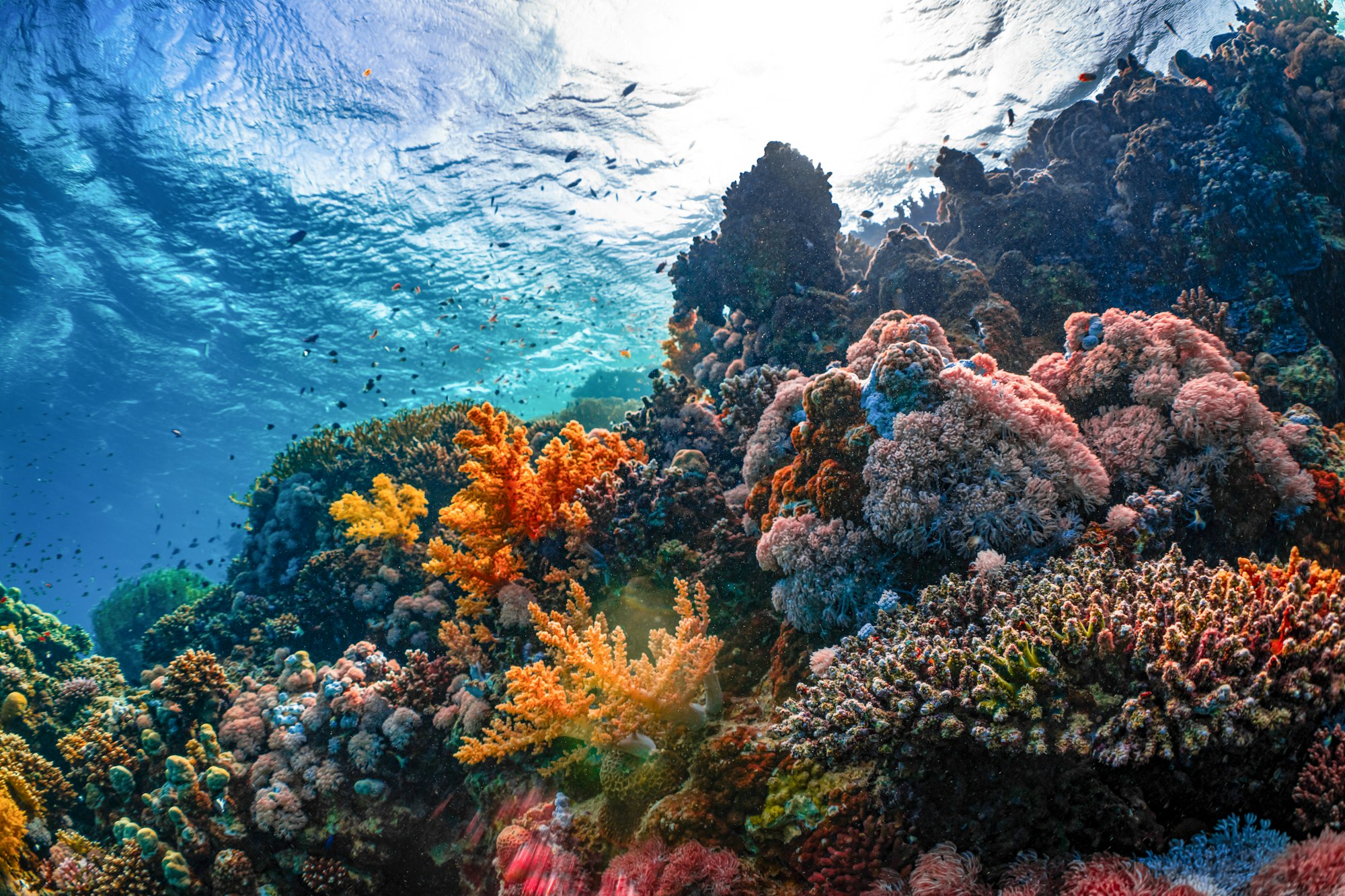
A soft-coral-draped channel slope in Raja Ampat, best known for orange and yellow coral on a shallow pinnacle, schooling fish and resident wobbegong sharks; usually run as a drift, with currents that can turn brisk.
Overview
Citrus Ridge is a sloping channel reef in Raja Ampat, named — every source agrees on this much — for the orange and yellow soft corals that carpet it. One correction up front: despite occasional listings placing it in the Fam Islands, the operators who dive it most consistently locate it elsewhere. Meridian Adventure Dive describes it as sitting in a natural channel on the north-eastern edge of Yanggefo (Yanggelo) Island, west of Gam, with mangrove forest lining both shores; La Galigo places it offshore of Gam; the Bird’s Head Seascape map files it under West Waigeo. None of those is Fam. Divers booking specifically for Citrus Ridge should confirm the area with their operator rather than assume a Fam itinerary includes it.
A second piece of honesty: Citrus Ridge is not as thoroughly documented as Cape Kri or Melissa’s Garden. Those sites have dive-count records, scientific surveys and decades of published description behind them. Citrus Ridge has operator pages and a PADI listing. What follows sticks to what multiple operators consistently say, and flags where they disagree.
Why divers come
The colour. Descriptions converge on a reef where soft corals, sea fans and large sponge formations run in deep oranges, yellows, reds and greens — Meridian likens it to a field of citrus fruit seen from a distance, which is where the name comes from. Layered on that is the channel effect: moving water concentrates fish, and operators report schooling bumphead parrotfish, barracuda, fusiliers and surgeonfish converging over the reef. It is also cited as reliable ground for wobbegong sharks, the flattened, carpet-patterned sharks that Raja Ampat is known for and which lie motionless under coral ledges.
The dive
Topography is a slope rather than a wall — a coral-covered incline running toward the middle of the channel, broken by rock formations, bommies, coral gardens and sandy patches. The feature operators single out is a pinnacle whose top sits around 14 m, densely overgrown and the most photogenic part of the site.
Depth figures vary a little by source. PADI lists a maximum of 27 m; operators describe the useful range as roughly 10–27 m, with some profiles beginning deeper along the ridge and working shallow. The site is normally run as a drift, entered from the north or the south depending on which way the water is moving.
Marine life
Reef fish first: bumpheads, barracuda, fusiliers, surgeonfish, triggerfish, pufferfish. On the reef itself, operators report wobbegong sharks, octopus, moray eels, scorpionfish and lionfish resting on table and brain corals, nudibranchs, green turtles, anemones with resident anemonefish, and assorted shrimps and crustaceans. Reef sharks and eagle rays appear in some accounts of the channel but should be treated as possible rather than expected. No source substantiates a reliable large-pelagic aggregation here — this is a coral-and-reef-fish dive with a good chance of wobbegong, not a shark dive.
Conditions & who should dive it
Sources genuinely disagree here, so weigh both. Meridian calls the site accessible to divers of all levels while warning that currents “can get quite intense” and that divers should not swim against them. La Galigo rates it intermediate to advanced, citing moderate-to-strong current running along the reef and picking up over the sandy slopes. The reconciling factor is that the island’s position shelters the slope from the full force of Dampier Strait water, so conditions are often gentler than the strait’s headline sites — but “often” is not “always.”
Practically: comfort with drift technique, a surface marker buoy and a dive computer are the sensible baseline, and briefings matter because entry direction is chosen by the current on the day. Newer divers should go with an operator willing to time the tide.
When to go
Raja Ampat’s main season runs roughly October to April, and operators put visibility at Citrus Ridge in the 15–30 m band, best during those drier months. Conditions across the archipelago are diveable much of the year; June to September brings more wind and swell.
Getting there
Access is by boat, from a Waigeo-based resort or dayboat operation, or as a stop on a liveaboard itinerary. There is no shore entry. The regional gateway is Sorong, then ferry or transfer to Waisai.
A note on protection
Citrus Ridge lies within Raja Ampat’s marine protected areas. Visitors need the Marine Park Entry Permit (Environmental Service Fee) — IDR 700,000 for foreign passport holders, valid 12 months, purchasable online via the park authority or in person at Waisai — which funds monitoring of the MPAs. A separate regency Visitor Entry Ticket also applies. Fees change; confirm current amounts before travelling.
Sea-surface temperature and wave height from Open-Meteo Marine (ERA5 reanalysis, monthly averages).
145 verified species observations (75 species) logged within ~11 km of this site between 1929 and 2019, from the Ocean Biodiversity Information System.
- Dascyllus aruanus
- Mobula alfredi · Reef manta ray
- Eviota raja
- Eviota bifasciata
- Hoplolatilus
- Dermochelys coriacea · Leatherback sea turtle
- Ecsenius
- Apogon
- Eviota · Greenies
- Lepidochelys olivacea · Olive ridley
- Meiacanthus
- Nerita undulata
Scientific survey records skew toward sampled taxa (molluscs, corals) and do not reflect what you are guaranteed to see on a dive.
Source: OBIS (obis.org), aggregated Darwin Core occurrence records.
Conditions change with the tide and the season. If you have dived this site, share what it was actually like — date, visibility, current, and what you saw. Real, recent reports from divers are exactly what this guide is built to collect.
Send a conditions report ›