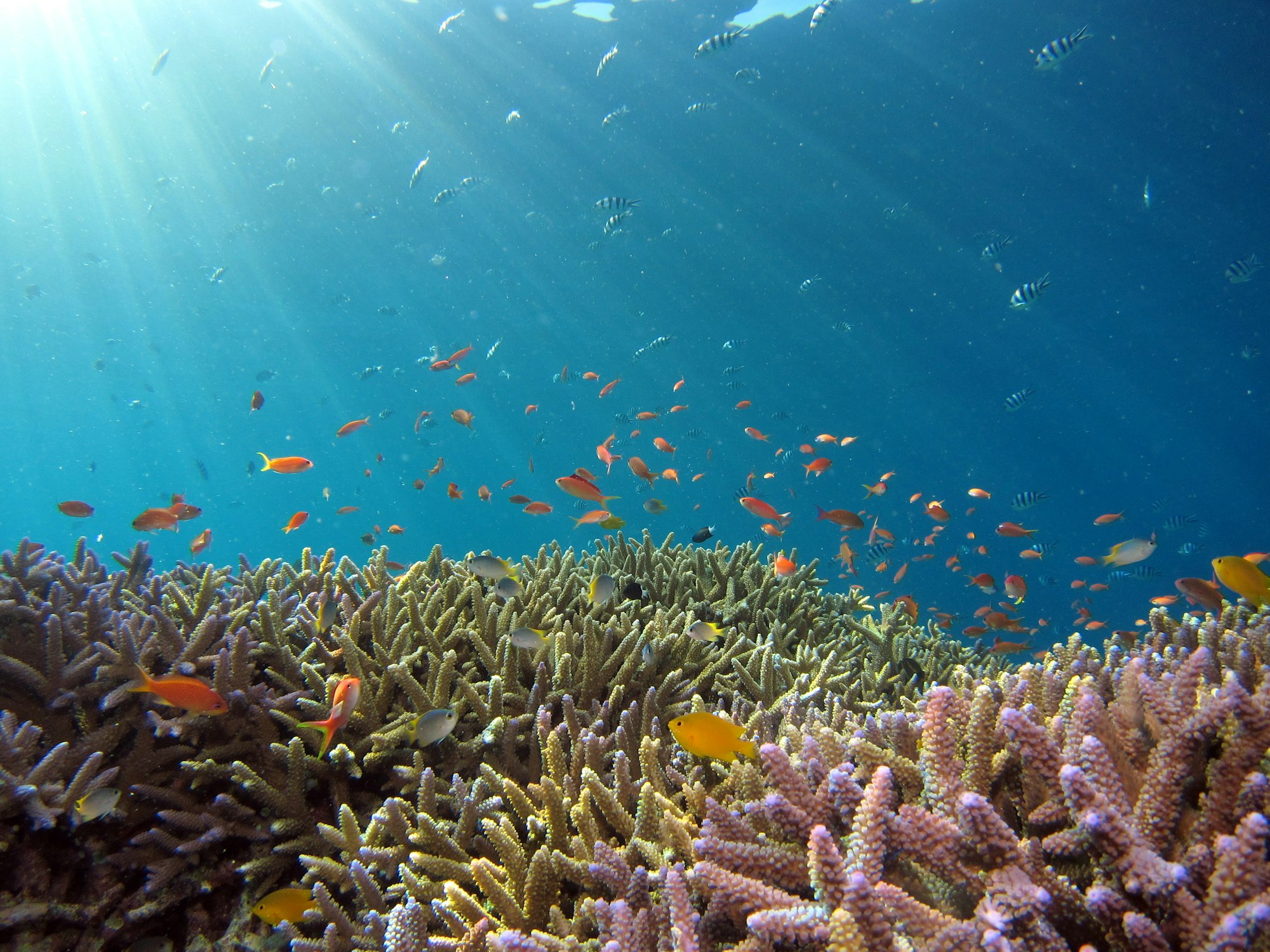
Fam Wall
0.5916°S 130.2968°E · wall
Fam Wall (also known as the Keruwo/Keruo Channel area) is a wall dive in the Fam Islands in southern Raja Ampat. Multiple sources confirm it as a true wall dive, with the site’s signature feature being the mandarin fish (Synchiropus splendidus) courtship ritual performed at dusk, visible to patient observers in the shallows.
Overview
Also referenced in some sources as associated with Keruo/Keruwo Channel, Fam Wall drops from a reef crest to a maximum depth of 25 meters (confirmed). The wall is covered in hard and soft coral, sea fans, and encrusting sponges. Water temperature averages 27–29°C. The Fam Islands area is remote and lightly visited, which contributes to the undisturbed state of the marine life.
Site Information
- Location: Fam Islands, Raja Ampat, West Papua, Indonesia
- Entry Type: Boat dive
- Site Type: Wall dive
- Difficulty Level: Intermediate
- Maximum Depth: 25 meters
- Current: Typically mild; can moderate on tidal flow
- Best Time: October to April; dusk dives recommended for mandarin fish
Marine Life
Sources confirmed at this specific site (thescubadirectory.com, lagaligoliveaboard.com, divescover.com, diveconcepts.com): mandarin fish performing their dusk courtship ritual (the site’s signature feature), ghost pipefish, and pygmy seahorses on gorgonian fans. The wall structure hosts sea fans, barrel sponges, and soft coral typical of Raja Ampat wall diving.
Dive Profile
Daytime: begin at the reef crest and work along the wall, descending to 20–25 meters on the deeper section before ascending slowly and spending time on the coral gardens at 8–12 meters. Night dive: deploy on the reef flat in 2–5 meters of water and search methodically with torches, watching for epaulettes moving through the shallows. Their distinctive leopard-spotted pattern makes them unmistakable when the torch beam finds them.
Entry and Exit
Access by liveaboard tender — the Fam Islands are 3–4 hours from Sorong and beyond the range of most day-trip operations. Entry by giant stride or back roll in calm conditions. Night diving requires good torch management and a close group. Exit to the tender with an agreed surface signal.
Tips and Recommendations
- Book a night dive specifically to observe epaulette sharks walking — this behavior is unique and unmissable
- During the day, look under ledges and in crevices for resting epaulettes
- The Fam Islands receive very little dive pressure, so be especially careful about buoyancy
- Ask your liveaboard guides about the specific walking shark locations — they know them well
- Carry a compass bearing along the wall to maintain orientation in low light at depth
Safety Considerations
The wall’s drop-off means depth management is essential. Night diving adds complexity — all divers must carry a primary torch and backup, and stay within visual contact of the guide. In a remote location like the Fam Islands, emergencies require significant evacuation time; plan conservative dive profiles.
Photography
Epaulette shark photography at night is the signature opportunity at Fam Wall. A macro lens on a port or a 60mm equivalent with close-focus capability captures the shark’s intricate spotted patterning. Wide-angle wall photography during the day is outstanding — the pristine coral coverage and dramatic depth perspective make compelling shots. The remote location means encounter photographs are rarely crowded with other divers in the background.
Sources: The Scuba Directory, La Galigo Liveaboard, Divescover, Dive Concepts. Last updated 2026-06-27.
Sea-surface temperature and wave height from Open-Meteo Marine (ERA5 reanalysis, monthly averages).
264 verified species observations (91 species) logged within ~11 km of this site between 1995 and 2019, from the Ocean Biodiversity Information System.
- Trimma haimassum
- Trimma stobbsi · Stobbs' Pygmy Goby
- Trimma habrum
- Eviota sparsa · Sparse Eviota
- Trimma tevegae · Blue-striped Dwarfgoby
- Trimma
- Trimma xanthochrum
- Eviota pellucida
- Trimma hollemani
- Trimma gigantum
- Trimmatom sagma
- Sueviota lachneri
Scientific survey records skew toward sampled taxa (molluscs, corals) and do not reflect what you are guaranteed to see on a dive.
Source: OBIS (obis.org), aggregated Darwin Core occurrence records.
Conditions change with the tide and the season. If you have dived this site, share what it was actually like — date, visibility, current, and what you saw. Real, recent reports from divers are exactly what this guide is built to collect.
Send a conditions report ›