Fuzzy Rock
0.4471°S 130.4581°E · reef
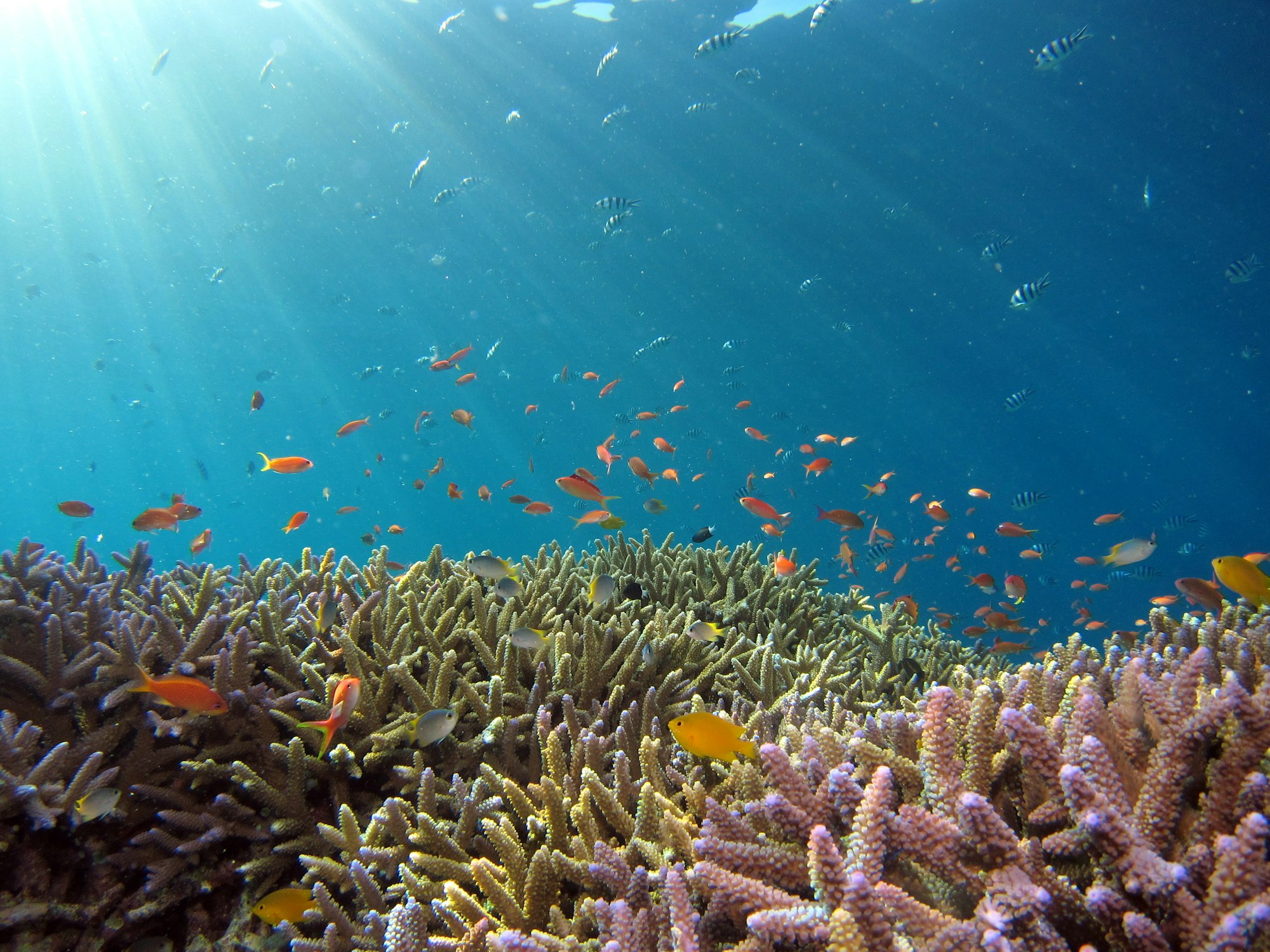
Fuzzy Rock is a reef dive site in the Gam Island area of Raja Ampat, West Papua, Indonesia — named for the dense soft coral coverage that gives the rock a distinctly “fuzzy” appearance.
Overview
The name says it all: Fuzzy Rock is a rocky structure so thickly coated in soft corals, sponges, and encrusting invertebrates that its surface appears blurred or fuzzy from a distance. This style of encrustation is typical of sites in the Gam area where current conditions favour the dominance of filter-feeding organisms over hard corals. The result is an extraordinarily colourful dive: oranges, pinks, purples, and yellows cover every centimetre of the rock face. The site sits among a cluster of similar sites near The Passage and the Gam-Waigeo channel system, and is commonly dived in combination with these neighbours. Visibility typically reaches 20-30 meters and water temperatures average 27-29°C.
Site Information
- Location: Raja Ampat, West Papua, Indonesia
- Entry Type: Boat dive
- Site Type: Reef
- Difficulty Level: Intermediate
- Maximum Depth: 25 meters
- Typical Visibility: 15-30 meters
- Current: Moderate, variable
- Best Time: October to April
Marine Life
The soft coral and sponge coverage at Fuzzy Rock supports a remarkable density of associated species. Nudibranchs feeding on the soft corals are present in exceptional variety and abundance — this is one of the finest nudibranch sites in the Gam area. Commensal shrimp, decorator crabs, and flatworms occupy every level of the encrusting growth. Fish life around the rock includes anthias schooling above the soft corals, resident groupers and sweetlips in crevices, and reef sharks patrolling the surrounding water. Pygmy seahorses on gorgonian fans are worth a careful search.
Dive Profile
Begin at the top of the rock formation (5-8 meters) and circle the structure systematically, examining the encrusting coverage at each depth level. The rock extends down to around 20-25 meters, and the growth character changes with depth as light decreases. Hover close to the surface for the richest soft coral colours. A single circumnavigation of the rock typically occupies a full dive. Finish with a safety stop in the water above the rock top.
Entry and Exit
Access is by dive boat. Entry via giant stride near the rock formation. Current may be moderate — your guide will direct the approach. Deploy SMB before ascending. The site is typically dived on calm days when the Gam-area channel conditions are manageable.
Tips and Recommendations
- Approach the rock face slowly and hover — the encrustation density rewards patience
- Bring a dive torch even on daytime dives: the true colour of the soft corals is revealed under artificial light
- Allocate time for nudibranch searching — multiple species can be found on a single careful dive
- The site pairs well with nearby Gam Ridge and The Passage for a full day in the area
- Wide-angle and macro equipment are both valuable at this site
Safety Considerations
Moderate currents can develop around the rock structure. Maintain buoyancy to avoid contact with the soft coral coverage — even gentle contact can damage these filter feeders. Carry an SMB and ascend at a controlled rate. Dive within your certification limits.
Photography
Fuzzy Rock is a macro photographer’s jewel box: the soft coral surface presents a field of colour and texture that produces stunning close-up images. Bring a macro lens and plan to spend time methodically covering the rock face. Wide-angle shots from slightly off the rock capture the overall “fuzzy” character of the encrustation and the three-dimensional quality of the reef. A dive torch improves colour rendition dramatically at depth.
Sources: Papua Diving - Raja Ampat Dive Sites, Bluewater Dive Travel - Raja Ampat Diving, La Galigo Liveaboard - Top 10 Raja Ampat Dive Sites, Girls That Scuba - Scuba Diving Raja Ampat, PADI - Diving in Raja Ampat. Last updated 2026-04-04.
Sea-surface temperature and wave height from Open-Meteo Marine (ERA5 reanalysis, monthly averages).
131 verified species observations (63 species) logged within ~11 km of this site between 1929 and 2015, from the Ocean Biodiversity Information System.
- Dascyllus aruanus
- Centropyge eibli
- Eviota rubrisparsa
- Eviota raja
- Trimma xanthochrum
- Trimma tevegae
- Eviota bifasciata
- Hoplolatilus
- Diancistrus
- Gobiidae · Gobies
- Dermochelys coriacea · Leatherback sea turtle
- Ecsenius
Scientific survey records skew toward sampled taxa (molluscs, corals) and do not reflect what you are guaranteed to see on a dive.
Source: OBIS (obis.org), aggregated Darwin Core occurrence records.
Conditions change with the tide and the season. If you have dived this site, share what it was actually like — date, visibility, current, and what you saw. Real, recent reports from divers are exactly what this guide is built to collect.
Send a conditions report ›