Mayhem Dive Site
0.5111°S 130.4466°E · pinnacle
Mayhem earns its name. This exposed pinnacle in the central Dampier Strait is Raja Ampat’s most aptly named dive site — a current-swept reef structure where the fish life is so thick, so fast-moving, and so chaotic that first-time visitors are often overwhelmed.
Overview
Mayhem is a submerged pinnacle that breaks the surface and extends into the Dampier Strait’s powerful tidal flows. When conditions align — strong current, correct tidal phase — the site delivers an underwater spectacle that few places on Earth can match. Schools of jack and fusilier swirl in tornadoes overhead, barracuda hold formation in the current, reef sharks cruise the edges, and mantas occasionally make an appearance. The pinnacle’s surface is heavily colonized with soft coral and encrusting life, but the real draw is the pelagic action in the water column above. Water temperature averages 27–29°C and visibility is typically 15–25 meters.
Site Information
- Location: Raja Ampat, West Papua, Indonesia
- Entry Type: Boat dive
- Site Type: Pinnacle/seamount
- Difficulty Level: Advanced
- Maximum Depth: 25 meters
- Typical Visibility: 15–25 meters (50–80 feet)
- Current: Strong, often very strong; site is best at moderate to strong flow
- Best Time: October to April; tidal timing is critical
Marine Life
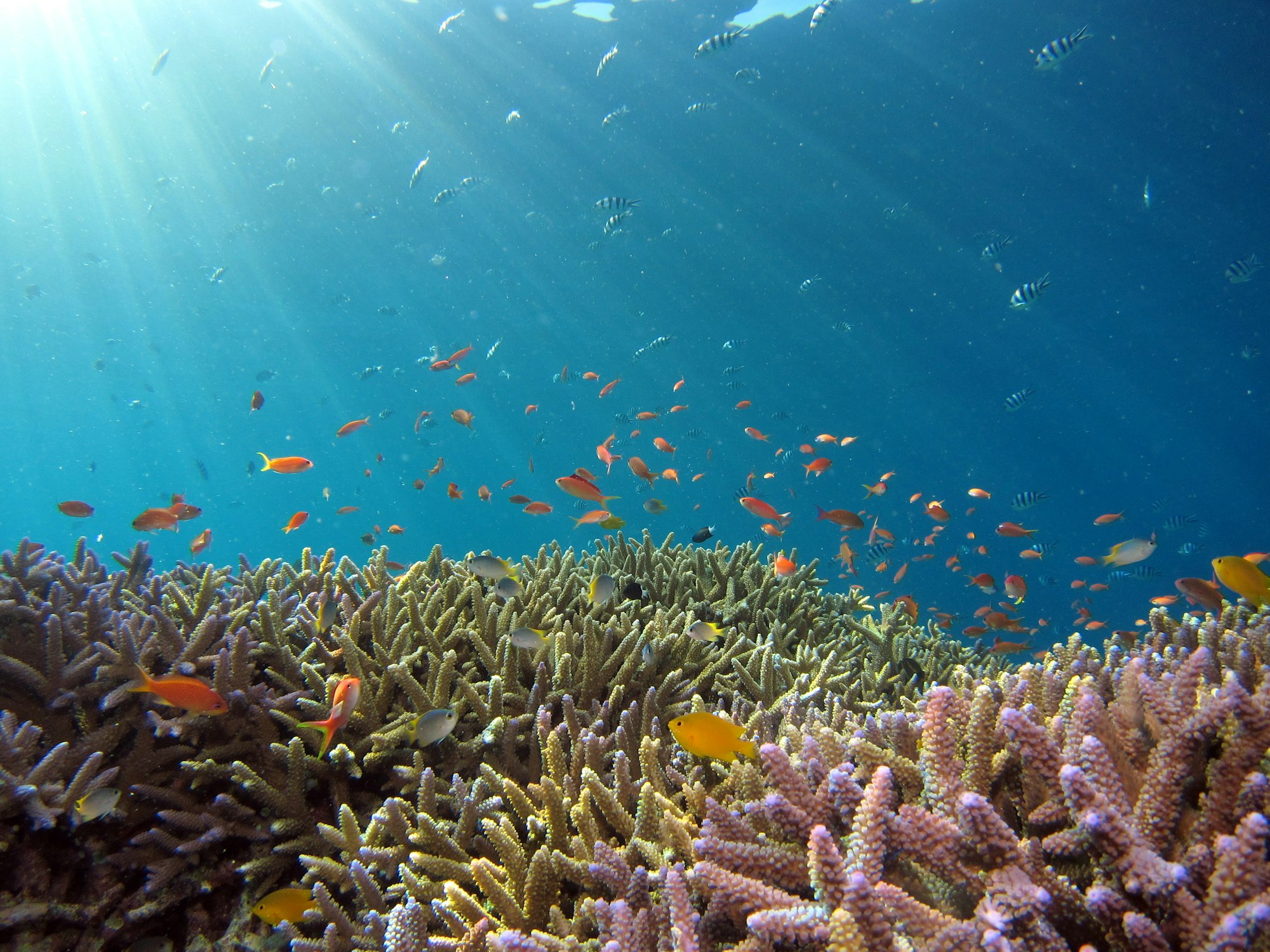
Giant trevally and bigeye trevally form dense, fast-moving schools that chase baitfish across the top of the pinnacle. Chevron barracuda stack in columns. Grey reef sharks and white-tip reef sharks patrol the deeper flanks. On the pinnacle itself, ornate wobbegongs and tasselled wobbegongs sit motionless in the surge zone. Reef fish diversity is extraordinary — surgeonfish, triggerfish, parrotfish, anthias, and butterflyfish crowd every coral head. During certain tidal phases, oceanic manta rays sweep through the blue water beyond the pinnacle edge.
Dive Profile
The dive plan depends entirely on current strength and direction. With strong incoming current, drop behind the pinnacle, hook in or fin hard to hold position, and allow the fish action to come to you. With slacker conditions, swim the circumference of the pinnacle from the summit at 5–10 meters down to 20–25 meters. The fishiest zone is typically the upper 15 meters where schools concentrate. Always plan air conservatively — the excitement of Mayhem tends to drive up breathing rate.
Entry and Exit
Boat access only — liveaboards and day-trip operators drop divers directly on the pinnacle with a current assessment. If current is running, free descent to the pinnacle top is essential; avoid drifting into open water away from the structure. Carry reef hooks. SMB deployment at the end of the dive is mandatory — divers often surface downcurrent of the boat.
Tips and Recommendations
- Only dive this site if you are comfortable in strong current — it is not a beginner site
- A reef hook allows you to hold position and watch the action without fighting current
- Breathe slowly and deliberately; adrenaline elevates air consumption significantly here
- The best fish action is typically on the incoming current during the early flood tide
- Confirm tidal timing with your guide before entering the water
Safety Considerations
Mayhem is advanced-only. Unmanaged current can sweep divers away from the pinnacle into open water. Never surface in open water without an SMB deployed. Guide lines may be rigged on some visits; follow the guide’s lead precisely. The site should not be dived by less experienced divers regardless of conditions.
Photography
The chaotic schooling fish action is the main photographic subject. A wide-angle lens (15mm or wider) captures the school density. Shooting upward toward the surface gives silhouettes of trevally and barracuda against blue water. A fast shutter speed (1/160 or faster) is needed to freeze fast-moving fish. Ambient light photography works well in the upper 10 meters on sunny days.
Sources: Papua Diving - Raja Ampat Dive Sites, Bluewater Dive Travel - Raja Ampat Diving, La Galigo Liveaboard - Top 10 Raja Ampat Dive Sites, Girls That Scuba - Scuba Diving Raja Ampat, PADI - Diving in Raja Ampat. Last updated 2026-04-04.
Sea-surface temperature and wave height from Open-Meteo Marine (ERA5 reanalysis, monthly averages).
150 verified species observations (76 species) logged within ~11 km of this site between 1929 and 2019, from the Ocean Biodiversity Information System.
- Dascyllus aruanus
- Eviota nigriventris
- Mobula alfredi · Reef manta ray
- Eviota raja
- Eviota bifasciata
- Hoplolatilus
- Dermochelys coriacea · Leatherback sea turtle
- Ecsenius
- Apogon
- Eviota · Greenies
- Lepidochelys olivacea · Olive ridley
- Meiacanthus
Scientific survey records skew toward sampled taxa (molluscs, corals) and do not reflect what you are guaranteed to see on a dive.
Source: OBIS (obis.org), aggregated Darwin Core occurrence records.
Conditions change with the tide and the season. If you have dived this site, share what it was actually like — date, visibility, current, and what you saw. Real, recent reports from divers are exactly what this guide is built to collect.
Send a conditions report ›