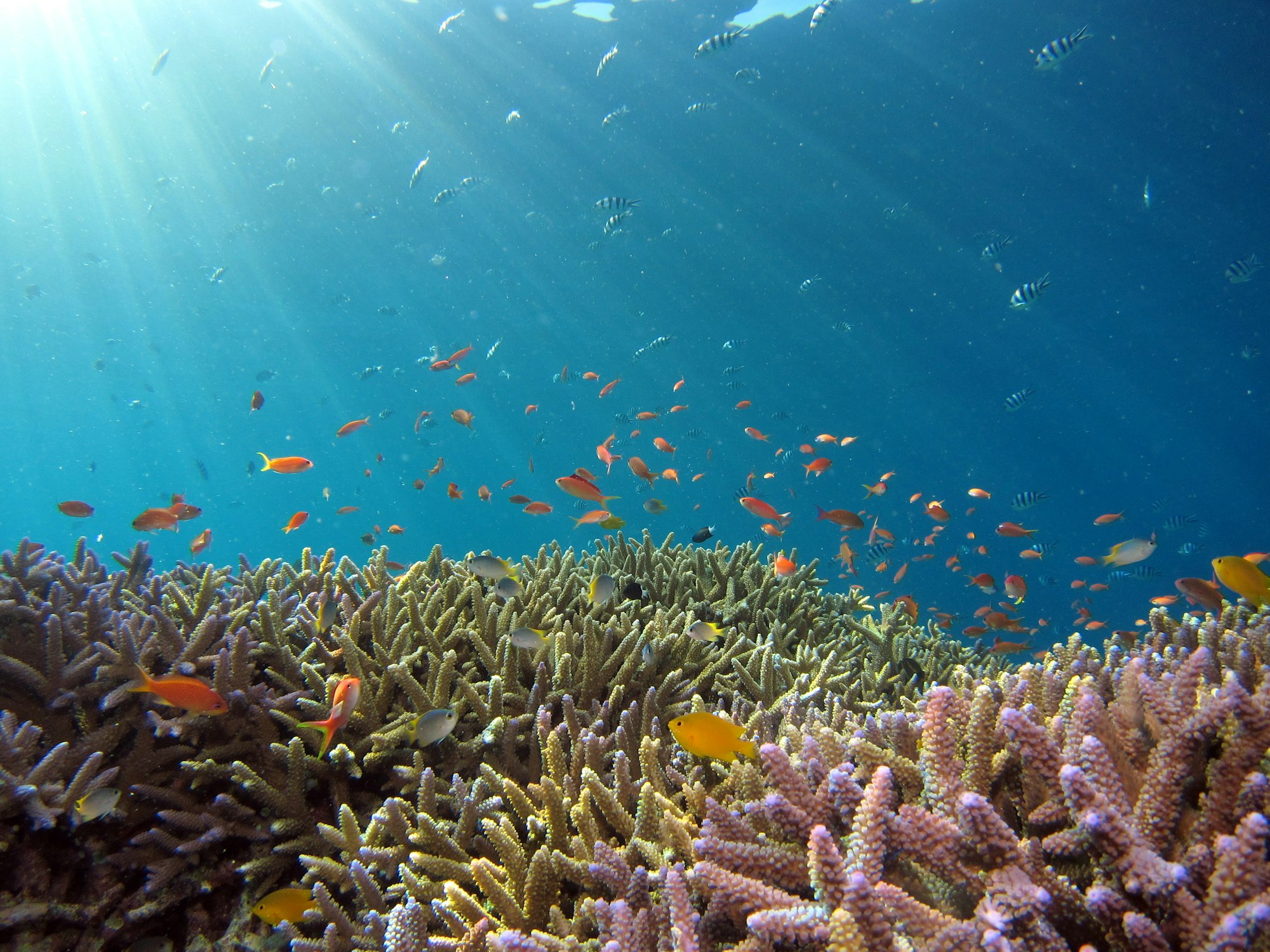
Selat Kabui
0.4322°S 130.5516°E · drift
Selat Kabui — “Kabui Passage” or “Kabui Strait” — is one of Raja Ampat’s most scenic drift dive experiences: a narrow, jungle-fringed channel between Waigeo and Gam Island where divers drift gently on the tidal flow past limestone karst walls, mangrove roots, and some of the most atmospheric underwater scenery in Indonesia.
Overview
The Kabui Passage is a famous geographic feature of Raja Ampat — a scenic, narrow waterway between Waigeo and Gam Island that is popular above water for kayaking and below water for its distinctive drift diving. The passage is framed by towering limestone karst formations draped in tropical vegetation, with mangrove roots at the water’s edge above and underwater walls descending into the passage. The drift through the passage on a gentle tidal flow is relaxed and visually rich — divers are carried past varied reef wall sections, through mangrove root systems, and alongside rocky outcrops draped in soft coral and sponge. Water temperature averages 27–29°C with visibility of 8–15 meters in the passage.
Site Information
- Location: Raja Ampat, West Papua, Indonesia
- Entry Type: Boat dive
- Site Type: Drift dive
- Difficulty Level: Intermediate
- Maximum Depth: 25 meters
- Typical Visibility: 8–15 meters (26–50 feet)
- Current: Gentle to moderate tidal drift; direction-dependent on tide phase
- Best Time: October to April
Marine Life
The passage’s varied habitat — limestone walls, mangrove roots, sandy channels, and reef outcrops — supports a correspondingly diverse marine community. Raja Ampat epaulette walking sharks have been reported in the shallow mangrove edge zones. The underwater walls carry sponges, soft coral, and tunicates. Snapper and sweetlips shelter in crevices, and large groupers occupy ledges in the rocky sections. Batfish are commonly seen drifting through the passage. The mangrove root systems at the passage margins are important nursery habitat, and juvenile fish species are conspicuous.
Dive Profile
The dive is a linear drift from the upcurrent end of the passage to the designated exit point. Depths vary from 5 meters alongside the passage walls to 20–25 meters in the channel center. Stay shallower (5–15 meters) to enjoy the wall features and avoid drifting into the deeper, less interesting channel floor. The guide sets the pace based on current speed. The passage’s scenery is part of the experience — enjoy the topside karst landscape through the surface as you drift.
Entry and Exit
Boat access with a two-boat setup — entry boat drops divers at the upcurrent end of the passage, exit boat waits at the downcurrent end. Entry timing is coordinated with the guide based on current phase. Deploy SMB approaching the exit to signal the pickup boat.
Tips and Recommendations
- Check tidal timing with the guide — the drift direction reverses completely with the tide
- Selat Kabui is as spectacular above water as below — look up through the surface at the limestone karst
- The narrow passage creates photographic framing opportunities unlike open-water reef sites
- Visibility is lower than open Dampier Strait sites due to mangrove tannins and passage sediment — manage expectations
- The mangrove root margins in very shallow water are worth a slow look for juvenile fish and possibly walking sharks
Safety Considerations
The tidal drift is gentle but must be respected — drift direction reverses with tide phase, so tidal timing is essential for the correct drift direction. The narrow passage means boat navigation requires caution. Divers must not surface in the passage until reaching the designated exit point. Carry an SMB. Rocky karst walls in shallow sections can create surge.
Photography
Selat Kabui’s above-and-below visual character makes it outstanding for wide-angle reef-to-surface photography. Shooting upward through the water surface to capture the limestone karst against the sky is a signature composition available nowhere else in Raja Ampat. Underwater wall photography along the passage sides captures the soft coral and sponge communities. A wide-angle lens (10–17mm or 14–24mm) is the primary tool; macro is secondary on this scenic drift.
Sources: Papua Diving - Raja Ampat Dive Sites, Bluewater Dive Travel - Raja Ampat Diving, La Galigo Liveaboard - Top 10 Raja Ampat Dive Sites, Girls That Scuba - Scuba Diving Raja Ampat, PADI - Diving in Raja Ampat. Last updated 2026-04-04.
Sea-surface temperature and wave height from Open-Meteo Marine (ERA5 reanalysis, monthly averages).
129 verified species observations (60 species) logged within ~11 km of this site between 1929 and 2012, from the Ocean Biodiversity Information System.
- Dascyllus aruanus
- Hippocampus denise
- Centropyge eibli
- Eviota rubrisparsa
- Trimma xanthochrum
- Trimma tevegae
- Hoplolatilus
- Oxyurichthys auchenolepis · Scaly-nape Tentacle Goby
- Halichoeres hartzfeldii · Orange-line Wrasse
- Dermochelys coriacea · Leatherback sea turtle
- Pseudamia hayashii · Hayashi's Cardinalfish
- Ostorhinchus fasciatus · Bar-striped Cardinalfish
Scientific survey records skew toward sampled taxa (molluscs, corals) and do not reflect what you are guaranteed to see on a dive.
Source: OBIS (obis.org), aggregated Darwin Core occurrence records.
Conditions change with the tide and the season. If you have dived this site, share what it was actually like — date, visibility, current, and what you saw. Real, recent reports from divers are exactly what this guide is built to collect.
Send a conditions report ›