West Reef's End
0.4650°S 130.8494°E · reef
West Reef’s End is a reef terminus dive site in Raja Ampat, West Papua, Indonesia, located at the western tip of a reef system.
Overview
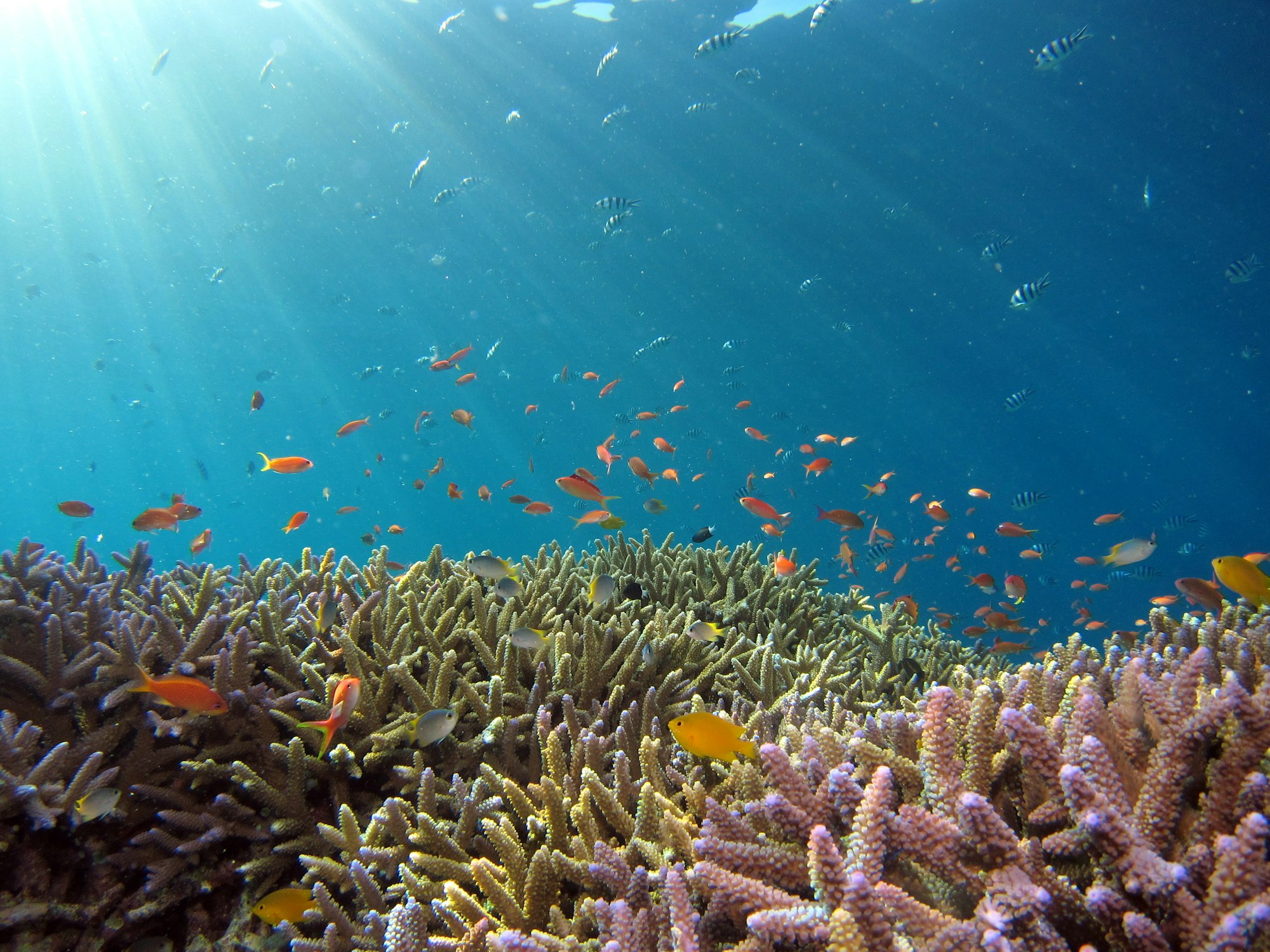
Reef termini — the points where a reef ends and open water begins — are among the most productive locations to dive in any marine environment, and West Reef’s End is a classic example of this phenomenon in Raja Ampat. At the reef’s western terminus, currents converge from multiple directions, concentrating fish life at the tip and creating a natural aggregation point for both reef species and pelagic visitors drawn from the open water. The reef end features a gradual slope on one side and a more abrupt drop on the other, providing varied terrain within a single dive. Hard and soft coral coverage is strong throughout. Visibility typically reaches 20-30 meters and water temperatures average 27-29°C.
Site Information
- Location: Raja Ampat, West Papua, Indonesia
- Entry Type: Boat dive
- Site Type: Reef
- Difficulty Level: Intermediate
- Maximum Depth: 25 meters
- Typical Visibility: 15-30 meters
- Current: Moderate to strong at the terminus
- Best Time: October to April
Marine Life
The reef tip at West Reef’s End concentrates some of the best fish action of the dive. Schools of trevally and barracuda hover at the terminus, often engaging in coordinated hunting behaviour. Reef sharks cruise both faces of the reef end. Napoleon wrasse and sweetlips are resident in the overhangs. Sea turtles frequent the site. Moving away from the tip and along either face of the reef slope, the community transitions to more resident fish species: groupers, angels, butterflies, and the rich invertebrate community typical of healthy Raja Ampat reefs.
Dive Profile
Begin at the reef top and make for the terminus, observing the change in fish behaviour as the reef end approaches. Spend time at the tip watching current-driven fish aggregations before working along each face of the reef slope. The western face may be more exposed to open-water current and pelagics; the sheltered face offers more intimate reef exploration. Finish the dive working back to shallower water for the safety stop.
Entry and Exit
Access is by dive boat. Current at the reef end requires careful positioning of the boat for entry. Your guide will assess the current direction and advise the optimal approach. Deploy SMB before ascending — surface pickup may be downurrent from the reef end.
Tips and Recommendations
- Approach the reef terminus from the sheltered side for initial orientation before committing to the tip
- Reef hooks are useful for stationary observation at the current-swept terminus
- The contrast between the two faces of the reef end makes for a varied, interesting dive
- Be aware of open-water current at the very tip — it can be stronger than expected
- Bring a wide-angle lens for the fish school action at the point
Safety Considerations
Reef termini experience multidirectional currents that can be challenging. A reef hook helps maintain position without damaging the reef. Avoid being swept off the reef end into open water without an SMB deployed. Always dive with an experienced guide who knows the reef end dynamics. Carry appropriate signaling equipment.
Photography
The fish aggregations at the reef tip create outstanding wide-angle photography opportunities: shoot toward the terminus with schools of trevally or barracuda spiralling in the current. Along the reef faces, coral scenic photography and fish portraits are accessible. The changing light conditions on the west-facing reef face during afternoon dives can produce atmospheric results.
Sources: Papua Diving - Raja Ampat Dive Sites, Bluewater Dive Travel - Raja Ampat Diving, La Galigo Liveaboard - Top 10 Raja Ampat Dive Sites, Girls That Scuba - Scuba Diving Raja Ampat, PADI - Diving in Raja Ampat. Last updated 2026-04-04.
Sea-surface temperature and wave height from Open-Meteo Marine (ERA5 reanalysis, monthly averages).
21 verified species observations (16 species) logged within ~11 km of this site between 1995 and 2008, from the Ocean Biodiversity Information System.
- Halophryne
- Chrysiptera
- Signigobius biocellatus · Crab-eye Goby
- Fowleria marmorata · Barred Cardinalfish
- Eviota hoesei · Doug's Eviota
- Pseudochromis howsoni · Howson's Dottyback
- Asterropteryx spinosa · Eyebar Spinygoby
- Gobiopsis arenaria · Patchwork Goby
- Opistognathus · Spotfin Jawfishes
- Chelycypraea testudinaria · Tortoise-shell Cowry
- Monetaria caputserpentis · Serpent's Head
- Naria labrolineata
Scientific survey records skew toward sampled taxa (molluscs, corals) and do not reflect what you are guaranteed to see on a dive.
Source: OBIS (obis.org), aggregated Darwin Core occurrence records.
Conditions change with the tide and the season. If you have dived this site, share what it was actually like — date, visibility, current, and what you saw. Real, recent reports from divers are exactly what this guide is built to collect.
Send a conditions report ›