Staghorn Crest
4.1167°N 118.6278°E · wall
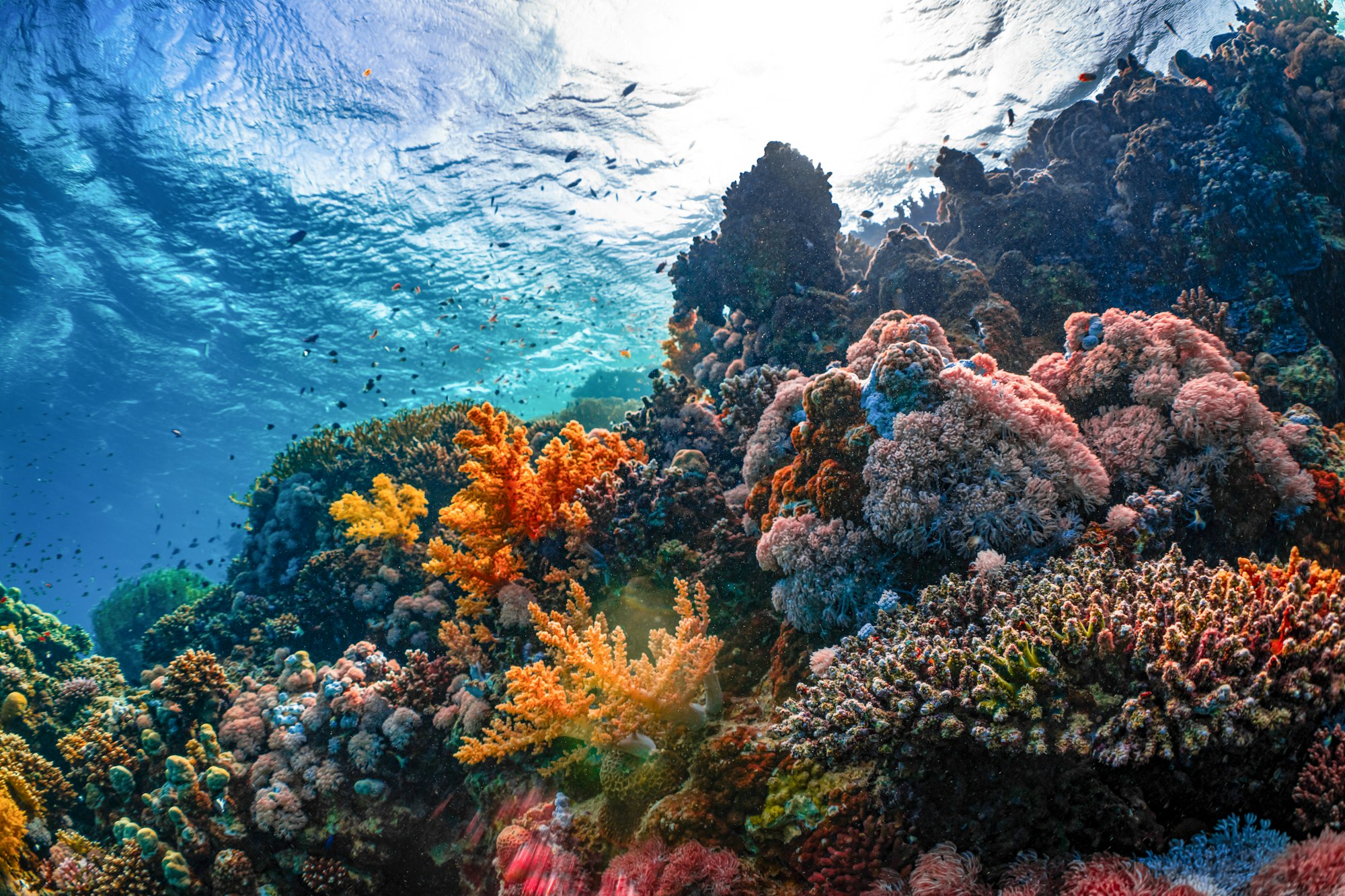
A hard-coral showpiece on Sipadan's western reef where a dense staghorn (Acropora) garden crowns the crest before the wall plunges away; turtles and reef fish abound, and the crest-to-drop edge can catch a brisk drift.
Overview
Staghorn Crest lies on the western side of Sipadan, the protected oceanic island rising from the Celebes Sea off Semporna, Sabah. The site is named for the thickets of branching staghorn coral (Acropora) that carpet the reef crest before the seabed tips over into Sipadan’s signature wall. It combines a bright, shallow hard-coral garden with a vertical drop-off riddled with cracks and overhangs, and it rewards divers who time it for the afternoon light.
Why divers come
Most of Sipadan’s fame rests on turtles, jacks and pelagic wall dives, but Staghorn Crest is one of the island’s finest showcases of healthy hard coral. Because the reef has been shielded from resort pressure for two decades, the coral has grown to unusual size and density — the crest is a genuine staghorn garden, and black-coral bushes deeper on the wall are reported to spread up to around two metres across. It is a scenic, photograph-friendly dive rather than a pure adrenaline drift.
The dive
Typically the dive begins with a gentle descent along the drop-off, then follows a gradual diagonal line down the wall. The shallows hold the staghorn garden; deeper sections open onto a sloping plateau near 15 metres and cracks in the wall packed with life. Divers generally work the reef between roughly 15 and 40 metres. Sources note the site sits north of Sipadan’s South Point, and the western aspect makes late-day dives especially well lit.
Marine life
Expect Sipadan’s ever-present green and hawksbill turtles, plus a dense reef-fish community — groupers, triggerfish, angelfish, gobies and grunts — along with nudibranchs and shrimp for the macro-minded. Red sea-whips, black corals and barrel sponges decorate the wall. Reef sharks and the occasional ray pass through, and divers who venture off the wall into blue water sometimes glimpse larger pelagics, though these are not guaranteed here.
Conditions & who should dive it
Reports on current vary, which itself is the honest picture: much of the time the crest is mild, but where the reef edge meets the drop it can accelerate into a brisk drift, and surface conditions can turn choppy. Visibility is commonly around 30 metres. Some operators rate the site straightforward, while others reserve it for advanced or divemaster-led groups precisely because of the current. Sabah Parks generally requires Sipadan divers to hold Advanced Open Water (or equivalent experience), so treat this as an intermediate dive demanding solid buoyancy and a willingness to hook or drift if the crest is running.
When to go
Sipadan dives year-round, with water temperatures around 26–31°C. Conditions are generally most settled outside the northeast-monsoon months; peak visibility and calmer seas tend to fall in the mid-year window. Afternoon slots make the most of the western light.
Getting there
All Sipadan diving is by boat, day-tripping from the resorts and dive centres on nearby Mabul and Kapalai, which are reached via Semporna on Sabah’s east coast (fly into Tawau). No one stays on Sipadan itself.
A note on protection
Sipadan is a strictly protected marine area. Following studies showing reef damage from human presence, the Malaysian government ordered the island’s resorts relocated by the end of 2004, with accommodation cleared by 2005. Since 2006 a daily permit quota — on the order of 176 permits, allocated among licensed operators — has capped visitor numbers. Booking a Sipadan permit well ahead is essential, and the quota is a large part of why sites like Staghorn Crest remain so healthy.
Sea-surface temperature and wave height from Open-Meteo Marine (ERA5 reanalysis, monthly averages).
344 verified species observations (175 species) logged within ~11 km of this site between 1849 and 2018, from the Ocean Biodiversity Information System.
- Coelorinchus commutabilis
- Trimma yanoi
- Gadomus filamentosus
- Nezumia evides
- Ventrifossa nigrodorsalis
- Hymenocephalus nascens
- Trimma agrena
- Trimma tevegae
- Apristurus platyrhynchus
- Trimma stobbsi
- Pycnochromis atripes
- Synchiropus delandi
Scientific survey records skew toward sampled taxa (molluscs, corals) and do not reflect what you are guaranteed to see on a dive.
Source: OBIS (obis.org), aggregated Darwin Core occurrence records.
Conditions change with the tide and the season. If you have dived this site, share what it was actually like — date, visibility, current, and what you saw. Real, recent reports from divers are exactly what this guide is built to collect.
Send a conditions report ›