White Tip Avenue
4.1117°N 118.6256°E · wall
White Tip Avenue is an east-side Sipadan wall dive named for the whitetip reef sharks resting on its ledges and terraces, with turtles, schooling fish and gorgonian-draped drop-offs. Intermediate-level, mild-to-moderate current.
Overview
White Tip Avenue sits on the eastern side of Sipadan, the protected oceanic island rising from the Celebes Sea off Semporna in Sabah, Malaysian Borneo. It lies to the south of the famous Barracuda Point, along the stretch of reef that fringes the island’s northeastern flank. Like the rest of Sipadan, the site is a shallow reef top that drops abruptly into a vertical wall plunging toward a seabed several hundred metres below. The name is literal: this is the stretch where divers most reliably find whitetip reef sharks.
Why divers come
The draw is the whitetip reef sharks themselves. Along this section of wall, the animals are regularly seen resting motionless on sandy ledges, terraces and rocky slopes, lying up outside the current before hunting. Whitetip reef sharks are a small, slender, generally placid species, and seeing several hauled out along a single dive is what earns the site its name. Grey reef sharks patrol the deeper blue alongside them, and turtles are near-constant companions.
The dive
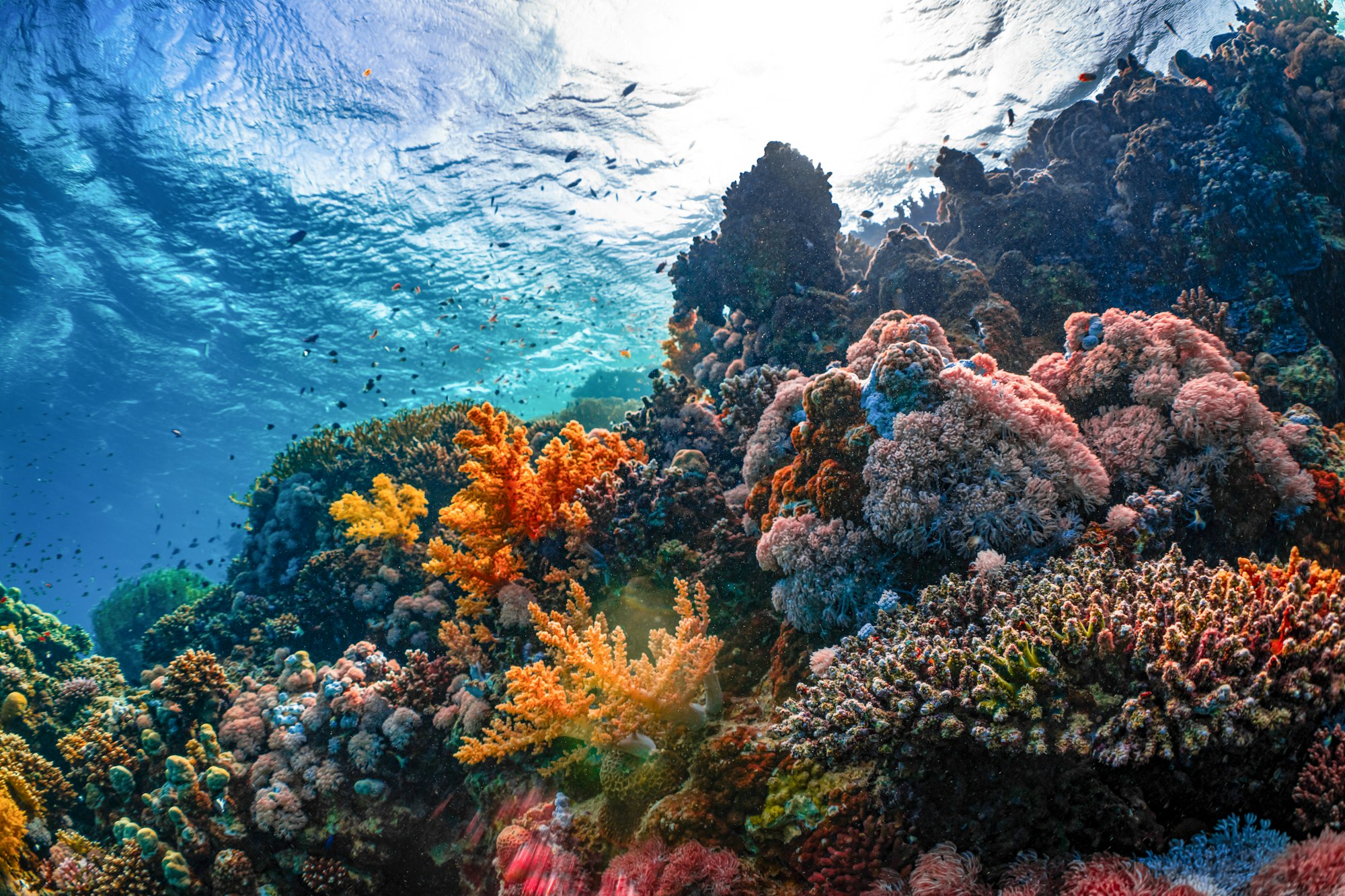
This is a wall dive, typically run as a drift with the current dictating whether you track the reef face or hang out over the blue. Divers usually work a range of roughly 18–30 metres, with the wall itself continuing far beyond recreational limits, so depth discipline matters. The face is cut with canyon-like crevices, chimneys and overhangs draped in black coral and large gorgonian sea fans that fan out in the current. Whitetips are most often spotted on the ledges and sandy shelves rather than in open water, so a slow, controlled pass close to the wall pays off.
Marine life
Beyond the resident whitetips and grey reef sharks, sightings include green and hawksbill turtles, big schools of bigeye trevally and barracuda, bumphead parrotfish, and Napoleon (humphead) wrasse. Eagle rays are reported passing along the drop-off. The wall’s crevices shelter groupers, angelfish, lionfish, triggerfish, moorish idols and anemonefish, while anthias and chromis shimmer over the coral. As always at Sipadan, the exact cast varies by day and current; the whitetips and turtles are the dependable stars.
Conditions & who should dive it
Currents here are usually mild to moderate but can pick up, and the site is best suited to divers comfortable with drift diving and confident on buoyancy over a deep wall. Most operators treat Sipadan as advanced-level diving overall; White Tip Avenue itself is a fair intermediate dive for those with solid control, but the ever-present deep drop-off means it is not a place to push depth or wander off the reef. Visibility is often excellent, frequently 20–30 metres or more, and water temperatures run roughly 26–30°C year-round.
When to go
Sipadan is diveable all year. Conditions are generally most settled and visibility best in the drier windows around March–May and again roughly October–December, though marine life is present in every season.
Getting there
There is no accommodation on Sipadan itself. Divers stay on the nearby islands of Mabul or Kapalai (around 20–30 minutes away by boat) or more cheaply in the town of Semporna on the mainland, from which day boats run out to the island in roughly an hour. Every dive day begins with a boat transfer to Sipadan’s moorings.
A note on protection
Sipadan is a protected marine area, and the resorts that once stood on the island were removed in the mid-2000s to reduce pressure on the reef. Access is now controlled by a daily permit quota shared among the licensed operators, so places must be booked ahead. The rules exist to keep sites like White Tip Avenue — and their resident sharks — as healthy as they are today.
Sea-surface temperature and wave height from Open-Meteo Marine (ERA5 reanalysis, monthly averages).
344 verified species observations (175 species) logged within ~11 km of this site between 1849 and 2018, from the Ocean Biodiversity Information System.
- Coelorinchus commutabilis
- Trimma yanoi
- Gadomus filamentosus
- Nezumia evides
- Ventrifossa nigrodorsalis
- Hymenocephalus nascens
- Trimma agrena
- Trimma tevegae
- Apristurus platyrhynchus
- Trimma stobbsi
- Pycnochromis atripes
- Synchiropus delandi
Scientific survey records skew toward sampled taxa (molluscs, corals) and do not reflect what you are guaranteed to see on a dive.
Source: OBIS (obis.org), aggregated Darwin Core occurrence records.
Conditions change with the tide and the season. If you have dived this site, share what it was actually like — date, visibility, current, and what you saw. Real, recent reports from divers are exactly what this guide is built to collect.
Send a conditions report ›