Merlo Reef
20.8446°N 37.4187°E · pinnacle
Sha’ab Merlo is a large coral pinnacle rising from deep water roughly one mile southwest of Angarosh in Sudan’s northern Red Sea — reclassified here from a wall dive to a pinnacle dive to match how dive operators consistently describe it.
Overview
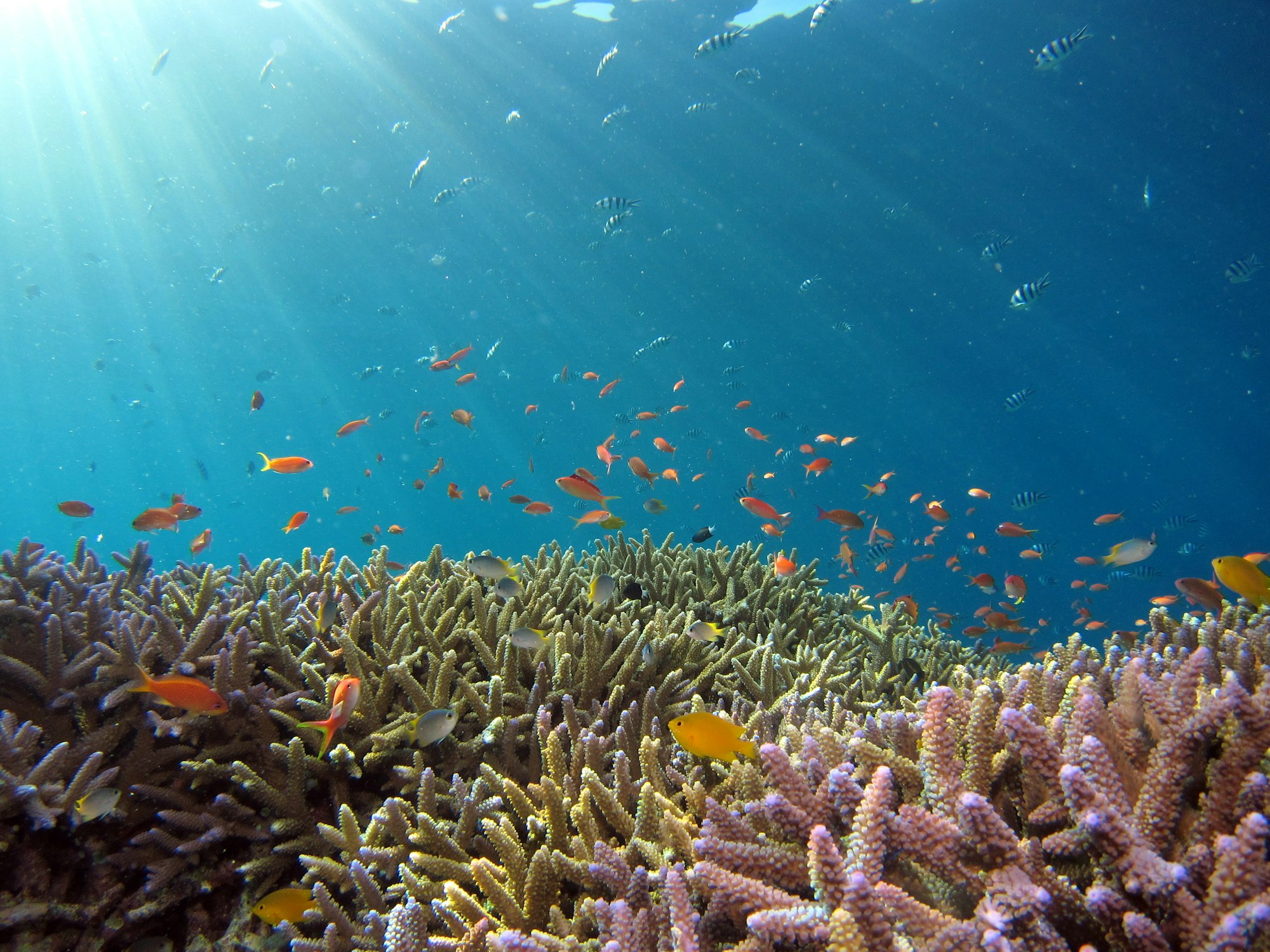
Merlo Reef’s defining feature, per multiple dive-operator sources, is a tall pinnacle protruding from its northern edge, covered in hard and soft corals, anthias, and fusiliers. Its exposed position (like neighbouring Angarosh) attracts current-driven marine life, though currents here are generally reported as less strong than at nearby Abington Reef. The prior description of this site as a classic wall dive did not match any source found and has been corrected.
Site Information
- Location: ~1 mile southwest of Angarosh, offshore northern Sudan Red Sea
- Entry Type: Boat dive
- Site Type: Pinnacle/seamount
- Difficulty Level: Advanced
- Maximum Depth: 20 meters
- Current: Moderate (generally weaker than at Angarosh/Abington, per sources)
Marine Life
Confirmed by multiple sources: hammerhead and grey reef sharks, moray eels, white-tip reef sharks sheltering in coral blocks, and occasional oceanic manta rays. Anthias and fusiliers are reported around the pinnacle’s soft coral cover. Species not confirmed by these sources (surgeonfish, scorpionfish, silvertip sharks, Napoleon wrasse) have been removed from this description.
Dive Profile
Descend to the reef crest at 5-10 metres and then drop along the outer pinnacle to 15-20 metres. Drift along the pinnacle face with the prevailing current, watching the blue water for passing pelagics. The most productive encounters are typically at the current-exposed reef points. Return to the reef crest for the final minutes of the dive and conduct a safety stop on the shallow plateau before signalling the boat.
Entry and Exit
Access is exclusively by liveaboard dive boat. Entry is by giant stride or back roll on the up-current side of the reef. The boat drifts with the dive group and picks up divers following a high-visibility SMB safety stop. Coordinate closely with the crew on current direction before entering the water.
Tips and Recommendations
- Check current direction with your dive guide before descent to plan the drift correctly
- Early morning dives give the best chance of encountering sharks near the reef edge
- Maintain depth discipline — pinnacle dives in Sudan can lead to inadvertent deep descents in clear water
- Wide-angle camera is the right tool for this open-water pinnacle diving environment
- Merlo pairs naturally with Angarosh on liveaboard itineraries — dive both on the same day if conditions allow
Safety Considerations
Strong and variable currents are the primary hazard. Monitor drift direction continuously and be prepared for current changes as you round reef points. The pinnacle drops steeply and the clear water makes depth estimation difficult — use your dive computer. Always carry a high-visibility SMB; the offshore location means the surface pickup requires divers to be clearly visible. Dive with a buddy at all times and agree on an ascent signal before descending.
Photography
The pinnacle face between 10-20 metres photographs well throughout the day, with the clearest light conditions in the morning hours. Grey reef sharks against the deep blue water make strong wide-angle subjects. The coral-encrusted pinnacle offers both sweeping reef landscape compositions and close-focus macro subjects in the crevices and overhangs.
Sources: Merlo Reef - Divescover, Sudan North - Seawolf Safari, Central & South route - Blue Force Fleet. Last updated 2026-07-03.
Sea-surface temperature and wave height from Open-Meteo Marine (ERA5 reanalysis, monthly averages).
34 verified species observations (23 species) logged within ~11 km of this site between 1977 and 2009, from the Ocean Biodiversity Information System.
- Enneapterygius abeli
- Chromodoris
- Trapezionida dispar
- Thalamita poissonii
- Plesionika narval
- Catapaguroides pectinipes
- Metopograpsus messor
- Coenobita scaevola
- Pontocaris profundior
- Xiphonectes tenuicaudatus
- Parapenaeus indicus
- Cirolana meseda
Scientific survey records skew toward sampled taxa (molluscs, corals) and do not reflect what you are guaranteed to see on a dive.
Source: OBIS (obis.org), aggregated Darwin Core occurrence records.
Conditions change with the tide and the season. If you have dived this site, share what it was actually like — date, visibility, current, and what you saw. Real, recent reports from divers are exactly what this guide is built to collect.
Send a conditions report ›