SS Umbria
19.6367°N 37.2906°E · wreck
SS Umbria is a WWII cargo ship scuttled by her own captain in June 1940 at Wingate Reef near Port Sudan, and is regarded as one of the finest wreck dives in the world.
Overview
SS Umbria was built in Hamburg in 1911 as SS Bahia Blanca, a 154.9m, 10,076 GRT cargo liner. Italy purchased and renamed her in 1935. In June 1940, en route to East Africa with a secret military cargo, she was intercepted by the British warships HMS Grimsby and HMS Leander and forced to anchor at Wingate Reef near Port Sudan. When Captain Lorenzo Muiesan learned that Italy had declared war, he scuttled the ship with his crew’s help rather than let the cargo be seized. Wikipedia dates the sinking to 9 June 1940; several dive-industry sources describe the captain acting on the morning of 10 June — sources disagree on the exact day. She now lies on her port side at a maximum depth of 38 metres, her holds still holding part of her wartime cargo (reported as roughly 6,000 tons of bombs, 600 cases of detonators, and around 100 tons of assorted weapons, alongside over 2,000 tons of cement), and three Fiat 1100 cars remain on the car deck. Her engine room, kitchen, and dining areas are accessible and encrusted with soft corals and crinoids, with dense schools of sweepers and snapper reported around the wreck.
Site Information
- Location: Wingate Reef, near Port Sudan, Sudan Red Sea
- Entry Type: Boat dive
- Site Type: Wreck dive
- Difficulty Level: Advanced
- Maximum Depth: 38 meters
Marine Life
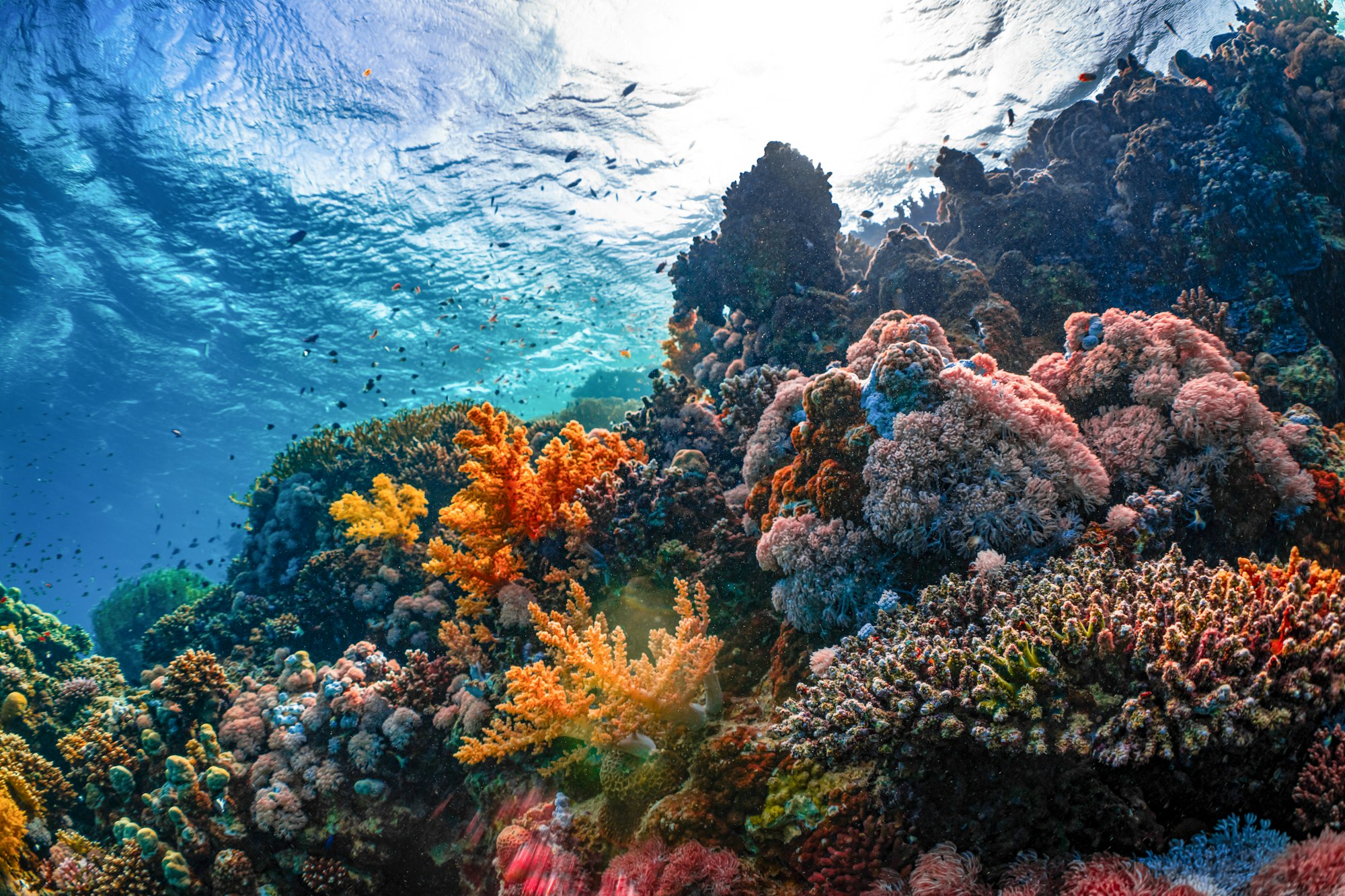
Sources describe schools of snappers, sweetlips, butterflyfish, and barracuda around the wreck. No source-specific report of additional species at this exact site was found; broader Red Sea reef species are not attributed here to avoid overstating what has been confirmed.
Wreck History Notes
Ship name, build year, length, and cargo composition are cross-checked against Wikipedia and multiple dive-industry sources. Where those sources genuinely disagree (the exact day of sinking), that disagreement is stated above rather than resolved by guesswork. No claim is made about the wreck being “safe” — wreck penetration always carries risk and requires appropriate training.
Sources: SS Umbria - Wikipedia, Umbria Wreck dive site - PADI, Five Great Dive Sites in Sudan’s Red Sea - Scuba Diving Magazine, Blue Force Fleet - Central & North Route. Last updated 2026-07-03.
Sea-surface temperature and wave height from Open-Meteo Marine (ERA5 reanalysis, monthly averages).
1801 verified species observations (160 species) logged within ~11 km of this site between 1911 and 2012, from the Ocean Biodiversity Information System.
- Mugil cephalus
- Cephalopholis argus
- Cephalopholis oligosticta
- Kyphosus cinerascens
- Crenimugil crenilabis
- Gerres oyena
- Sargocentron marisrubri
- Cephalopholis hemistiktos
- Chromodoris africana
- Pulsellum
- Odostomia dalli
- Cerithiopsidae
Scientific survey records skew toward sampled taxa (molluscs, corals) and do not reflect what you are guaranteed to see on a dive.
Source: OBIS (obis.org), aggregated Darwin Core occurrence records.
Conditions change with the tide and the season. If you have dived this site, share what it was actually like — date, visibility, current, and what you saw. Real, recent reports from divers are exactly what this guide is built to collect.
Send a conditions report ›