Admiralty Anchorage
13.8867°S 146.5569°E · reef
Admiralty Anchorage is a sheltered reef dive site at Osprey Reef in the Coral Sea, Queensland, Australia.
Overview
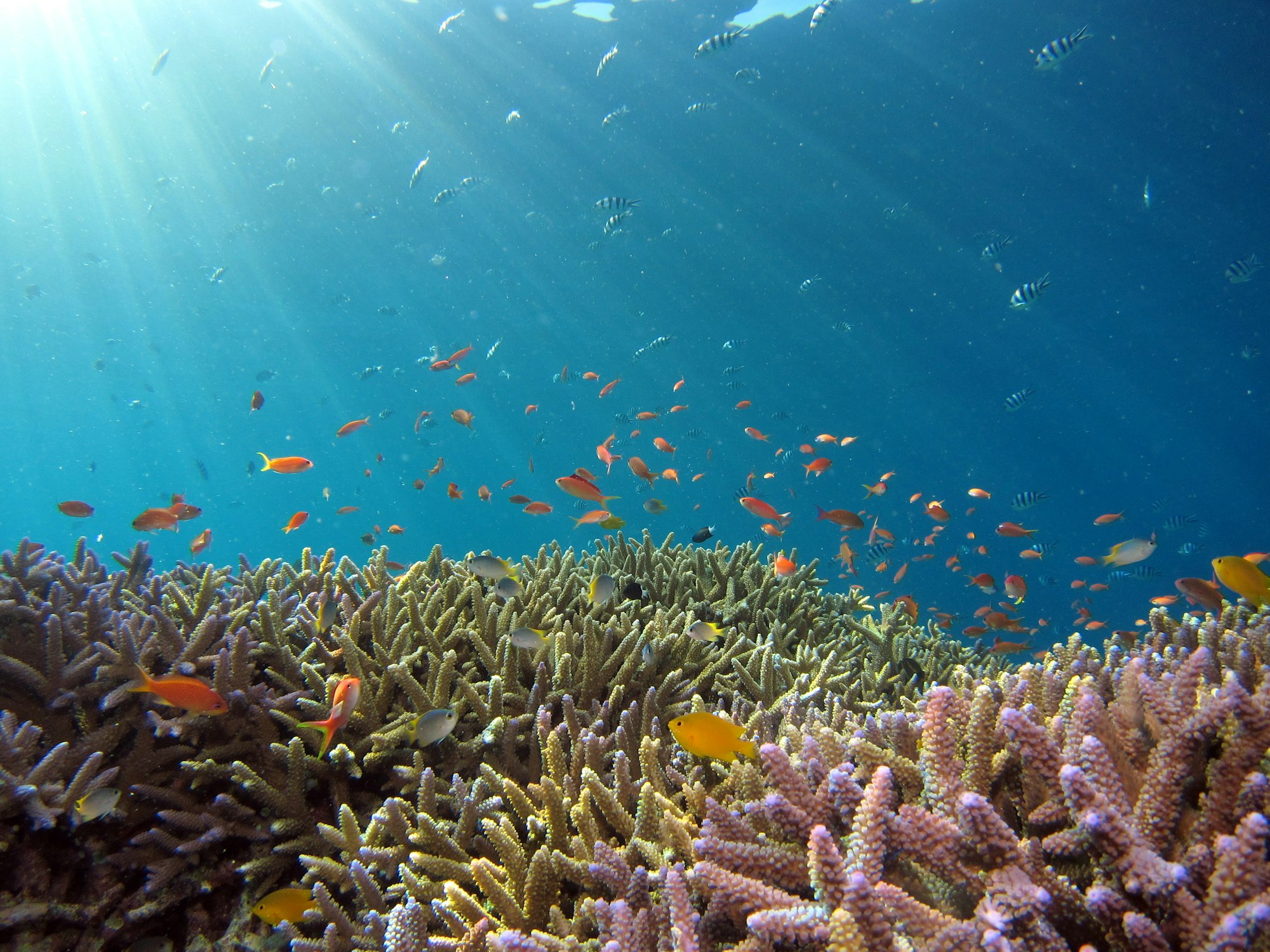
Admiralty Anchorage sits on the western, leeward side of Osprey Reef, where the reef platform creates a natural anchorage that has historically been used by vessels sheltering from the Coral Sea’s exposed conditions. The sheltered location means calmer water than the North Horn side, and the protected reef here has developed differently from the exposed outer faces — with denser coral communities and more varied bottom topography in the shallows.
The site functions as a useful complement to the more dramatic exposed sites on the northern and eastern faces, offering calm, accessible diving that suits less experienced divers or serves as a recovery dive between more demanding sites.
Site Information
- Location: Osprey Reef (western face), Coral Sea, Queensland, Australia
- Entry Type: Boat dive
- Site Type: Reef
- Difficulty Level: Advanced
- Maximum Depth: 18 meters
- Typical Visibility: 20–35 metres
- Current: Minimal in sheltered conditions
- Best Time: August to November
Marine Life
The calmer conditions on the leeward side allow delicate coral structures to thrive that would be broken by surge on the outer faces. Table corals and branching Acropora form dense stands in the shallows. Napoleon wrasse are frequently encountered here — the atoll’s resident population is habituated to divers throughout. Reef sharks patrol the deeper margins. The sandy bottom between coral heads provides habitat for stingrays, and the coral overhangs shelter crayfish, moray eels, and sleeping turtles. A resident hawksbill turtle has been reported by multiple liveaboard crews.
Dive Profile
Explore the mixed coral and sand terrain at 10–18 metres before working into the shallower coral garden at 5–10 metres. The site allows for a relaxed, non-linear dive path — ideal for divers who prefer to explore at their own pace rather than following a defined route. Night dives in the anchorage are comfortable given the protected conditions.
Entry and Exit
Liveaboard only. Entry from the dive platform or tender with free descent. The protected location makes entry and exit easy regardless of conditions on the exposed side.
Tips and Recommendations
- A good choice for the first dive of the day to warm up before tackling North Horn
- The Napoleon wrasse are particularly friendly at this site — move slowly and they may follow you for extended periods
- Check under table corals for sleeping nurse sharks and resting turtles
Safety Considerations
Admiralty Anchorage is among the most straightforward dives at Osprey Reef. The principal consideration is the same as all Osprey dives — remote location with limited emergency support. Dive within certification limits and follow conservative profiles.
Photography
The sheltered conditions make Admiralty Anchorage ideal for close-up and macro work. The Napoleon wrasse provide excellent portrait opportunities. Table coral structures shot from below against the surface light create strong architectural compositions. The sandy areas offer opportunities for blue-spotted stingray and flatfish images.
Sources: Mike Ball Dive Expeditions - Osprey Reef Liveaboard, Spirit of Freedom - 4 Night Liveaboard, Dive the World - Osprey Reef, Cairns Dive Adventures - Osprey Reef. Last updated 2026-05-30.
Sea-surface temperature and wave height from Open-Meteo Marine (ERA5 reanalysis, monthly averages).
8039 verified species observations (90 species) logged within ~11 km of this site between 1984 and 2021, from the Ocean Biodiversity Information System.
- Carcharhinus amblyrhynchos · Grey Reef Shark
- Carcharhinus albimarginatus · Silvertip Shark
- Caranx ignobilis · Giant Trevally
- Pseudogramma polyacantha · False Gramma
- Gobiidae · Gobies
- Thalassoma
- Rhincodon typus · whale shark
- Siphamia
- Zanclus cornutus · Moorish Idol
- Trimma okinawae · Orange Spot Goby
- Apogonidae · Big Eyes
- Stegastes lacrymatus · Jewel Damsel
Scientific survey records skew toward sampled taxa (molluscs, corals) and do not reflect what you are guaranteed to see on a dive.
Source: OBIS (obis.org), aggregated Darwin Core occurrence records.
Conditions change with the tide and the season. If you have dived this site, share what it was actually like — date, visibility, current, and what you saw. Real, recent reports from divers are exactly what this guide is built to collect.
Send a conditions report ›