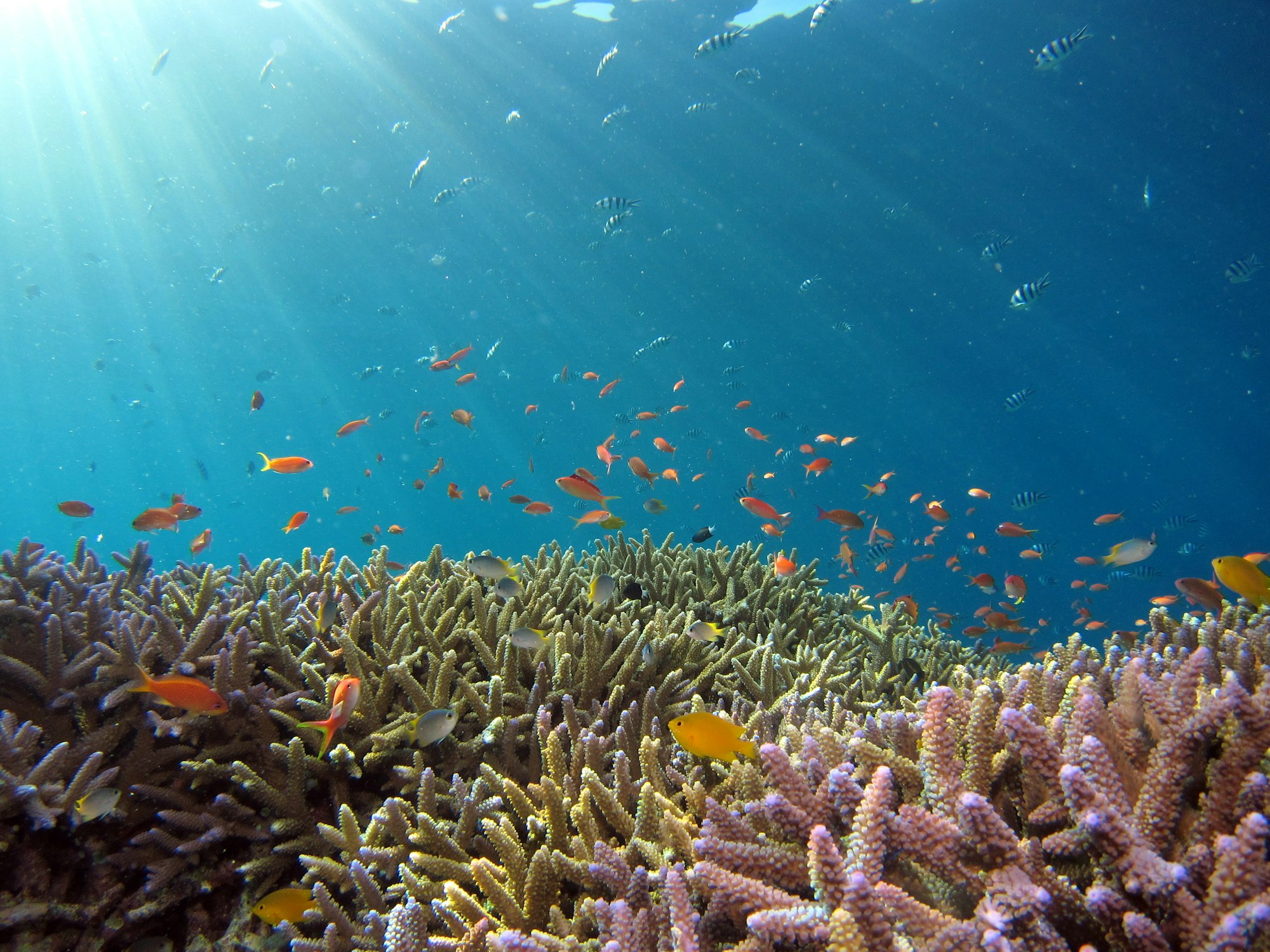
Challenger Bay
14.9154°S 145.6903°E · reef
Challenger Bay is a sheltered reef dive site in the Ribbon Reefs of the northern Great Barrier Reef, Queensland, Australia.
Overview
Challenger Bay occupies a naturally protected embayment between Ribbon Reef sections, offering calm conditions that make it a reliable dive site even when weather affects more exposed parts of the outer reef. The bay’s sheltered character creates a different ecological dynamic from the exposed pinnacles and walls of the area — coral growth is denser in the protected lower zones, and the reduction in surge encourages macro life to colonise surfaces that would be too exposed elsewhere.
The site is a favourite for night dives on liveaboard itineraries due to its calm, predictable conditions and rich invertebrate community after dark.
Site Information
- Location: Ribbon Reefs, northern Great Barrier Reef, Queensland, Australia
- Entry Type: Boat dive
- Site Type: Reef
- Difficulty Level: Intermediate
- Maximum Depth: 18 meters
- Typical Visibility: 15–25 metres
- Current: Minimal; well sheltered
- Best Time: Year-round; one of the more reliable sites in adverse conditions
Marine Life
The sheltered coral heads and bommies within the bay host a strong community of reef fish, with coral grouper, large parrotfish, and batfish moving through the formations. Nudibranch diversity is high throughout the bay, with species found on every hard substrate. Flatworms, hairy shrimp, and tiny crustaceans inhabit the rubble and coral edges. At night, spotted and painted crayfish emerge from the reef, and Spanish dancer nudibranchs have been sighted here on night dives. Whitetip reef sharks are regularly encountered resting on the sandy floor between coral heads.
Dive Profile
Begin at the deeper coral bommies at 15–18 metres, working upward through the coral formations to the shallower zone. The bay floor is mostly sand with scattered coral heads, making navigation easy. Night dives follow a similar profile with a focus on the coral edges and rubble zones at 8–12 metres, where nocturnal invertebrates are most active.
Entry and Exit
Liveaboard access. Typically moored directly in the bay, allowing easy entry and exit from the vessel tender or dive platform. Shot line descent in night conditions.
Tips and Recommendations
- Request a night dive here — the sheltered conditions make it an ideal introduction to GBR night diving
- Check under table corals and along reef edges for flatworms and small nudibranchs
- The sandy channels between coral heads are productive for blue-spotted stingrays and sleeping nurse sharks
- Conditions here are among the most forgiving in the Ribbon Reefs section — a good choice for divers acclimatising to liveaboard diving
Safety Considerations
Challenger Bay is one of the safest sites in the Ribbon Reefs. Currents are minimal and the shallow maximum depth limits any decompression concerns. Night dives should still follow standard buddy protocols with primary and backup lighting.
Photography
The bay’s calm conditions make it ideal for macro work — no surge to disturb camera positioning. Nudibranchs, flatworms, and small crustaceans reward patient photographers with a diopter or macro lens. Night dives offer Spanish dancer nudibranchs, crayfish, and hunting octopuses as subjects in reliably still water.
Sources: Spirit of Freedom - Ribbon Reefs itinerary, Dive the World - Ribbon Reefs, Cairns Dive Adventures - Ribbon Reefs. Last updated 2026-05-30.
Sea-surface temperature and wave height from Open-Meteo Marine (ERA5 reanalysis, monthly averages).
958 verified species observations (321 species) logged within ~11 km of this site between 1967 and 2024, from the Ocean Biodiversity Information System.
- Rhincodon typus · whale shark
- Amsichthys knighti · Bug-eyed Dottyback
- Istiompax indica · Black Marlin
- Trimma xanthum · Yellow-red Pygmygoby
- Pristiapogon fraenatus · Bridled Cardinalfish
- Ostorhinchus nigrofasciatus · Black-striped Cardinalfish
- Cheilodipterus
- Gobiidae · Gobies
- Festucalex gibbsi · Gibb's Pipefish
- Cirrhilabrus squirei
- Wetmorella nigropinnata · Sharpnose Wrasse
- Symphorichthys spilurus · Blue-lined Sea-bream
Scientific survey records skew toward sampled taxa (molluscs, corals) and do not reflect what you are guaranteed to see on a dive.
Source: OBIS (obis.org), aggregated Darwin Core occurrence records.
Conditions change with the tide and the season. If you have dived this site, share what it was actually like — date, visibility, current, and what you saw. Real, recent reports from divers are exactly what this guide is built to collect.
Send a conditions report ›