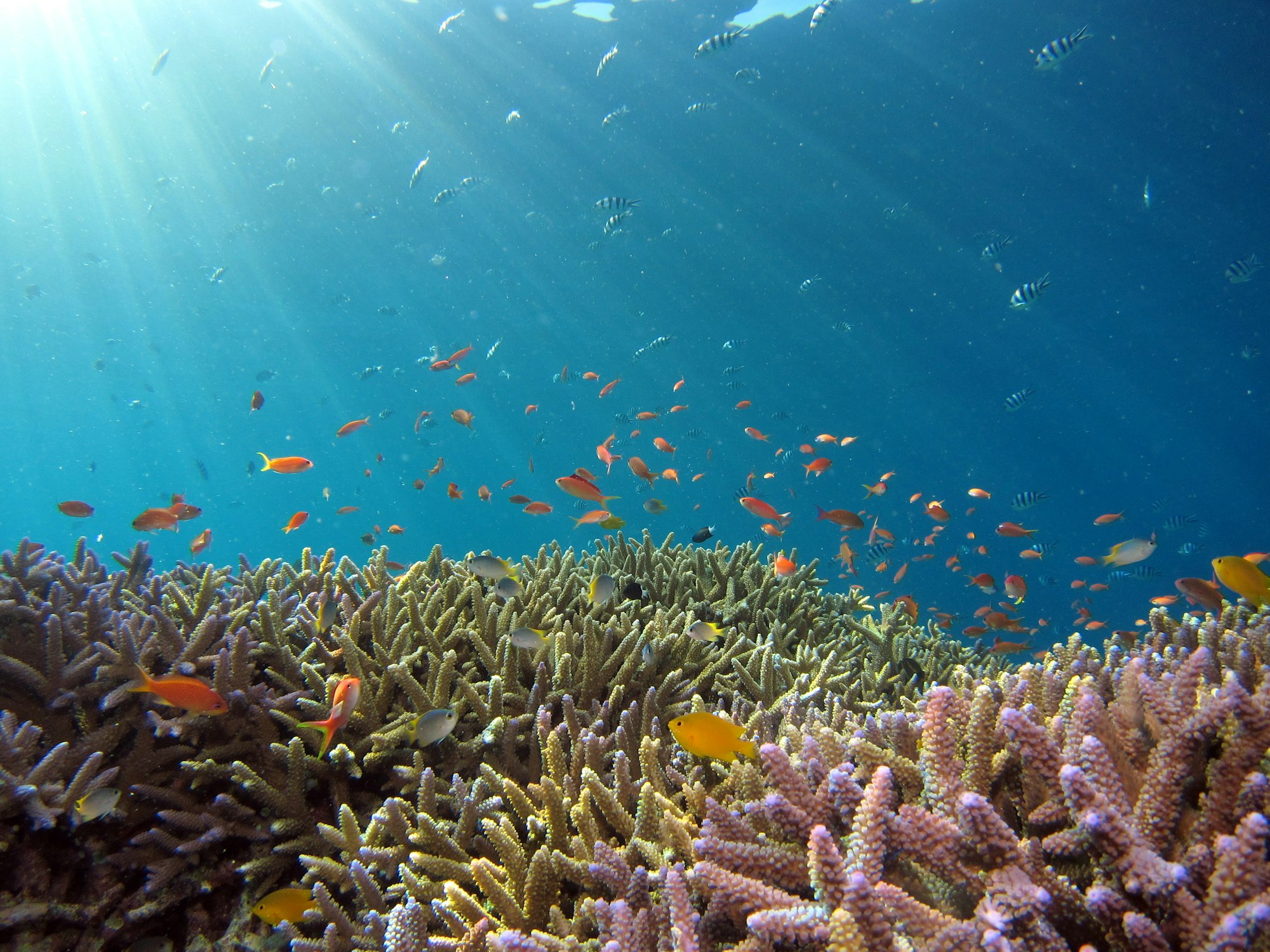
Cod Hole
14.6637°S 145.6635°E · pinnacle
Cod Hole is one of the most famous dive sites in the world, located at Ribbon Reef No. 10 in the northern Great Barrier Reef, Queensland, Australia.
Overview
Cod Hole earned its legendary status through decades of fish-feeding encounters with giant potato cod — massive groupers that can grow to nearly two metres in length and weigh over 100 kg. Underwater filmmakers Ron and Valerie Taylor brought the site to international attention after they documented it in 1971, and the fish have been interacting with divers since the 1970s. The potato cod are completely unafraid, approaching within touching distance and hovering motionlessly in front of your mask. On a typical dive, a dozen or more individual potato cod may be present simultaneously, an experience unlike anything else in Australian waters.
The site itself is a coral pinnacle at Ribbon Reef No. 10, rising from the sandy seafloor to around 8 metres depth, surrounded by sloping reef and rubble at approximately 25 metres. Where divemaster-led feeding still occurs on some liveaboard programs, only the guides handle the bait; individual divers are not permitted to feed the fish directly.
Site Information
- Location: Ribbon Reef No. 10, northern Great Barrier Reef, ~240km north of Cairns, Queensland, Australia
- Entry Type: Boat dive
- Site Type: Pinnacle/seamount
- Difficulty Level: Intermediate
- Maximum Depth: 25 meters
- Typical Visibility: 20–40 metres
- Current: Mild to moderate; can be stronger on the outgoing tide
- Best Time: July to November (optimal conditions and visibility)
Marine Life
Potato cod are the headline act, but Cod Hole also holds a resident Napoleon (humphead) maori wrasse that matches the cod for size and audacity. Moray eels — including giant morays — emerge from crevices along the pinnacle. Coral trout patrol the reef perimeter, while schools of batfish, sweetlips, and snapper fill the mid-water. At depth on the sandy bottom, whitetip reef sharks rest in loose groups. Occasional hammerheads have been reported on the deeper approaches. The pinnacle itself is decorated with sea fans, soft corals, and encrusting sponges that attract nudibranchs and smaller invertebrates.
Dive Profile
Descend directly onto the pinnacle, which tops out at around 8 metres. Most divers spend the bulk of the dive between 10 and 18 metres, where the cod congregate along the pinnacle walls and overhangs. The sandy bottom at 25 metres offers a brief exploration before ascending back up the pinnacle for the safety stop in the shallows. Currents are typically manageable but become stronger on the outgoing tide — arrive on the slack for best conditions.
Entry and Exit
Access is exclusively by liveaboard from Cairns or Port Douglas. The site sits approximately 240km north of Cairns and is not reachable by day-trip vessels. Descent is by shot line or free descent to the pinnacle top. Exit via surface marker buoy (SMB) and boat pickup.
Tips and Recommendations
- Approach the potato cod slowly and let them come to you — they will
- Do not attempt to touch or feed the cod; respectful observation produces better encounters
- Wide-angle photography is the standard here, but get close — the fish will cooperate
- A liveaboard itinerary combining Cod Hole with Pixie Pinnacle and the Osprey Reef sites is the classic northern GBR trip
- Bring a torch for the pinnacle crevices
Safety Considerations
Currents can strengthen rapidly with tidal changes. Monitor depth carefully when following the cod down the pinnacle walls. Box jellyfish are present in inshore and mid-reef waters during the November–April wet season. Always deploy an SMB on ascent — liveaboard traffic in the Ribbon Reefs can be significant.
Photography
Cod Hole is a wide-angle dream. The sheer size of the potato cod demands a fisheye or rectilinear wide-angle lens to capture them in full. Shoot upward with ambient light behind the pinnacle for dramatic silhouettes, or use strobes close in to reveal the cod’s spotted patterns. The Napoleon wrasse, coral trout, and schooling fish provide constant compositional variety throughout the dive.
Sources: Cairns Dive Adventures - Cod Hole, Wikipedia - Cod Hole, Ribbon Reefs.com - The Cod Hole, Great Barrier Reef Liveaboards - Cod Hole. Last updated 2026-05-30.
Sea-surface temperature and wave height from Open-Meteo Marine (ERA5 reanalysis, monthly averages).
17178 verified species observations (347 species) logged within ~11 km of this site between 1975 and 2018, from the Ocean Biodiversity Information System.
- Chordata · Chordates
- Scarus niger · Dusky Parrotfish
- Pomacentrus bankanensis
- Chaetodon pelewensis
- Naso tuberosus
- Acanthurus lineatus
- Zebrasoma velifer
- Chaetodon baronessa · Baroness Butterflyfish
- Pomacentrus lepidogenys
- Scarus rubroviolaceus
- Chaetodon trifascialis
- Gomphosus varius
Scientific survey records skew toward sampled taxa (molluscs, corals) and do not reflect what you are guaranteed to see on a dive.
Source: OBIS (obis.org), aggregated Darwin Core occurrence records.
Conditions change with the tide and the season. If you have dived this site, share what it was actually like — date, visibility, current, and what you saw. Real, recent reports from divers are exactly what this guide is built to collect.
Send a conditions report ›