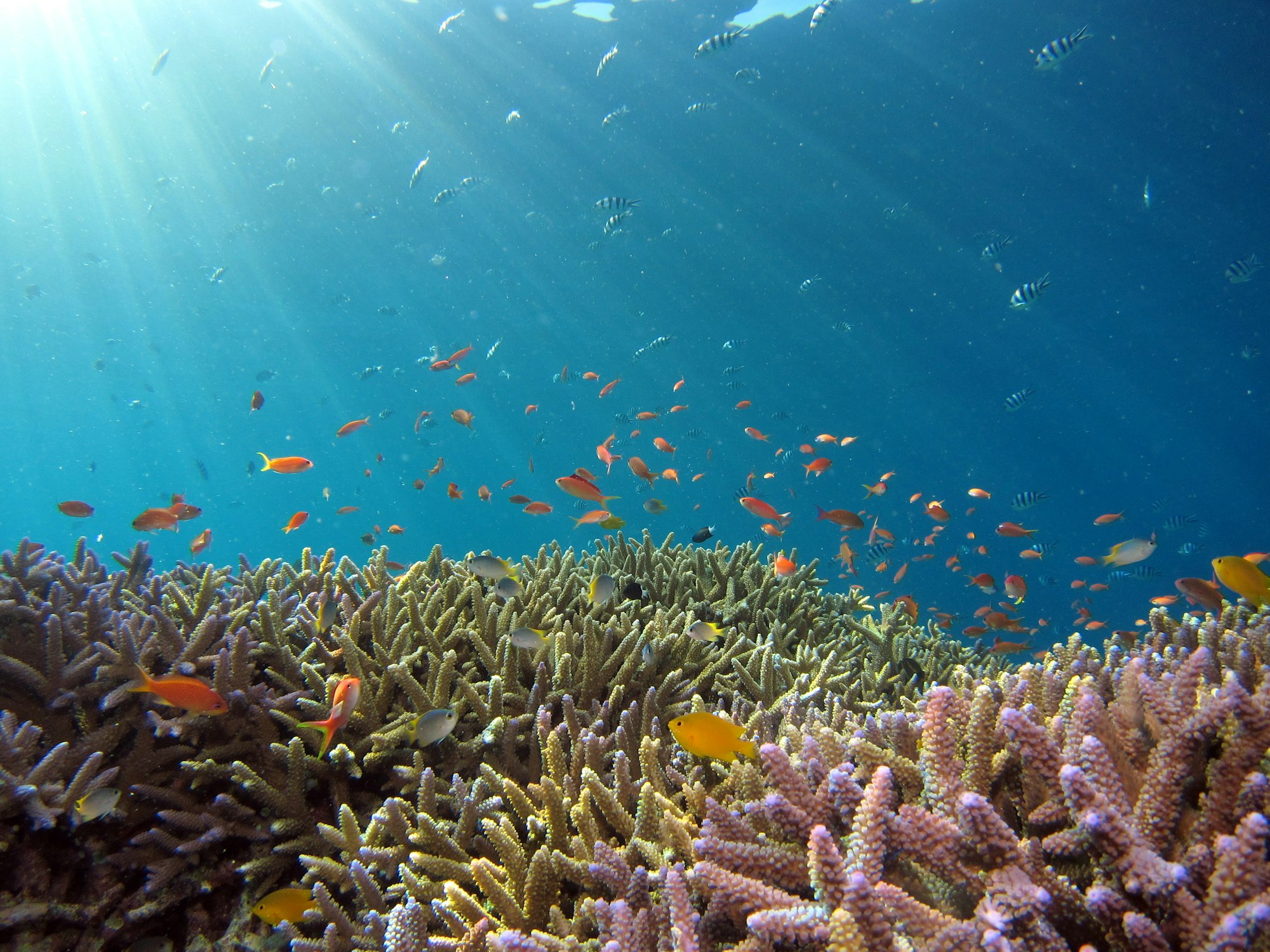
Cruise Whitsundays Pontoon
19.5714°S 149.2695°E · reef
Cruise Whitsundays Pontoon is a day-trip dive site at Hardy Reef, approximately 65km northeast of Airlie Beach in the Whitsunday Islands section of the Great Barrier Reef, Queensland, Australia.
Overview
The Cruise Whitsundays Reefworld pontoon provides the primary structured diving and snorkelling experience for day-trippers from the Whitsunday Islands — one of the most visited sections of the GBR. The pontoon is permanently moored at Hardy Reef, giving access to GBR reef that would otherwise require a liveaboard commitment. Reefworld also offers overnight Reef Sleep stays and Reef Suites accommodation on the pontoon.
The diving is characterised by sheltered conditions, shallow depth, and the GBR’s southern character — warmer summer water than the northern reef, slightly less visibility on average, but impressive coral gardens and good fish life. This site is particularly well-designed for the many visitors to the Whitsundays who want a first scuba experience without prior training.
Site Information
- Location: Hardy Reef, approximately 65km northeast of Airlie Beach, Whitsunday Islands, Great Barrier Reef, Queensland, Australia
- Entry Type: Boat dive
- Site Type: Reef
- Difficulty Level: Beginner
- Maximum Depth: 12 meters
- Typical Visibility: 8–20 metres
- Current: Minimal at pontoon site
- Best Time: July to November (clearest water); year-round operation
Marine Life
The Whitsunday section of the GBR supports different species composition from the northern sites. Maori wrasse are present and habituated to the regular dive traffic. Sea turtles are common. The reef around the pontoon holds good populations of parrotfish, surgeonfish, and the smaller reef fish families. Stingrays cruise the sandy areas. In clearer conditions, the reef shows the classic GBR diversity of hard corals and associated fish. Octopus are occasionally encountered in the reef crevices. The slightly warmer Whitsunday water supports prolific soft coral growth in sheltered areas.
Dive Profile
Introductory dives are conducted in the immediate vicinity of the pontoon in the 3–8 metre zone, typically guided by a staff instructor. Certified divers can explore further under guide supervision or independently to the maximum 12 metres. The site is not a challenging dive navigation-wise, but the reef around the pontoon has been well-explored and maps of the local features are often available from the dive operation.
Entry and Exit
Day trips from Airlie Beach (approximately 90 minutes by high-speed catamaran) or from Whitsunday Islands resorts. The Cruise Whitsundays operation provides full equipment hire, introductory dive instruction, and certified dive guiding from the pontoon. Entry and exit via the pontoon dive platform.
Tips and Recommendations
- Introductory (discover scuba) dives are the primary offering here — no prior certification required
- Book dive slots in advance during peak season (school holidays and summer), as demand is high
- The combined snorkelling and diving day means excellent value for mixed groups
- Semi-submersible tours from the pontoon offer a non-diving way to view the reef
Safety Considerations
The pontoon operation runs with multiple staff in the water at all times during introductory dives. Visibility varies more in this section of the reef than in the north — following guide positioning ensures you stay in the clearest water. Box jellyfish stinger suits are provided during the wet season (November–April).
Photography
The shallow depth and protected conditions make this an accessible underwater photography venue. Sea turtles are reliably approachable. The reef fish are accustomed to divers and allow close approach. For beginning photographers, this pontoon site offers forgiving conditions to learn without strong current or deep water.
Sources: Cruise Whitsundays - Great Barrier Reef, Visit Whitsunday Islands - Hardy Reef, Barrier Reef Australia - Hardy Reef Reefworld. Last updated 2026-05-30.
Sea-surface temperature and wave height from Open-Meteo Marine (ERA5 reanalysis, monthly averages).
326 verified species observations (196 species) logged within ~11 km of this site between 1985 and 2010, from the Ocean Biodiversity Information System.
- Abalistes stellatus · Flat-tailed Trigger-fish
- Pentapodus paradiseus
- Pentapodus nagasakiensis
- Upeneus tragula
- Choerodon venustus
- Parapercis xanthozona
- Symphorus nematophorus
- Neoaploactis tridorsalis · Threefin Velvetfish
- Trichonotus setiger · Sand Lance
- Siphamia roseigaster · Pink-breasted Siphon-fish
- Turrum gymnostethus
- Sula dactylatra · Masked (Blue-faced) Booby
Scientific survey records skew toward sampled taxa (molluscs, corals) and do not reflect what you are guaranteed to see on a dive.
Source: OBIS (obis.org), aggregated Darwin Core occurrence records.
Conditions change with the tide and the season. If you have dived this site, share what it was actually like — date, visibility, current, and what you saw. Real, recent reports from divers are exactly what this guide is built to collect.
Send a conditions report ›