Clipper
16.4276°S 145.9882°E · reef
Clipper is a reef dive site on the outer Great Barrier Reef near Lizard Island, Queensland, Australia.
Overview
Clipper is in close proximity to Plate Top and Troppo’s, forming part of a cluster of outer reef sites on the same reef structure in the Lizard Island area. The site’s name evokes the fast sailing ships that once navigated these outer reef passages, trading between Asian ports and Australian colonies. The site sits on an outer reef section exposed to the Coral Sea, with the characteristic clear water and healthy coral of this northern GBR area.
At 17 metres maximum depth, Clipper is one of the shallower sites in the area, making it ideal as a third or fourth dive of the day when bottom time and no-decompression limits are more constrained.
Site Information
- Location: Outer Great Barrier Reef (Lizard Island area), Queensland, Australia
- Entry Type: Boat dive
- Site Type: Reef
- Difficulty Level: Beginner
- Maximum Depth: 17 meters
- Typical Visibility: 15–28 metres
- Current: Variable
- Best Time: August to November
Marine Life
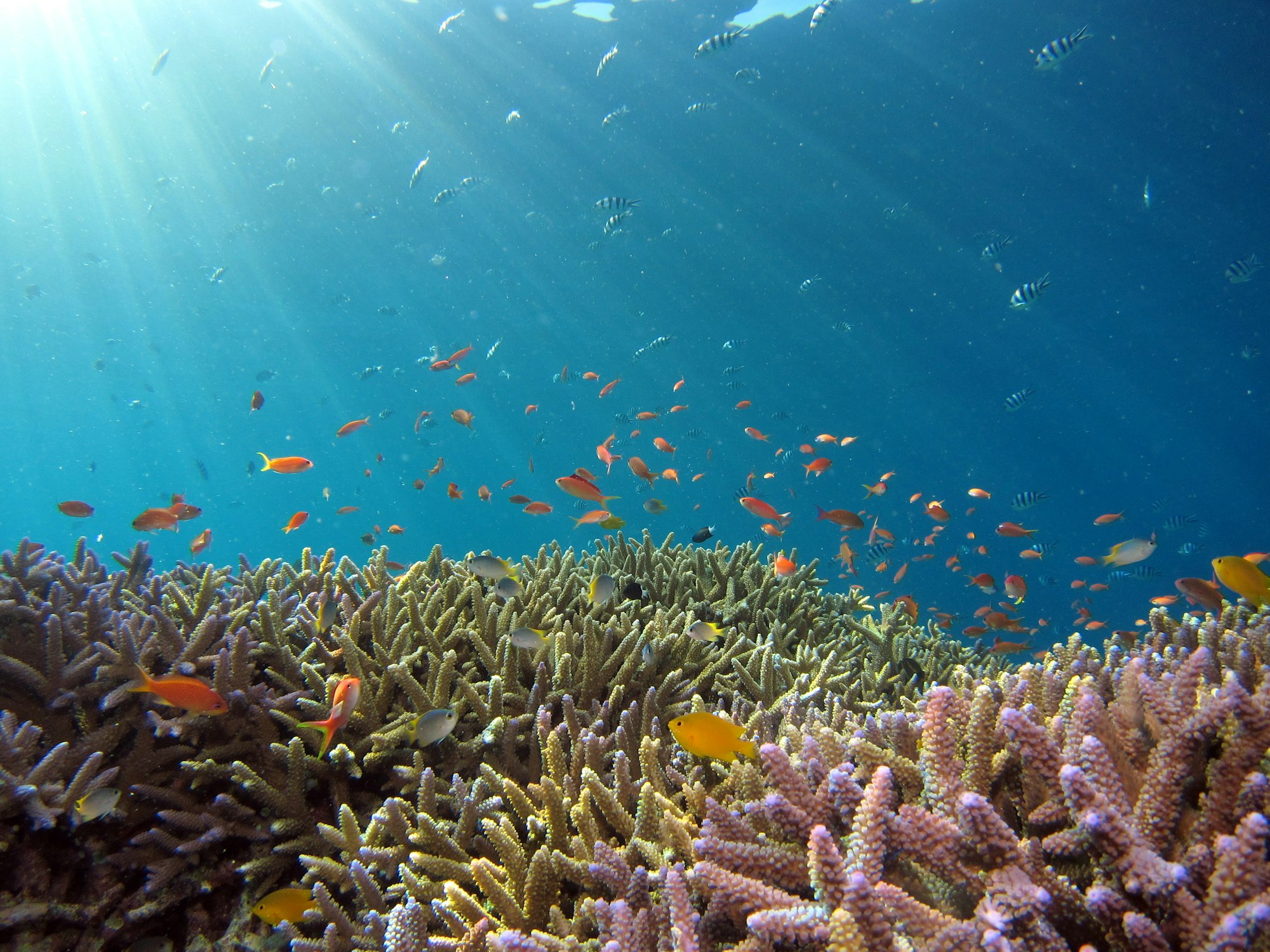
Clipper’s outer reef position delivers consistent fish diversity. Maori wrasse are regulars, often investigating divers with characteristic boldness. Coral grouper and coral trout hold positions in the reef structure, launching ambush attacks on smaller fish. Sea turtles — green and hawksbill both — graze along the reef slope. The reef surface hosts colourful communities of butterflyfish and angelfish, with various species of both families represented. In the sand areas at depth, garden eels extend vertically in communities that retract instantly as divers approach.
Dive Profile
Follow the reef slope from the crest at 3–5 metres to the sandy base at 17 metres. The site is compact enough to explore thoroughly in a single dive. The sand zone at depth is worth a dedicated 5-minute exploration before ascending along the reef face.
Entry and Exit
Boat access from Lizard Island or liveaboard operators. Standard moored dive entry and exit via the boat platform.
Tips and Recommendations
- Approach the garden eel colonies on the sand slowly and at a low angle — rushing causes them to retract before you reach photographing distance
- The reef crest in the top 5 metres is a good snorkelling zone for non-diving companions
- Combine with Plate Top and Troppo’s for a comprehensive day of outer reef diving in the area
Safety Considerations
Standard outer reef considerations. The relatively shallow maximum depth at 17 metres makes this site forgiving in terms of no-decompression limits. The main risk is the current — outer reef sites can experience tidal flows that affect navigation.
Photography
Clipper suits close-focus wide-angle and standard wide-angle approaches. The garden eel colony on the sand makes an unusual subject — use a very slow approach and frame a few eels against the sandy bottom. Reef fish portraits are straightforward given the typical friendliness of the Lizard Island area fish population, habituated to regular dive activity.
Sources: Dive the World - Great Barrier Reef, Cairns Dive Adventures, Great Barrier Reef Tours. Last updated 2026-05-30.
Sea-surface temperature and wave height from Open-Meteo Marine (ERA5 reanalysis, monthly averages).
5533 verified species observations (204 species) logged within ~11 km of this site between 1928 and 2024, from the Ocean Biodiversity Information System.
- Pomacentrus philippinus
- Dascyllus reticulatus
- Plectroglyphidodon dickii
- Sula leucogaster · Brown booby
- Gomphosus varius
- Chaetodon baronessa
- Chlorurus sordidus
- Monotaxis grandoculis
- Chrysiptera rex
- Plectroglyphidodon fasciolatus
- Acanthurus nigrofuscus
- Rhincodon typus · whale shark
Scientific survey records skew toward sampled taxa (molluscs, corals) and do not reflect what you are guaranteed to see on a dive.
Source: OBIS (obis.org), aggregated Darwin Core occurrence records.
Conditions change with the tide and the season. If you have dived this site, share what it was actually like — date, visibility, current, and what you saw. Real, recent reports from divers are exactly what this guide is built to collect.
Send a conditions report ›