Flare Point
15.5126°S 145.7768°E · reef
Flare Point is a reef dive site in the southern Ribbon Reefs of the northern Great Barrier Reef, Queensland, Australia.
Overview
Flare Point sits near the southern end of the Ribbon Reefs chain, in close proximity to Steve’s Bommie and Flare Point offers a broader reef experience that complements the concentrated bommie diving of the area. The site spans a section of outer reef slope where the reef top gives way to a sloping face descending through progressively deeper coral zones to a sandy bottom at 19 metres.
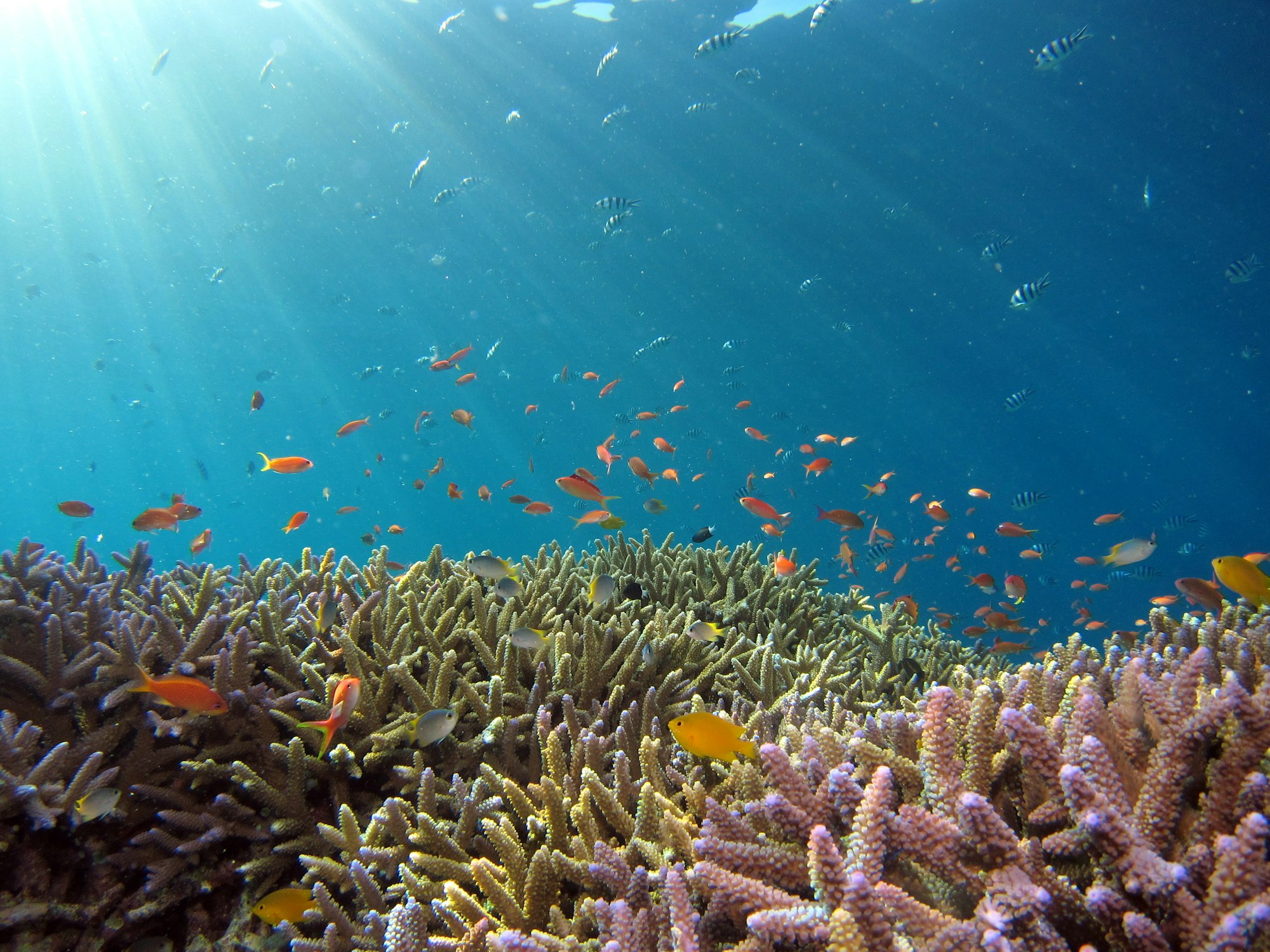
The reef is in good health by GBR standards and offers representative outer Ribbon Reef diving — excellent coral coverage, reliable fish diversity, and occasional pelagic visitors. Its position at the reef edge makes it a natural aggregation point for species moving between the open water and the reef.
Site Information
- Location: Ribbon Reefs (southern section), northern Great Barrier Reef, Queensland, Australia
- Entry Type: Boat dive
- Site Type: Reef
- Difficulty Level: Beginner
- Maximum Depth: 19 meters
- Typical Visibility: 15–30 metres
- Current: Variable; mild to moderate
- Best Time: July to November
Marine Life
The reef slope supports a broad cross-section of GBR species. Maori wrasse patrol the upper reef, and large parrotfish graze the coral surface noisily. Coral grouper and coral trout occupy the overhangs on the deeper sections. Turtles — both green and hawksbill — are regular grazers and browsers along the reef slope. Whitetip reef sharks rest on sandy patches. Above the reef, schools of fusiliers and surgeonfish move in coordinated formations. The site regularly produces eagle ray sightings in the open water off the reef edge.
Dive Profile
Descend to the reef slope base at 17–19 metres, then follow the contour of the reef upward and along its length. The reef top at 5–10 metres provides an excellent final phase with strong light, dense fish activity, and a comfortable safety stop. The site is well-suited to a single-circuit dive that covers both the deeper slope and the shallower reef top.
Entry and Exit
Liveaboard access only. Free descent to reef slope. Exit via SMB on open water with boat pickup.
Tips and Recommendations
- Watch the blue water off the reef edge for eagle rays — they frequently appear without warning from the open water
- The upper reef top at 5–8 metres in morning light is ideal for natural-light wide-angle photography
- Combine with a dive at nearby Steve’s Bommie for a contrast between bommie and open reef diving
Safety Considerations
Standard outer reef precautions apply. Current can be localised around the reef point — be prepared for surge on the exposed side. Box jellyfish risk is low at outer reef sites but increases during the November–April season.
Photography
Flare Point offers classic outer reef wide-angle photography: reef slope receding into the blue, large wrasse and parrotfish in their natural context, and turtle portraits. The clear water and good depth range allow for environmental images that convey the scale of the reef structure.
Sources: Spirit of Freedom - Ribbon Reefs itinerary, Dive the World - Ribbon Reefs, Cairns Dive Adventures - Ribbon Reefs. Last updated 2026-05-30.
Sea-surface temperature and wave height from Open-Meteo Marine (ERA5 reanalysis, monthly averages).
553 verified species observations (306 species) logged within ~11 km of this site between 1992 and 2019, from the Ocean Biodiversity Information System.
- Pentapodus aureofasciatus · Yellowstripe Threadfin Bream
- Oxycheilinus bimaculatus · Two-spot Maori Wrasse
- Lethrinus semicinctus · Black Blotch Emperor
- Cheilodipterus artus
- Parapercis snyderi · Snyder's Grubfish
- Arrhamphus sclerolepis · Snub-nosed Garfish
- Lethrinus · Emperor
- Loxodon macrorhinus · Slit-eye shark
- Foa fo · Samoan Cardinalfish
- Pristotis obtusirostris
- Gymnocranius grandoculis
- Richardsonichthys leucogaster
Scientific survey records skew toward sampled taxa (molluscs, corals) and do not reflect what you are guaranteed to see on a dive.
Source: OBIS (obis.org), aggregated Darwin Core occurrence records.
Conditions change with the tide and the season. If you have dived this site, share what it was actually like — date, visibility, current, and what you saw. Real, recent reports from divers are exactly what this guide is built to collect.
Send a conditions report ›