Halfway Wall
13.8487°S 146.5639°E · wall
Halfway Wall is a soft coral wall dive at Osprey Reef in the Coral Sea, Queensland, Australia, situated between the North Horn and Castle sites on the atoll’s eastern face.
Overview
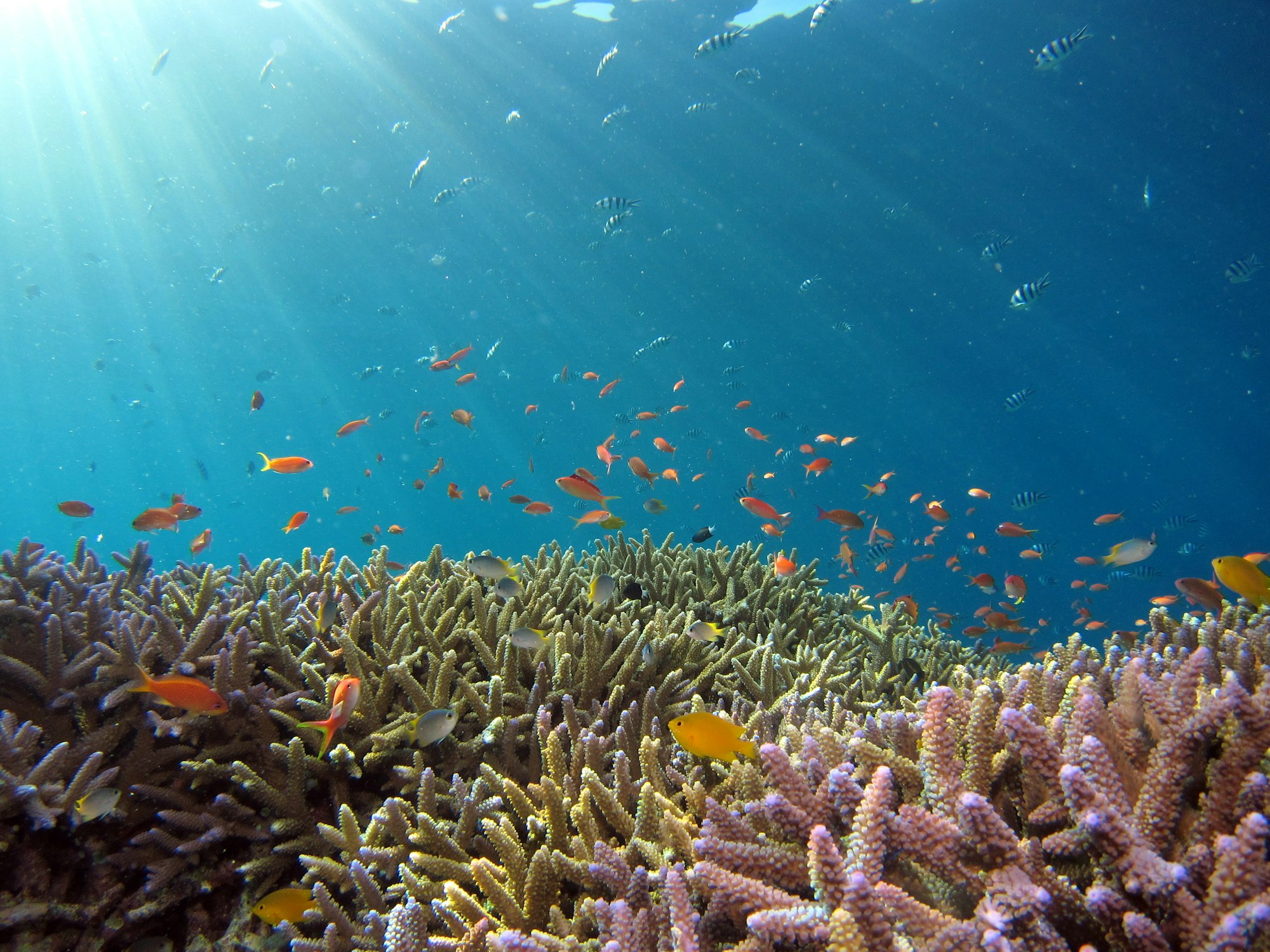
Halfway Wall runs along a section of Osprey Reef’s outer face where the reef descends as a gently sloping wall rather than a vertical drop. The wall surface is densely colonised by soft corals, sea fans, and whip corals — a feature of Osprey Reef’s remote Coral Sea position, where nutrient-rich currents sweep past and nourish filter feeders. The result is a wall that appears draped in a living tapestry, with soft corals of multiple species cascading down the face to the maximum dive depth.
The site provides an excellent middle option on Osprey Reef liveaboard itineraries — less intense than the North Horn shark feed but more varied than the standard Coral Sea reef dive.
Site Information
- Location: Osprey Reef (eastern face), Coral Sea, Queensland, Australia
- Entry Type: Boat dive
- Site Type: Wall dive
- Difficulty Level: Advanced
- Maximum Depth: 22 meters
- Typical Visibility: 25–40 metres
- Current: Variable; typically mild along the wall face
- Best Time: August to November
Marine Life
The soft coral forest on the wall hosts an array of associated species: sea fans are decorated with long-nosed hawkfish, and crinoids anchor to the branching structures and extend their feeding arms. Nudibranchs — including the large chromodoris species characteristic of the Coral Sea — move across the wall surface. Reef fish typical of the outer reef — surgeonfish, butterflyfish, Moorish idols — populate the upper wall. In the mid-water beyond the wall edge, grey reef sharks cruise, and occasional Spanish mackerel and wahoo flash through. Sea turtles rest on the broader ledges.
Dive Profile
Begin at the wall top at around 8 metres and descend slowly along the face to the maximum depth of 22 metres. The richest soft coral coverage is typically found between 12 and 18 metres. Ascend by moving across the face rather than straight up, to continue encountering new sections of wall. The reef top provides a comfortable safety stop zone with abundant fish life.
Entry and Exit
Liveaboard only. Descent direct from the surface to the wall top. Exit via SMB from open water with liveaboard tender pickup.
Tips and Recommendations
- Maintain your position on the wall rather than drifting into the blue — the best life is on the wall itself
- Use a focus light on the soft coral branches to illuminate the smaller animals living among them
- The wall is long enough to drift slowly with even a very gentle current — let the site come to you
Safety Considerations
Wall dives require consistent depth monitoring — it is easy to drift deeper than intended while focusing on wall subjects. Set a maximum depth alarm if your dive computer supports it. Osprey Reef’s remote location means conservative profiles are standard practice.
Photography
Halfway Wall excels for wide-angle photography with divers positioned against the soft coral backdrop and the blue water column extending below. Use a strobe to bring out the orange and red tones of the soft corals, which appear dull without artificial light at depth. Sea fans with associated hawkfish provide excellent close-focus wide-angle compositions.
Sources: Mike Ball Dive Expeditions - Osprey Reef Liveaboard, Spirit of Freedom - 4 Night Liveaboard, Dive the World - Osprey Reef, Cairns Dive Adventures - Osprey Reef. Last updated 2026-05-30.
Sea-surface temperature and wave height from Open-Meteo Marine (ERA5 reanalysis, monthly averages).
7981 verified species observations (89 species) logged within ~11 km of this site between 1984 and 2021, from the Ocean Biodiversity Information System.
- Carcharhinus amblyrhynchos · Grey Reef Shark
- Carcharhinus albimarginatus · Silvertip Shark
- Caranx ignobilis · Giant Trevally
- Pseudogramma polyacantha · False Gramma
- Gobiidae · Gobies
- Thalassoma
- Rhincodon typus · whale shark
- Siphamia
- Zanclus cornutus · Moorish Idol
- Trimma okinawae · Orange Spot Goby
- Apogonidae · Big Eyes
- Stegastes lacrymatus · Jewel Damsel
Scientific survey records skew toward sampled taxa (molluscs, corals) and do not reflect what you are guaranteed to see on a dive.
Source: OBIS (obis.org), aggregated Darwin Core occurrence records.
Conditions change with the tide and the season. If you have dived this site, share what it was actually like — date, visibility, current, and what you saw. Real, recent reports from divers are exactly what this guide is built to collect.
Send a conditions report ›