Lighthouse Bommie
14.8751°S 145.6900°E · pinnacle
Lighthouse Bommie is a coral pinnacle on Ribbon Reef No. 9 in the northern Great Barrier Reef, Queensland, Australia, and is considered one of the best night dive sites in the region.
Overview
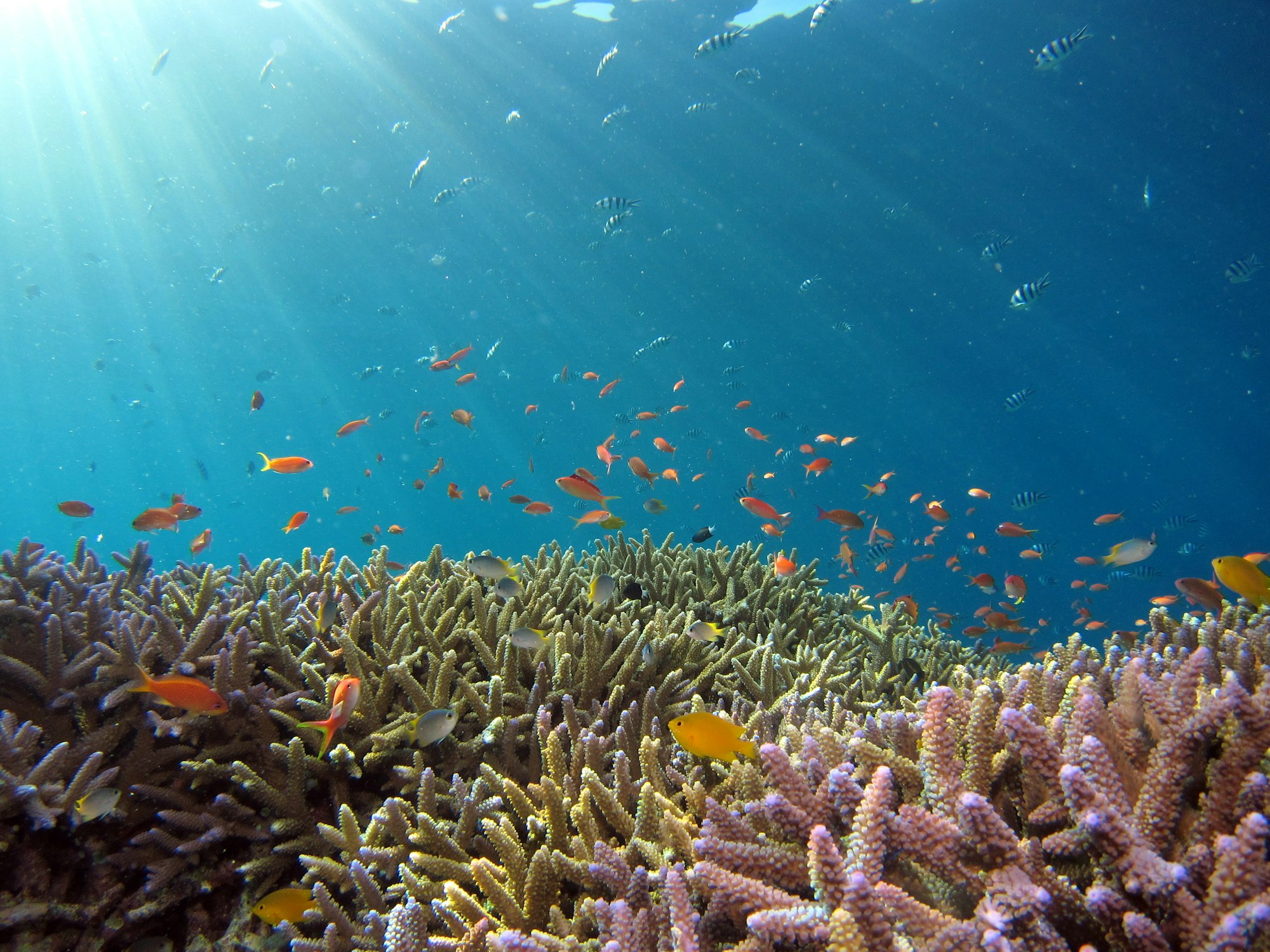
Lighthouse Bommie is a coral tower that rises from the seafloor at approximately 25 metres to around 5 metres depth, standing roughly 20 metres tall. The structure is dense with encrusting corals, sponges, and sea fans, and the overhangs and crevices throughout the bommie provide ideal habitat for the ambush predators and nocturnal animals that make night diving here exceptional.
During the day, the site offers a well-rounded experience — healthy coral coverage, a resident community of reef fish, and reliable sightings of larger species including moray eels, lionfish, and sweetlips. At night it transforms completely, with previously hidden critters emerging from every surface.
Site Information
- Location: Ribbon Reef No. 9, northern Great Barrier Reef, Queensland, Australia
- Entry Type: Boat dive
- Site Type: Pinnacle/seamount
- Difficulty Level: Intermediate
- Maximum Depth: 25 meters
- Typical Visibility: 15–30 metres
- Current: Variable; can strengthen with tidal changes
- Best Time: July to November
Marine Life
By day, Lighthouse Bommie hosts large moray eels — including giant morays — emerging partially from crevices throughout the structure. Lionfish hover in the overhangs, and aggregations of sweetlips and snapper school in the mid-water. Coral trout and hawksbill turtles are regular visitors. At night, Spanish dancer nudibranchs are reliably found on the upper surfaces — among the largest nudibranchs in the world, they can reach 60cm and undulate in a distinctive swimming motion when disturbed. Sleeping parrotfish in their mucous cocoons, hunting octopuses, and decorator crabs emerge as the light fades. Crayfish (spiny lobster) crowd the crevices after dark in numbers that can surprise first-time night divers.
Dive Profile
Daytime dives typically follow a circuit of the bommie, descending to the sandy base at 18–20 metres before working upward through the crevices and overhangs. Night dives are conducted from the liveaboard with torch and focus light; the bommie top at 5–8 metres is ideal for a leisurely night dive without deep commitments. Safety stops in the shallows around the pinnacle top are relaxed and rewarding.
Entry and Exit
Liveaboard access only from Cairns. Night dives are typically tethered to a shot line for orientation. Exit via SMB or direct retrieval from the liveaboard tender.
Tips and Recommendations
- This site is best appreciated as an evening or night dive — book a spot on the night dive roster
- Carry a primary torch and a backup — losing light at night on a bommie is disorienting
- Look for Spanish dancer nudibranchs on the sandy bottom and upper pinnacle surfaces in the first hour after dark
- Cuttlefish hunt along the sand edges at night — watch them stalk prey with colour-changing skin patterns
Safety Considerations
Night dives require careful buddy management and a pre-agreed surface signal. Monitor depth and time carefully in the dark. At Lighthouse Bommie the current can change with tidal shifts; check with the liveaboard crew before each dive. Always carry a signalling device.
Photography
The Spanish dancer nudibranch is the photographic trophy at Lighthouse Bommie. Its large size (up to 60cm) means standard macro lenses capture detailed close-ups, while wider focal lengths can capture the full animal in context. Use a torch for positioning, then a focus light for camera autofocus. The moray eels make excellent daytime portrait subjects in their crevice frames.
Sources: Spirit of Freedom - Ribbon Reefs, Great Barrier Reef Liveaboards - Ribbon Reefs, Cairns Tours - Ribbon Reefs, Diversion Dive Travel - Lighthouse Bommie. Last updated 2026-05-30.
Sea-surface temperature and wave height from Open-Meteo Marine (ERA5 reanalysis, monthly averages).
753 verified species observations (298 species) logged within ~11 km of this site between 1967 and 2024, from the Ocean Biodiversity Information System.
- Rhincodon typus · whale shark
- Amsichthys knighti · Bug-eyed Dottyback
- Istiompax indica · Black Marlin
- Trimma xanthum · Yellow-red Pygmygoby
- Cheilodipterus
- Lethrinus erythracanthus · Orange-finned Emperor
- Cirrhilabrus squirei
- Wetmorella nigropinnata · Sharpnose Wrasse
- Symphorichthys spilurus · Blue-lined Sea-bream
- Ecsenius australianus · Australian Blenny
- Cynoglossus
- Cheilodipterus macrodon · Big-toothed Cardinal
Scientific survey records skew toward sampled taxa (molluscs, corals) and do not reflect what you are guaranteed to see on a dive.
Source: OBIS (obis.org), aggregated Darwin Core occurrence records.
Conditions change with the tide and the season. If you have dived this site, share what it was actually like — date, visibility, current, and what you saw. Real, recent reports from divers are exactly what this guide is built to collect.
Send a conditions report ›