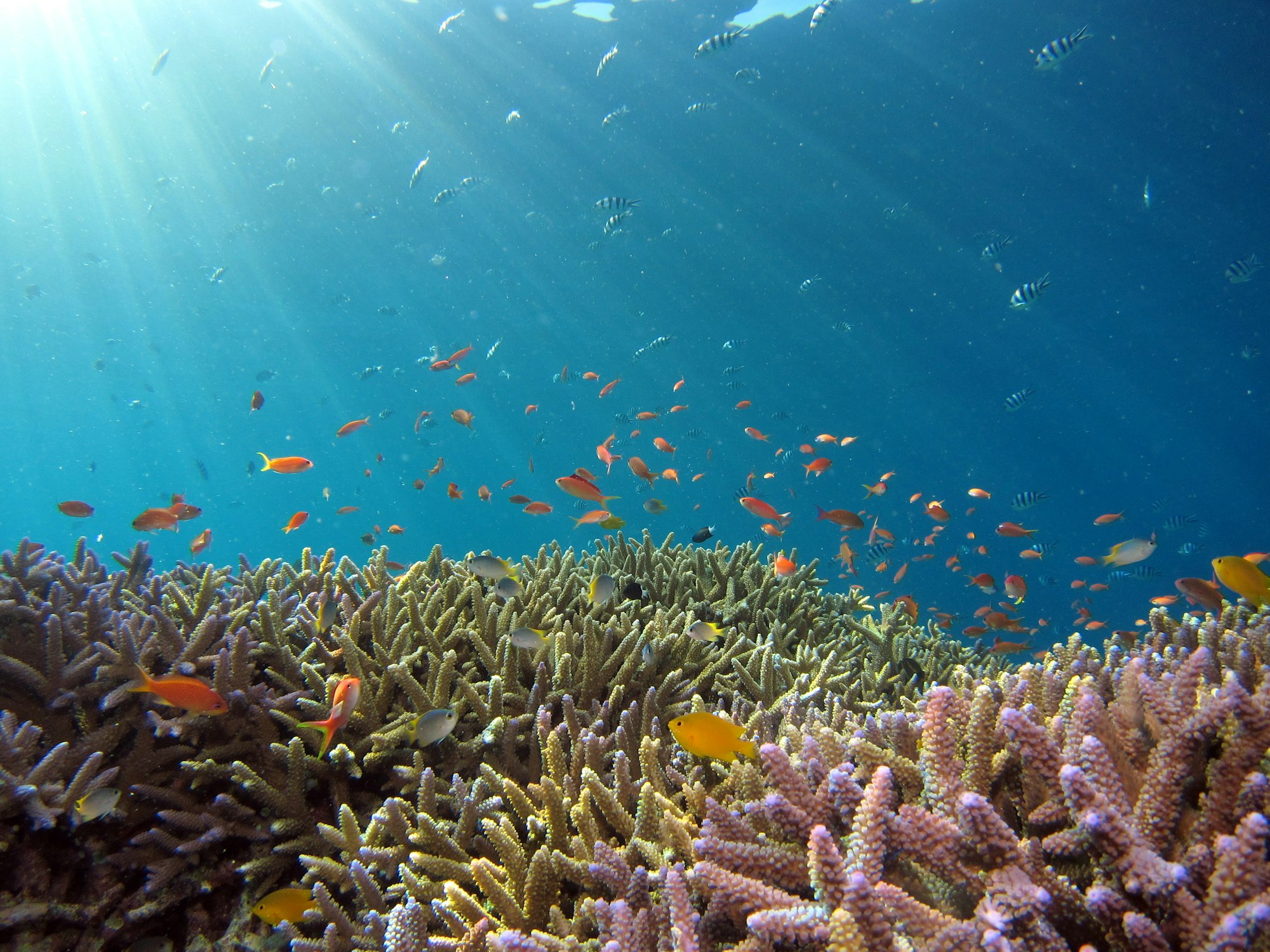
Moore Reef - 5 Ways
16.8596°S 146.2122°E · reef
Moore Reef - 5 Ways is a popular reef dive site on Moore Reef, approximately 40km east of Cairns on the outer Great Barrier Reef, Queensland, Australia.
Overview
Moore Reef is one of the most accessible outer reef destinations from Cairns, reached in approximately 90 minutes by high-speed catamaran. The 5 Ways site takes its name from the point where five separate reef channels meet, creating an intersection of current flows that concentrates food particles and, consequently, marine life. A permanent pontoon is maintained at Moore Reef, providing a stable platform for day-trip operations including guided snorkelling, introductory dives, and certified diver experiences.
The 5 Ways site is a short swim or boat transfer from the pontoon and offers the most diverse diving at Moore Reef. The converging channels create subtle current effects that keep the soft corals extended and attract midwater species to the confluence point.
Site Information
- Location: Moore Reef, outer Great Barrier Reef, approximately 40km east of Cairns, Queensland, Australia
- Entry Type: Boat dive
- Site Type: Reef
- Difficulty Level: Beginner
- Maximum Depth: 15 meters
- Typical Visibility: 10–25 metres
- Current: Mild at the confluence; predictable with tidal patterns
- Best Time: Year-round; July to October for best visibility
Marine Life
The five converging channels concentrate plankton and attract reef fish in feeding aggregations. Maori wrasse are numerous and confident around the pontoon area. Sea turtles are a near-guarantee at Moore Reef — both green and hawksbill turtles are resident in the reef system and frequently encountered at the 5 Ways site. Leopard sharks (zebra sharks) are commonly sighted resting on the sand. Whitetip reef sharks patrol the channel edges. The reef itself supports healthy hard coral coverage with butterflyfish, parrotfish, and surgeonfish in constant activity. Bumphead parrotfish groups occasionally pass through the channels.
Dive Profile
A shallow dive that stays within 15 metres, typically following the channel edges and crossing through the confluence area. Most of the marine life activity is in the 5–12 metre range. With a maximum depth of 15 metres, bottom time is generous — 50-60 minute dives are achievable for most divers, making this ideal for underwater photography and leisure exploration.
Entry and Exit
Day trips depart from Cairns marina (Reef Fleet Terminal) with multiple operators. Entry is from the pontoon dive platform or tender. Guided dives are available for beginners; certified divers can self-guide with a briefing. Exit via the pontoon dive platform ladder.
Tips and Recommendations
- Book the first dive slot on the pontoon to experience the site before the day’s snorkelling traffic begins
- The 5 Ways confluence is best during an incoming tide when current draws nutrients across the site
- Introductory (discover scuba) dives are well-suited to this site — it is shallow, calm, and rich in large, approachable marine life
- Ask about the resident turtle by name — pontoon dive guides typically know the individual animals
Safety Considerations
Moore Reef is the most supervised and supported dive environment on the GBR — the pontoon has trained staff in the water at all times during dive hours. Box jellyfish risk is managed with stinger suits provided to guests during the October–May season. Follow the guided dive briefing for current conditions on the day.
Photography
Moore Reef’s clear outer reef water and abundant large animals make it excellent for beginner underwater photographers. Sea turtles are the primary subject — approach slowly from the side and the turtles typically continue feeding, allowing close-range portraits. The maori wrasse are similarly cooperative. Wide-angle reef landscapes are achievable without strobes in the morning light.
Sources: Dive the World - Great Barrier Reef, Cairns Dive Adventures, Great Barrier Reef Tours. Last updated 2026-05-30.
Sea-surface temperature and wave height from Open-Meteo Marine (ERA5 reanalysis, monthly averages).
6597 verified species observations (194 species) logged within ~11 km of this site between 1970 and 2023, from the Ocean Biodiversity Information System.
- Chlorurus sordidus
- Acanthurus nigrofuscus
- Gomphosus varius
- Chrysiptera rex
- Zebrasoma scopas · Scopas surgeon
- Acanthochromis polyacanthus
- Chaetodon plebeius · Blue-dash butterflyfish
- Pomacentrus bankanensis
- Halichoeres hortulanus
- Epibulus insidiator
- Naso unicornis
- Plectroglyphidodon dickii
Scientific survey records skew toward sampled taxa (molluscs, corals) and do not reflect what you are guaranteed to see on a dive.
Source: OBIS (obis.org), aggregated Darwin Core occurrence records.
Conditions change with the tide and the season. If you have dived this site, share what it was actually like — date, visibility, current, and what you saw. Real, recent reports from divers are exactly what this guide is built to collect.
Send a conditions report ›