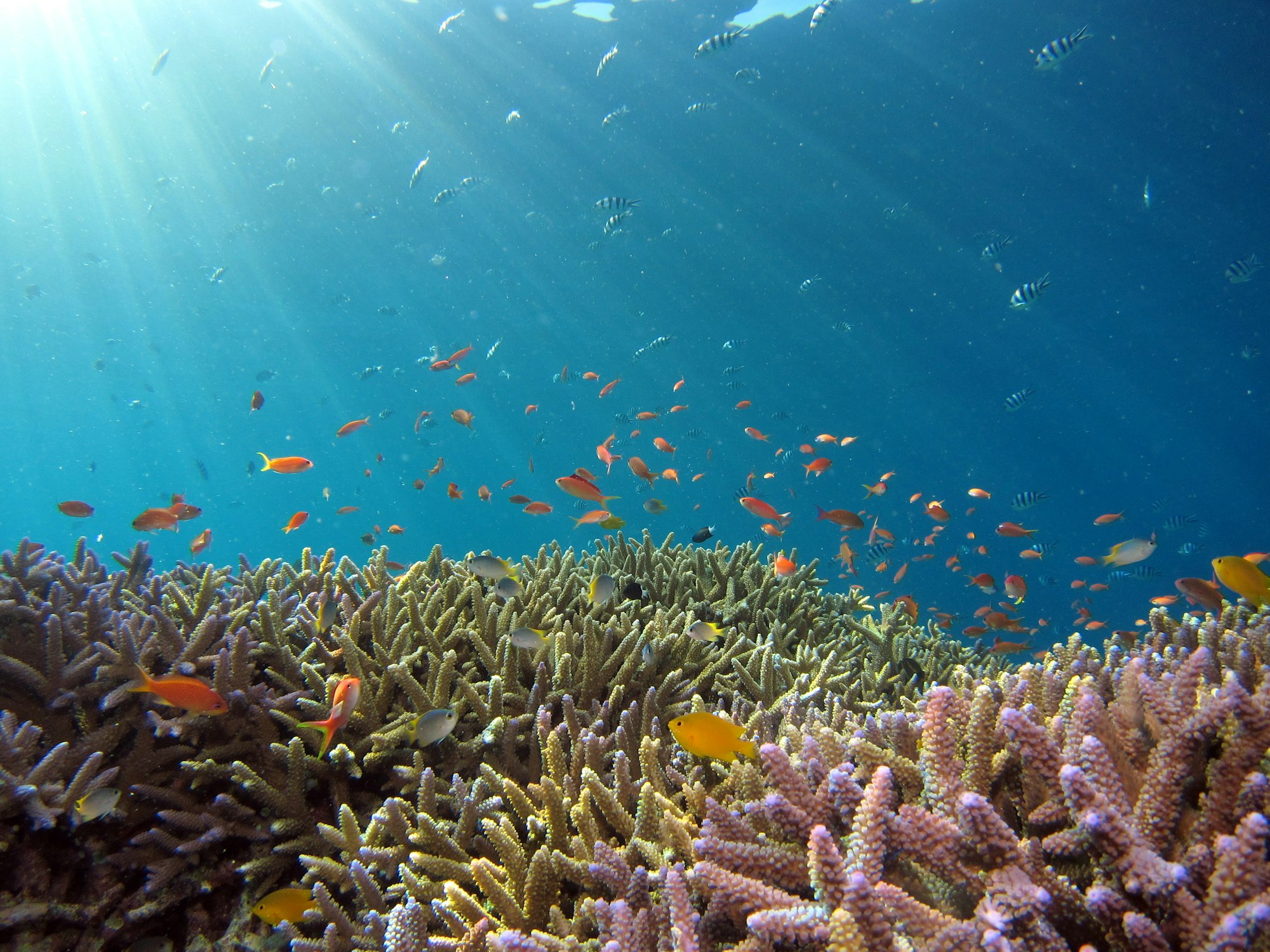
Moore Reef - Labyrinth
16.8758°S 146.1985°E · reef
Moore Reef - Labyrinth is a shallow reef dive site on Moore Reef, approximately 40km east of Cairns on the outer Great Barrier Reef, Queensland, Australia.
Overview
The Labyrinth is the most distinctive dive site on Moore Reef, offering a coral maze of narrow passages, swim-throughs, and interconnected channels that give the site its name. The formation is created by closely-spaced coral bommies and reef structures that have grown together at their tops while remaining separated below, creating a three-dimensional puzzle of passages and dead-ends that divers navigate at very shallow depths.
The maximum depth of just 12 metres makes the Labyrinth the shallowest and most relaxed dive site at Moore Reef. It is popular as a final dive of the day when air and bottom time are limited, and it is equally well-suited as an introductory dive for beginners encountering complex reef navigation for the first time.
Site Information
- Location: Moore Reef, outer Great Barrier Reef, approximately 40km east of Cairns, Queensland, Australia
- Entry Type: Boat dive
- Site Type: Reef
- Difficulty Level: Beginner
- Maximum Depth: 12 meters
- Typical Visibility: 10–20 metres
- Current: Minimal within the labyrinth
- Best Time: Year-round; July to October for optimal visibility
Marine Life
The enclosed passages of the Labyrinth create sheltered microhabitats that support species not found in open reef areas. Wobbegong sharks rest on the sand in corners and dead-ends of the maze. Juvenile fish use the passages as nursery areas — small wrasse, juvenile parrotfish, and juvenile surgeonfish are more abundant here than on the open reef. Coral coverage within the passages is dense and largely undisturbed; the complex architecture protects the inner structures from wave action and larger grazing animals. Moray eels are consistently present. The sandy pockets within the maze hold blue-spotted stingrays.
Dive Profile
Navigation through the Labyrinth is the primary challenge and appeal. Enter one of the passages at 8–10 metres and explore the network, finding routes upward through gaps and over the tops of the coral walls. Buoyancy control is critical to avoid contact with the coral as you navigate the passages. The whole site can be explored in a single dive, with most divers spending time finding the deeper passages before ascending through the shallower channels.
Entry and Exit
Day trips from Cairns on the Moore Reef pontoon. Entry from the pontoon dive platform. Exit to the pontoon after navigating back through the Labyrinth.
Tips and Recommendations
- Pre-dive orientation is important: the pontoon dive guides will give a compass heading for the exit — note it before you enter the maze
- Buoyancy control is critical here — do not grab or push off coral walls to navigate passages
- The site is ideal for buoyancy practice after an open-water course
- Wobbegong sharks in the dead-ends are a highlight — observe from a distance without cornering them
Safety Considerations
The enclosed passages could cause navigation confusion — always maintain a mental note of your orientation and ascent routes. Do not enter passages that narrow to the point where exit is uncertain. In poor visibility (uncommon at Moore Reef but possible after storms), use the compass provided during the briefing. Touch nothing — the coral walls are fragile and wobbegong sharks will bite if cornered.
Photography
The Labyrinth’s narrow passages create dramatic perspective shots — wide-angle images looking down a coral corridor are visually striking. The wobbegong sharks in the dead-ends are excellent subjects if approached carefully. Juvenile fish portraits reward a macro lens in the inner passages.
Sources: Dive the World - Great Barrier Reef, Cairns Dive Adventures, Great Barrier Reef Tours. Last updated 2026-05-30.
Sea-surface temperature and wave height from Open-Meteo Marine (ERA5 reanalysis, monthly averages).
6561 verified species observations (192 species) logged within ~11 km of this site between 1970 and 2023, from the Ocean Biodiversity Information System.
- Chlorurus sordidus
- Acanthurus nigrofuscus
- Gomphosus varius
- Chrysiptera rex
- Zebrasoma scopas · Scopas surgeon
- Acanthochromis polyacanthus
- Chaetodon plebeius · Blue-dash butterflyfish
- Pomacentrus bankanensis
- Halichoeres hortulanus
- Epibulus insidiator
- Naso unicornis
- Plectroglyphidodon dickii
Scientific survey records skew toward sampled taxa (molluscs, corals) and do not reflect what you are guaranteed to see on a dive.
Source: OBIS (obis.org), aggregated Darwin Core occurrence records.
Conditions change with the tide and the season. If you have dived this site, share what it was actually like — date, visibility, current, and what you saw. Real, recent reports from divers are exactly what this guide is built to collect.
Send a conditions report ›