Nursery Bommie
16.0310°S 145.8563°E · pinnacle
Nursery Bommie is a coral pinnacle dive site on the outer Great Barrier Reef near Port Douglas, Queensland, Australia.
Overview
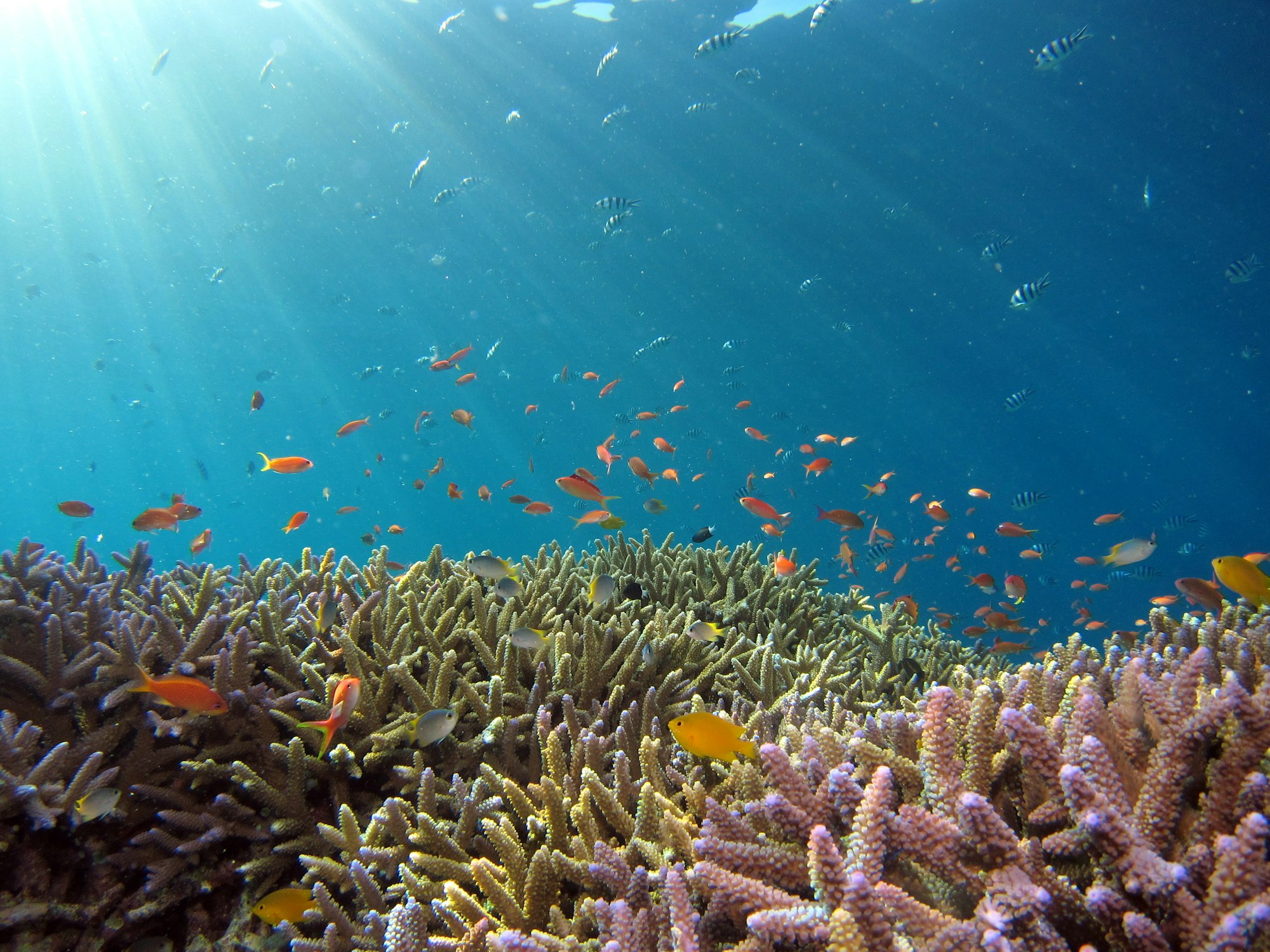
Nursery Bommie takes its name from the exceptional density of juvenile fish that shelter in and around the bommie’s structure. The complex architecture of the pinnacle — crevices, overhangs, soft coral branches, and anemone fields — provides ideal nursery habitat for the young of many reef species, creating concentrations of juvenile fish life that are not found on simpler reef structures.
The bommie rises to 20 metres on a sandy base, with the typical GBR bommie profile of a steep, colonised structure providing habitat across multiple depth zones simultaneously. The juvenile fish assemblage makes this site particularly interesting for divers interested in fish identification and behavioural observation.
Site Information
- Location: Outer Great Barrier Reef near Port Douglas, Queensland, Australia
- Entry Type: Boat dive
- Site Type: Pinnacle/seamount
- Difficulty Level: Beginner
- Maximum Depth: 20 meters
- Typical Visibility: 15–25 metres
- Current: Mild
- Best Time: August to November; year-round
Marine Life
Juvenile fish are the defining feature — small parrotfish, juvenile wrasse, baby grouper, and the larvae-stage young of many species that are invisible at other times find refuge in the bommie’s structure. Adult fish are equally present: maori wrasse, large coral grouper, and lionfish occupy the bigger crevices. Clownfish colonies in the anemones are a constant attraction. The sandy base holds blue-spotted stingrays. Nudibranchs are reliable on the soft coral surfaces. The site name notwithstanding, adult reef sharks patrol the deeper margins — whitetip reef sharks resting on the sand at 18–20 metres are common.
Dive Profile
Begin at the sandy base at 18–20 metres to observe the resting sharks and stingrays before ascending the bommie structure. The densest juvenile fish activity is in the 8–15 metre zone, particularly around the anemone clusters and soft coral branches. Finish the dive circling the bommie top at 5–8 metres in the best light.
Entry and Exit
Boat access from Port Douglas or liveaboard. Standard bommie descent by shot line or free descent. Exit via SMB with boat pickup.
Tips and Recommendations
- Take time to study the juvenile fish — the bommie is an outdoor fish identification class, with juvenile colour phases of common species present at every depth
- The clownfish colonies are highly photogenic and reliably easy to approach
- Look carefully in the crevices for juvenile moray eels and small reef fish hiding from the adult predators that also use the bommie
Safety Considerations
Standard outer reef dive. The maximum depth of 20 metres requires attention to no-decompression limits if doing multiple dives. Mild conditions overall.
Photography
The juvenile fish at Nursery Bommie are unusual photographic subjects — the juvenile colour phases of common species are often strikingly different from adults and make interesting images. Wide-angle bommie shots with the anthias cloud and clownfish anemone in frame are straightforward here. A macro lens rewards patient searching among the coral.
Sources: Silverseries - Silversonic Port Douglas, Visit Port Douglas - Agincourt Reef, Poseidon Cruises Port Douglas. Last updated 2026-05-30.
Sea-surface temperature and wave height from Open-Meteo Marine (ERA5 reanalysis, monthly averages).
10862 verified species observations (213 species) logged within ~11 km of this site between 1919 and 2019, from the Ocean Biodiversity Information System.
- Scarus niger
- Acanthochromis polyacanthus
- Acanthurus nigrofuscus
- Plectroglyphidodon johnstonianus
- Zebrasoma scopas
- Pycnochromis margaritifer
- Pomacentrus philippinus
- Plectroglyphidodon dickii
- Chlorurus sordidus
- Scarus globiceps
- Pycnochromis vanderbilti
- Pomacentrus bankanensis
Scientific survey records skew toward sampled taxa (molluscs, corals) and do not reflect what you are guaranteed to see on a dive.
Source: OBIS (obis.org), aggregated Darwin Core occurrence records.
Conditions change with the tide and the season. If you have dived this site, share what it was actually like — date, visibility, current, and what you saw. Real, recent reports from divers are exactly what this guide is built to collect.
Send a conditions report ›