Pixie Gardens
14.9281°S 145.6773°E · reef
Pixie Gardens is a shallow coral garden in the Ribbon Reefs of the northern Great Barrier Reef, Queensland, Australia, situated immediately adjacent to the famous Pixie Pinnacle.
Overview
Where Pixie Pinnacle rewards patient macro hunters on a single bommie, Pixie Gardens extends the diving experience across a broad, gently sloping coral garden that spreads out from the base of the pinnacle. The site reaches a maximum depth of just 12 metres, making it ideal for new divers, snorkellers making their first scuba dives, and underwater photographers looking to extend their bottom time in excellent conditions.
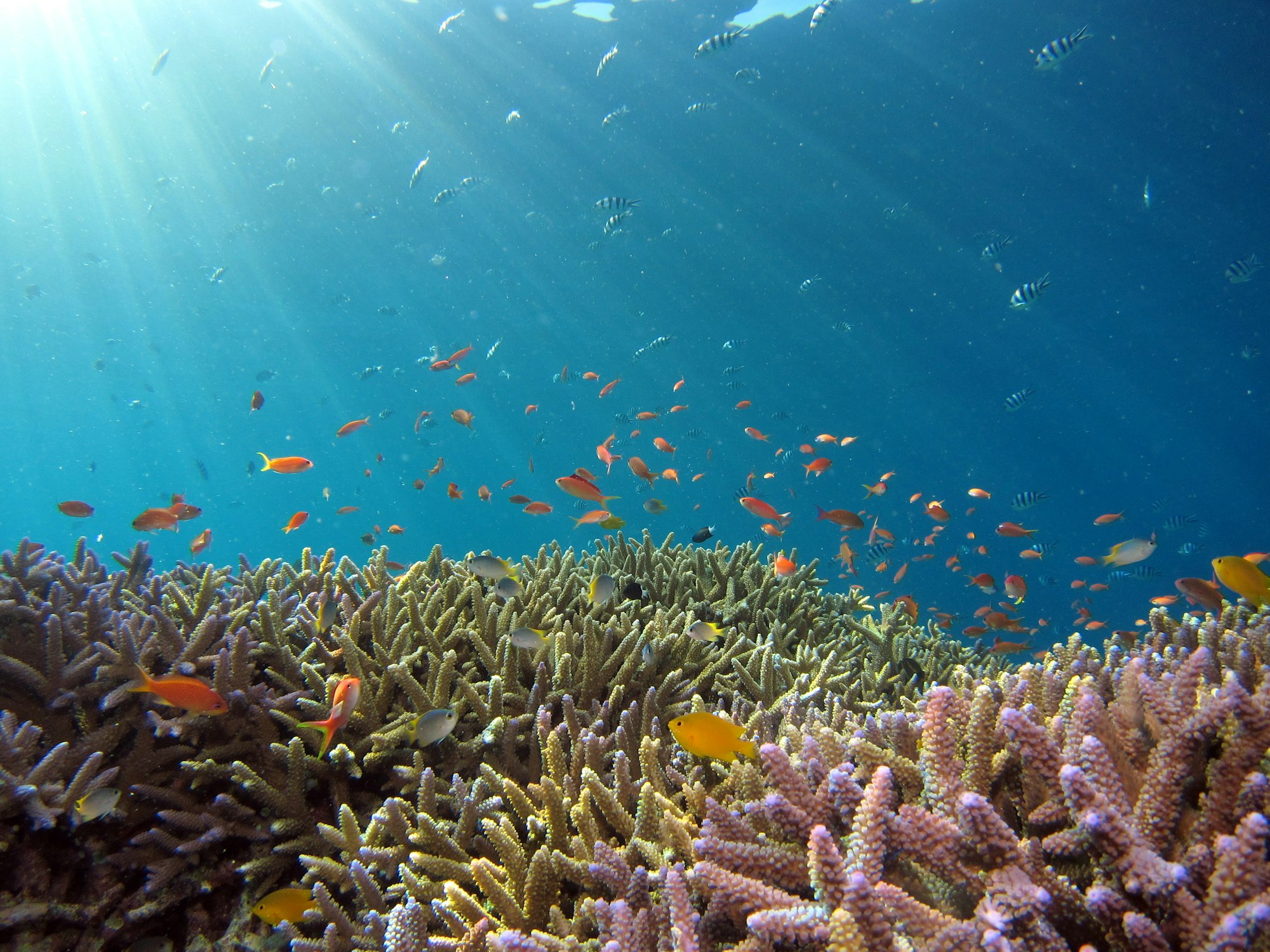
Coral coverage is exceptional — table corals, branching staghorns, brain corals, and encrusting plate corals compete for space across the reef flat, while gardens of soft coral and anemone fields fill the lower zones. The shallow depth means natural light penetrates fully throughout the dive, giving the site a luminous quality that deeper sites cannot match.
Site Information
- Location: Ribbon Reefs (adjacent to Pixie Pinnacle), northern Great Barrier Reef, Queensland, Australia
- Entry Type: Boat dive
- Site Type: Reef
- Difficulty Level: Beginner
- Maximum Depth: 12 meters
- Typical Visibility: 15–30 metres
- Current: Generally mild
- Best Time: July to November
Marine Life
The shallow coral garden teems with reef fish: parrotfish, surgeonfish, butterflyfish, and wrasse move through the corals in constant activity. Clownfish colonies inhabit the numerous anemone patches scattered across the garden. Sea turtles regularly browse the coral, and hawksbill turtles are often found feeding on sponges. Blue-spotted stingrays rest on the sandy channels between coral heads. The site’s proximity to Pixie Pinnacle means nudibranchs and pipefish spill over from the bommie into the garden, and the same pygmy seahorses known from the pinnacle’s sea fans extend into the garden’s outer reaches.
Dive Profile
A relaxed, meandering swim through the coral garden at any depth from 3 to 12 metres. The reef flat at 5–8 metres provides the densest coral coverage. Divers can spend extended time here given the shallow depth — 60-minute dives are comfortable for most certified divers at 8–10 metres. A natural circuit back to the liveaboard mooring is easily navigated.
Entry and Exit
Liveaboard access only. Free descent from the surface; the shallowest sections are visible from the surface in good visibility. Exit via swim back to the liveaboard or SMB deployment.
Tips and Recommendations
- Combine with a dive on Pixie Pinnacle for a contrast between concentrated bommie life and spread-out garden diving
- Ideal for reef photography with natural light — no strobe is needed in the top 8 metres during morning dives
- Look for sleeping nurse sharks in the sandy channels between coral heads
- An excellent site for divers building open-water experience in warm, clear, shallow conditions
Safety Considerations
The site is exceptionally safe for its target audience. The main consideration is sun protection — long surface intervals in tropical Queensland require appropriate sun coverage. Box jellyfish risk exists in inshore waters during the wet season (November–April); Ribbon Reef sites are considered lower risk than coastal sites but caution is advised.
Photography
Pixie Gardens is a natural-light photographer’s venue. The 5–10 metre depth zone at midday allows reef photography without strobes, rendering the hard corals in their true colours against the blue water background. Wide-angle reef landscapes and close-focus wide-angle shots of resident clownfish are both well-served here. The site also offers good close-up work on the anemone colonies.
Sources: Spirit of Freedom - Ribbon Reefs itinerary, Dive the World - Ribbon Reefs, Cairns Dive Adventures - Ribbon Reefs. Last updated 2026-05-30.
Sea-surface temperature and wave height from Open-Meteo Marine (ERA5 reanalysis, monthly averages).
940 verified species observations (327 species) logged within ~11 km of this site between 1967 and 2024, from the Ocean Biodiversity Information System.
- Rhincodon typus · whale shark
- Amsichthys knighti · Bug-eyed Dottyback
- Trimma xanthum · Yellow-red Pygmygoby
- Pristiapogon fraenatus · Bridled Cardinalfish
- Ostorhinchus nigrofasciatus · Black-striped Cardinalfish
- Cheilodipterus
- Gobiidae · Gobies
- Istiompax indica
- Festucalex gibbsi · Gibb's Pipefish
- Cirrhilabrus squirei
- Wetmorella nigropinnata · Sharpnose Wrasse
- Symphorichthys spilurus · Blue-lined Sea-bream
Scientific survey records skew toward sampled taxa (molluscs, corals) and do not reflect what you are guaranteed to see on a dive.
Source: OBIS (obis.org), aggregated Darwin Core occurrence records.
Conditions change with the tide and the season. If you have dived this site, share what it was actually like — date, visibility, current, and what you saw. Real, recent reports from divers are exactly what this guide is built to collect.
Send a conditions report ›