Round the Bend
13.8912°S 146.5529°E · reef
Round the Bend is a reef dive site at Osprey Reef in the Coral Sea, situated near the northern tip of the atoll, Queensland, Australia.
Overview
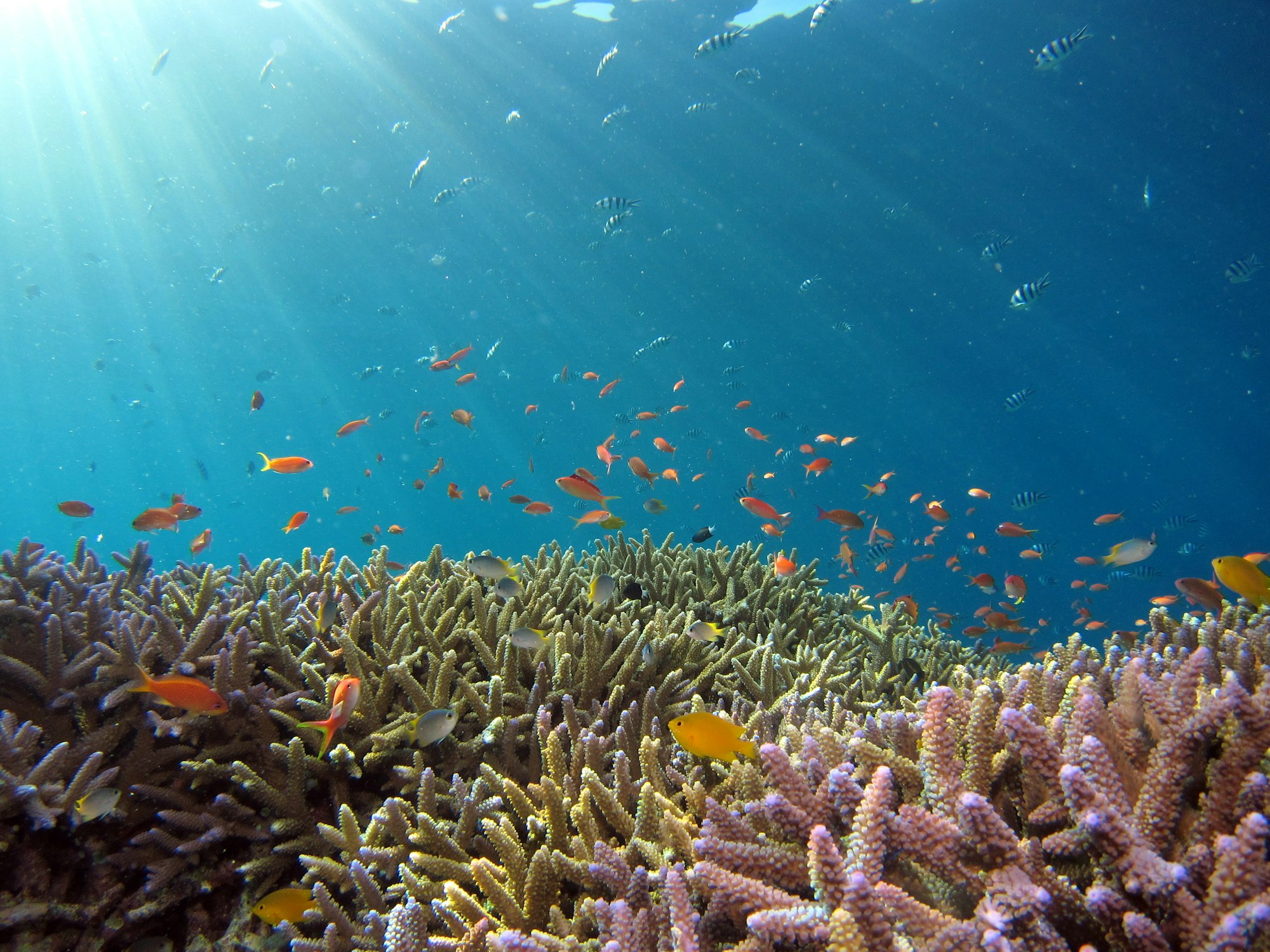
Round the Bend takes its name from its position just around the corner from the dramatic North Horn shark feed site. Divers who have just experienced the intensity of North Horn are often surprised by how different this nearby site feels — calmer, more intimate, and focused on the reef rather than the open water. The site follows the edge of Osprey Reef’s northern plateau, where the reef drops away on one side to deep water while shallower reef gardens spread inward toward the atoll lagoon.
The contrast between the exposed outer wall and the sheltered inner reef creates excellent diversity: wall species on the outer edge and garden reef species in the shallower sections, all within a single dive.
Site Information
- Location: Osprey Reef (northern section), Coral Sea, Queensland, Australia
- Entry Type: Boat dive
- Site Type: Reef
- Difficulty Level: Advanced
- Maximum Depth: 18 meters
- Typical Visibility: 25–40 metres
- Current: Variable; can be stronger at the corner point
- Best Time: August to November
Marine Life
The Coral Sea’s exceptional water clarity means the fish life at Round the Bend is highly visible from a distance. Grey reef sharks are present throughout, often cruising the reef edge in small groups. Large Napoleon wrasse make regular appearances, and schools of bumphead parrotfish occasionally pass through on their grazing circuits. The reef gardens hold dense populations of butterflyfish, moorish idols, and anthias, while the wall face features sea fans and whip corals. Sea turtles and eagle rays are commonly sighted in the mid-water.
Dive Profile
A gentle arc following the reef edge from shallow (8 metres) to the maximum dive depth at 18 metres, then returning via the reef top. The corner point where the site rounds from the wall exposure to the sheltered garden is typically the most productive area for pelagic sightings. Currents at the corner can create up-currents — maintain buoyancy control during transitions.
Entry and Exit
Liveaboard access; Osprey Reef is reached after approximately 18–24 hours from Cairns. Entry by giant stride with descent to the reef edge. Exit via SMB and liveaboard tender pickup.
Tips and Recommendations
- Dive this site as a complement to North Horn — the contrast between the two experiences is part of what makes Osprey Reef memorable
- Watch the blue water off the wall edge for passing pelagics — barracuda, tuna, and occasional hammerheads are sighted here
- The corner point concentrates current-driven plankton, attracting feeding activity — position yourself there early in the dive
Safety Considerations
Osprey Reef’s remote location means any medical assistance is hours away; conservative dive planning is prudent. The corner at Round the Bend can produce localised current — monitor your position relative to the reef and be prepared to abort the corner approach if current is strong.
Photography
Coral Sea visibility makes Round the Bend excellent for wide-angle shooting. Frame reef fish against the blue water column, or shoot along the reef edge at 15 metres with divers silhouetted above. The Napoleon wrasse and grey reef sharks make reliable wide-angle subjects.
Sources: Mike Ball Dive Expeditions - Osprey Reef Liveaboard, Spirit of Freedom - 4 Night Liveaboard, Dive the World - Osprey Reef, Cairns Dive Adventures - Osprey Reef. Last updated 2026-05-30.
Sea-surface temperature and wave height from Open-Meteo Marine (ERA5 reanalysis, monthly averages).
8003 verified species observations (90 species) logged within ~11 km of this site between 1984 and 2021, from the Ocean Biodiversity Information System.
- Carcharhinus amblyrhynchos · Grey Reef Shark
- Carcharhinus albimarginatus · Silvertip Shark
- Caranx ignobilis · Giant Trevally
- Pseudogramma polyacantha · False Gramma
- Gobiidae · Gobies
- Thalassoma
- Rhincodon typus · whale shark
- Siphamia
- Zanclus cornutus · Moorish Idol
- Trimma okinawae · Orange Spot Goby
- Apogonidae · Big Eyes
- Stegastes lacrymatus · Jewel Damsel
Scientific survey records skew toward sampled taxa (molluscs, corals) and do not reflect what you are guaranteed to see on a dive.
Source: OBIS (obis.org), aggregated Darwin Core occurrence records.
Conditions change with the tide and the season. If you have dived this site, share what it was actually like — date, visibility, current, and what you saw. Real, recent reports from divers are exactly what this guide is built to collect.
Send a conditions report ›