Guradoo South
3.8899°N 73.4673°E · reef
Guradoo South is a sheltered reef dive along the inner southern face of Guradoo Island in South Male Atoll — a calmer counterpart to Guradoo South Outside, with excellent coral coverage and reliable turtle sightings.
Overview
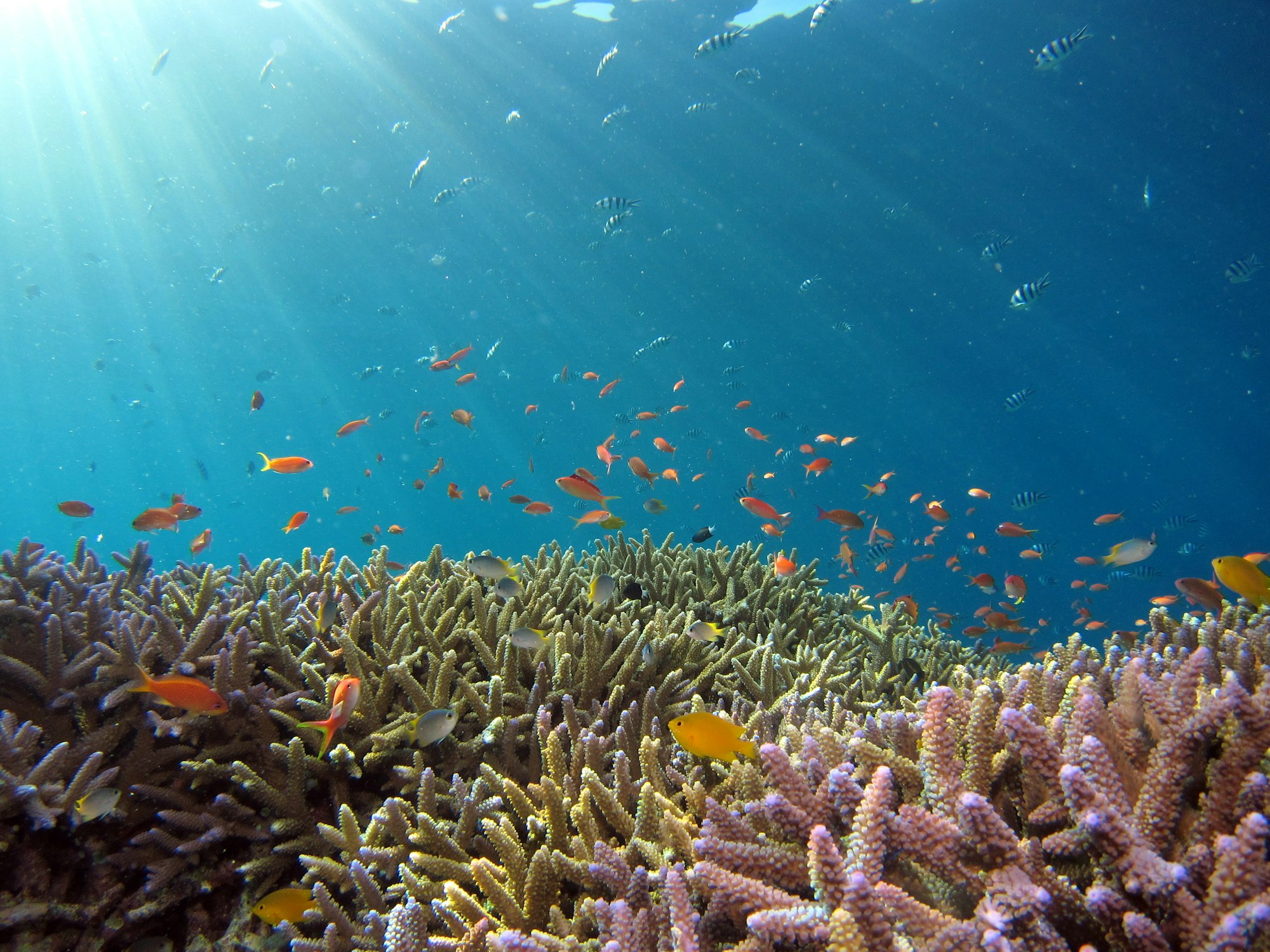
Protected from the full force of oceanic swells, Guradoo South offers a more relaxed dive along a gently sloping reef that descends to 25 metres. The inner wall is characterised by healthy hard coral gardens — particularly impressive table corals and branching Acropora between 8 and 15 metres — and dense aggregations of reef fish. Hawksbill turtles are regularly encountered grazing on sponges in the mid-depth zone, and the sandy patches at the reef base are home to garden eels and blue-spotted stingrays. Fusilier schools drift along the wall, and Napoleon wrasse make regular appearances near the deeper coral heads. Currents are generally light, making this suitable for photographers and divers wanting a more relaxed pace. Visibility averages 15–25 metres. Water temperature stays at 27–29°C.
Site Information
- Location: Maldives, Asia
- Entry Type: Boat dive
- Depth: Up to 25m
- Difficulty: Intermediate
- Site Type: Reef
Marine Life
Hawksbill turtles, Napoleon wrasse, blue-spotted stingrays, garden eels, fusiliers, grouper, anthias, and occasional eagle rays along the deeper reef edge.
Diving Conditions
| Condition | Details |
|---|---|
| Visibility | 15–25m |
| Current | Light |
| Water Temp | 27–29°C |
| Best Season | Year-round |
Tips for Divers
An ideal site for underwater photography thanks to calm conditions and plentiful subjects. Pair this dive with Guradoo South Outside on the same day to experience the contrast between the sheltered inner reef and the exposed outer face.
Sea-surface temperature and wave height from Open-Meteo Marine (ERA5 reanalysis, monthly averages).
64 verified species observations (41 species) logged within ~11 km of this site between 1984 and 2023, from the Ocean Biodiversity Information System.
- Ascidiacea
- Gempylus serpens
- Phyllidia alyta
- Pteraeolidia ianthina
- Phyllidiella rosans
- Goniobranchus tritos
- Phyllidiella zeylanica
- Phyllidia exquisita
- Coriocella hibyae
- Phyllidia ocellata
- Melithaea
- Astrogorgia
Scientific survey records skew toward sampled taxa (molluscs, corals) and do not reflect what you are guaranteed to see on a dive.
Source: OBIS (obis.org), aggregated Darwin Core occurrence records.
Conditions change with the tide and the season. If you have dived this site, share what it was actually like — date, visibility, current, and what you saw. Real, recent reports from divers are exactly what this guide is built to collect.
Send a conditions report ›