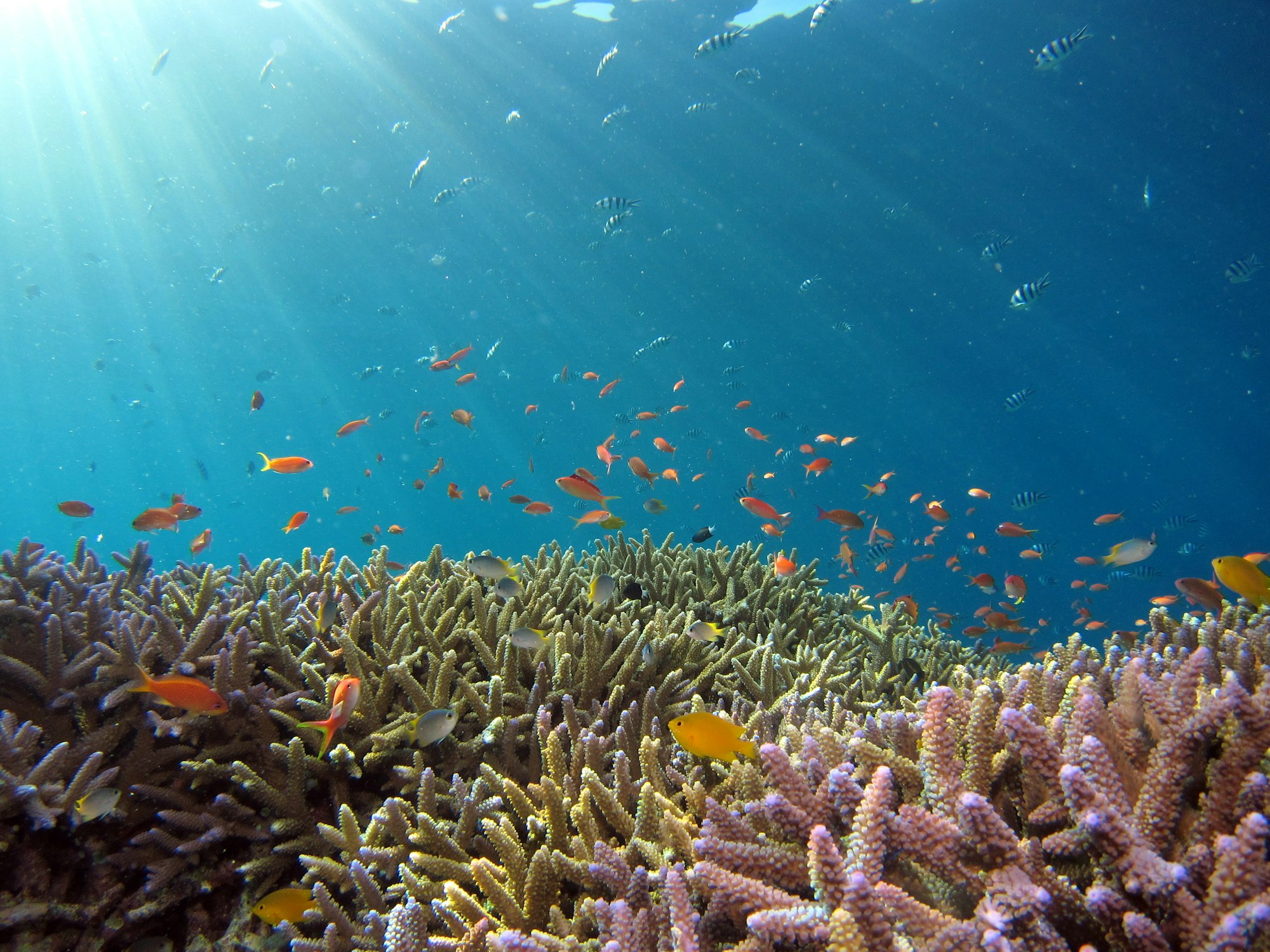
Vaageli Faru Tila
3.9437°N 73.3544°E · pinnacle
Vaageli Faru Tila is a submerged pinnacle (thila) associated with the Vaageli reef system in South Male Atoll, rising from the sandy floor to within snorkelling depth of the surface. Its isolated, open-water position concentrates marine life that seeks the structure for shelter, cleaning, and hunting opportunities, making it a consistently productive dive within the Vaageli site cluster.
Site Conditions
- Depth range: 5–25 m
- Typical visibility: 15–25 m
- Currents: Variable around the exposed pinnacle; can be strong
- Best season: November–April for northeast monsoon visibility
What to Expect
The pinnacle’s summit is carpeted with branching and encrusting corals alive with reef chromis and anthias, creating a vivid mosaic of colour and movement. The flanks descend through successive zones of increasing soft coral and gorgonian fan coverage. Cleaning stations on the mid-section pinnacle wall attract Napoleon wrasse, large grouper, and patrolling reef sharks to queue for attention from cleaner wrasse. The open sandy bottom around the base harbours blue-spotted ribbontail rays and garden eels that emerge from their burrows in calm conditions. Grey reef sharks regularly orbit the structure, while eagle rays sweep past in the blue water beyond.
Tips for Divers
As a standalone pinnacle, the tila requires confident open-water buoyancy and awareness of surge effects on the exposed summit. Divers can spend the entire dive circumnavigating the pinnacle on a gradual descent-and-ascent loop. The shallow summit makes a rewarding extended safety stop. The site is best combined with Vaageli Tila, Vaageli Corner, or the Vaageli Faru wall dives for a comprehensive day on the reef complex.
Sea-surface temperature and wave height from Open-Meteo Marine (ERA5 reanalysis, monthly averages).
100 verified species observations (65 species) logged within ~11 km of this site between 1987 and 2023, from the Ocean Biodiversity Information System.
- Gnatholepis
- Trimma emeryi
- Trimma flammeum
- Trimma striatum
- Eviota nebulosa
- Trimma naudei
- Styelidae
- Caracanthus maculatus
- Paragobiodon modestus
- Paragobiodon
- Phyllidiella rosans
- Phyllidia alyta
Scientific survey records skew toward sampled taxa (molluscs, corals) and do not reflect what you are guaranteed to see on a dive.
Source: OBIS (obis.org), aggregated Darwin Core occurrence records.
Conditions change with the tide and the season. If you have dived this site, share what it was actually like — date, visibility, current, and what you saw. Real, recent reports from divers are exactly what this guide is built to collect.
Send a conditions report ›