Vaageli Tila
3.9438°N 73.3623°E · pinnacle
Vaageli Tila is a submerged pinnacle in South Male Atoll, positioned slightly apart from the main Vaageli reef system in open water that makes it a dedicated pinnacle dive. Like all Maldivian thilas, it functions as a reef oasis in otherwise open water, drawing marine life from the surrounding atoll to its coral-encrusted flanks.
Site Conditions
- Depth range: 5–25 m
- Typical visibility: 15–25 m
- Currents: Variable; can be strong around the exposed pinnacle
- Best season: November–April for northeast monsoon clarity
What to Expect
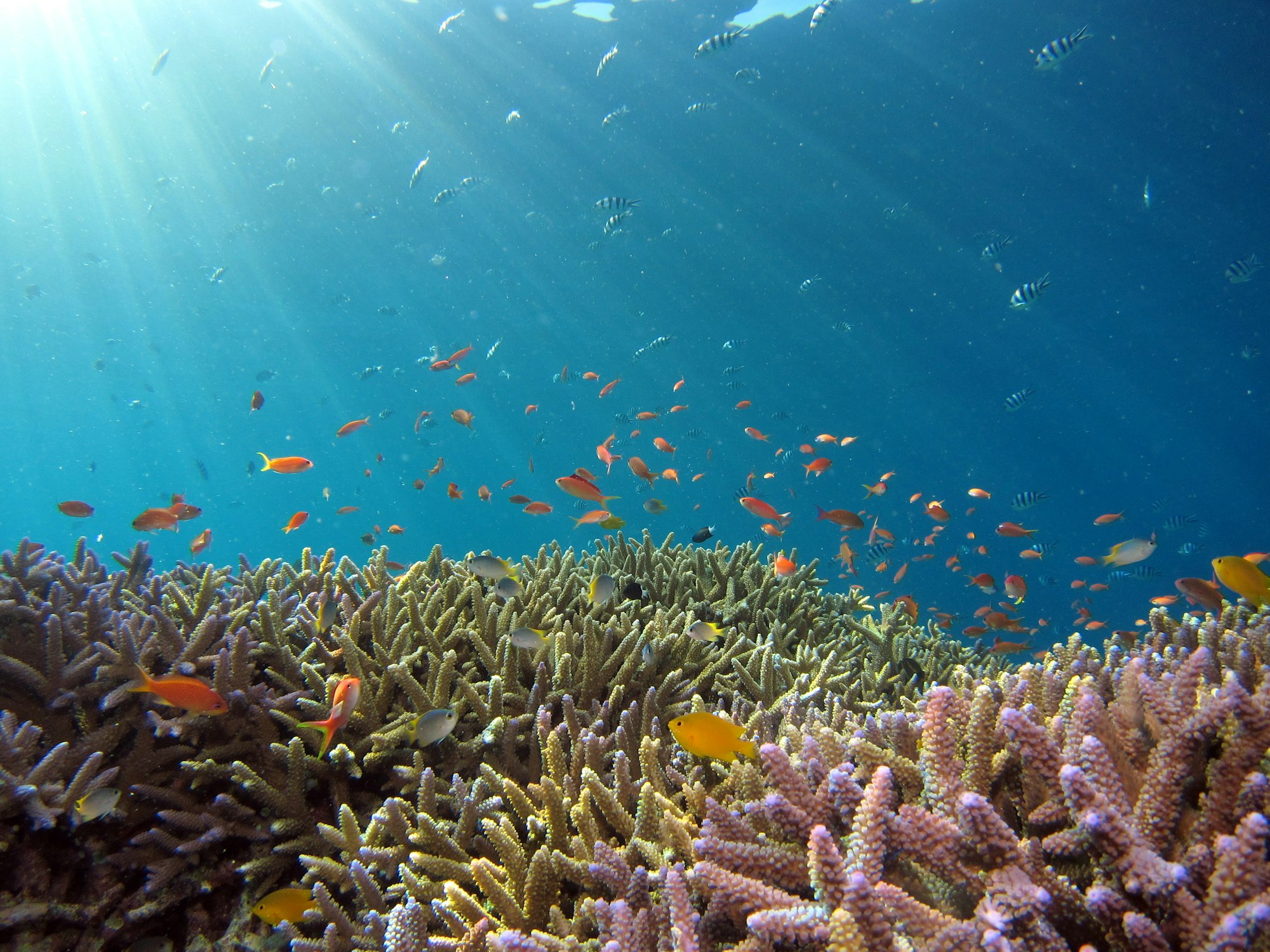
The pinnacle rises steeply from 25 metres to within 5 metres of the surface, its entire surface colonised with hard and soft corals, sea fans, and encrusting growth. Schooling fusiliers and glassfish create dense, shifting clouds around the upper sections, while larger predators — trevally, tuna, and reef sharks — orbit the pinnacle at depth. Cleaning stations are established at several points on the flanks, and Napoleon wrasse are regular visitors to these stations. Hawksbill turtles are frequently sighted resting on the summit coral, and white-tip reef sharks often lie in loose groups on the sandy patches around the base. The pinnacle’s location between the main reef sites and the open atoll makes pelagic cameos a frequent bonus.
Tips for Divers
The pinnacle can be circumnavigated in two directions — clockwise with the current favoured for the more dramatic pelagic action on the exposed side, counter-clockwise for a more sheltered dive. Gas management needs accounting for the open-water setting; there is no easy reef to ascend along if air runs short. This site pairs naturally with Vaageli Faru Tila for a double-pinnacle day on the Vaageli reef complex.
Sea-surface temperature and wave height from Open-Meteo Marine (ERA5 reanalysis, monthly averages).
126 verified species observations (77 species) logged within ~11 km of this site between 1984 and 2023, from the Ocean Biodiversity Information System.
- Gnatholepis
- Trimma emeryi
- Trimma flammeum
- Trimma striatum
- Eviota nebulosa
- Trimma naudei
- Styelidae
- Caracanthus maculatus
- Paragobiodon modestus
- Paragobiodon
- Phyllidiella rosans
- Phyllidia alyta
Scientific survey records skew toward sampled taxa (molluscs, corals) and do not reflect what you are guaranteed to see on a dive.
Source: OBIS (obis.org), aggregated Darwin Core occurrence records.
Conditions change with the tide and the season. If you have dived this site, share what it was actually like — date, visibility, current, and what you saw. Real, recent reports from divers are exactly what this guide is built to collect.
Send a conditions report ›