Ulong Channel
7.2834°N 134.2447°E · drift
Ulong Channel
Known as one of Palau’s greatest drift dives, this channel west of Ulong Island funnels tidal currents past towering lettuce coral formations, garden eel colonies, and grey reef sharks
Overview
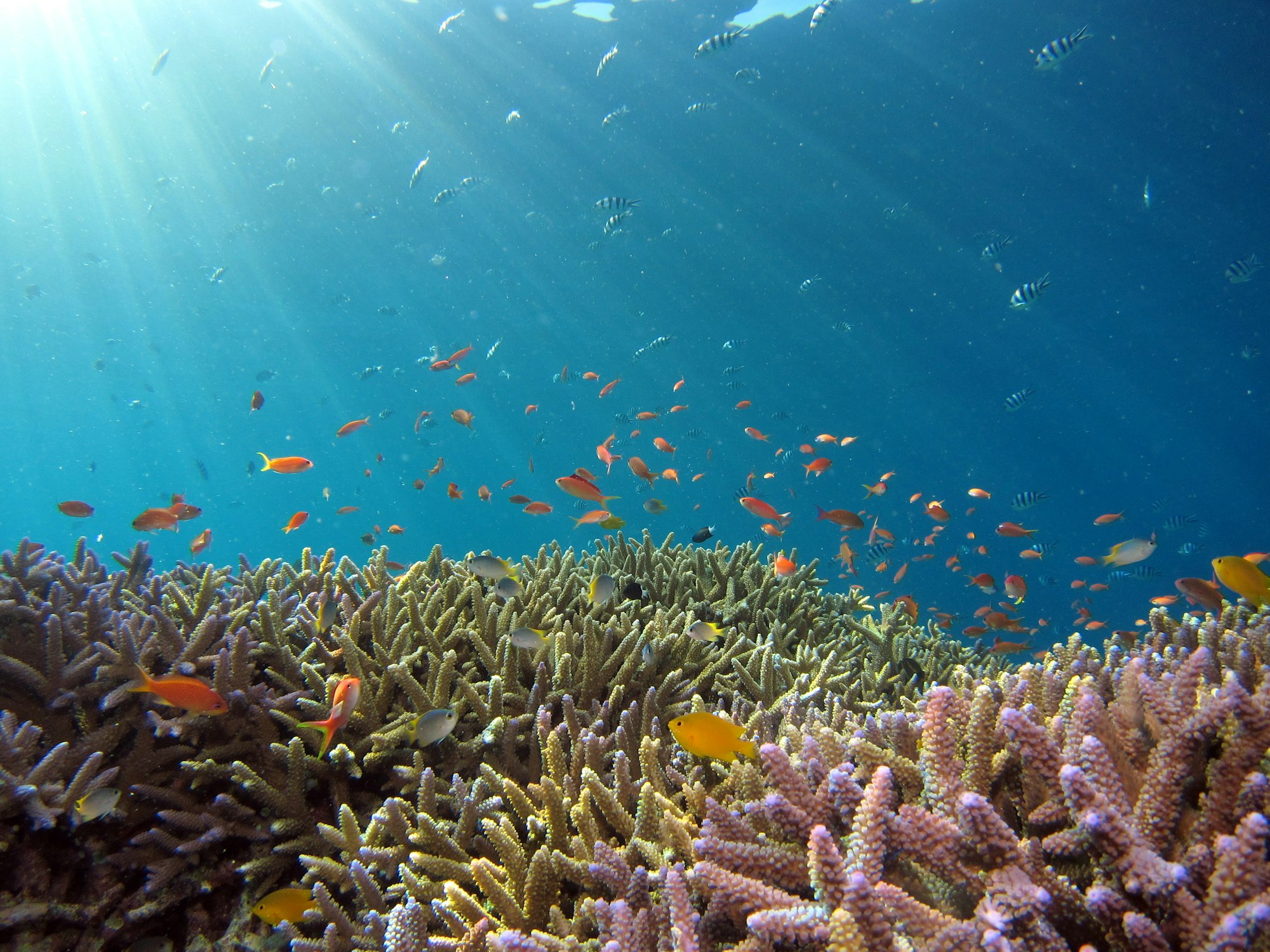
Ulong Channel is a natural cut west of Ulong Island on Palau’s western barrier reef, approximately 15 miles (24 km) from Koror — a 30–40 minute speedboat ride. As the tide changes, water funnels through the channel, and divers enter at the reef side to ride the current through the passage. The sandy bottom ranges from 10–40 feet (3–13 meters) depending on tidal state, with wall diving beginning at around 60 feet. The channel is particularly notable for enormous lettuce coral formations reaching 15–20 feet high that line the sandy bottom, housing schools of soldierfish. Garden eel colonies extend throughout the sandy areas. Grey reef sharks and whitetip reef sharks are present at the channel entrance. During April–July full moons, thousands of snappers and groupers gather at the channel to spawn — an unusual spectacle where groupers are seen schooling like jacks or barracudas.
Site Information
- Location: West of Ulong Island, Rock Islands, Palau, Micronesia
- Entry Type: Boat dive
- Site Type: Drift dive
- Difficulty Level: Advanced
- Maximum Depth: 13 meters
- Typical Visibility: 15–29 meters (50–95 feet); best on incoming tide
- Current: Strong to very strong, unpredictable; direction can reverse mid-dive
- Best Time: Year-round; best on strong incoming tide; spawning aggregations April–July full moons
Marine Life
Grey reef sharks cruise the channel entrance and are seen throughout the site. Whitetip reef sharks rest on the sandy bottom — approach slowly for close encounters. Garden eel colonies inhabit the sandy areas, visible extending from their burrows to feed on plankton. Enormous lettuce coral formations shelter hundreds of soldierfish. Schools of snappers, jacks, batfish, and barracuda move through the channel. Stingrays are found on the sandy bottom. During April–July full moon periods, large spawning aggregations of snappers and groupers occur at this site.
Dive Profile
Divers are dropped upstream of the channel entrance and descend to approximately 60 feet, where the current picks up. The drift carries divers through the channel over approximately 10 minutes before the channel mouth. After exiting, the sandy runoff area at the channel entrance reaches deeper depths where garden eels are found. Total dive time is typically 45–55 minutes, with post-channel reef exploration making up the bulk. This is a drift dive — the boat follows and collects divers at the end.
Entry and Exit
Boat access from Koror (approximately 30–40 minutes). The boat drops divers upstream of the channel entrance, timing the drop to tidal current. Divers descend quickly and enter the channel. Exit is a drift pickup — deploy an SMB during the safety stop for the boat to track. Communication with the boat captain regarding current timing is essential.
Tips and Recommendations
- Dive on a strong incoming tide for the best visibility and most active conditions
- Keep arms tucked and streamlined to avoid snagging on coral structures during the drift
- Slow your approach to the garden eel colonies — move gently and they will stay extended for photographs
- During April–July full moons, ask your operator about timing dives to the spawning aggregations
- A reef hook may be useful at the channel entrance if the guide stops the group to observe sharks
Safety Considerations
The strong and unpredictable current is the defining feature and the primary hazard. Divers must be comfortable in strong drift conditions and able to control buoyancy precisely. Current direction can change partway through the dive — stay with your guide. Do not fight the current; go with it. Ensure gear is streamlined with nothing dangling. An SMB is mandatory for the drift pickup. This site requires current-diving experience and is not suitable for beginners regardless of depth. Titan triggerfish nest here during the spawning season — do not swim directly over nesting sites.
Photography
The towering lettuce coral formations make striking wide-angle subjects — position a diver near the coral for scale. The garden eel colonies at the channel exit offer macro or close-focus wide-angle opportunities; approach slowly from downstream to avoid spooking the eels. Sharks at the channel entrance photograph well in the blue water column. Video suits this dive well for capturing the current-driven transit and the spawning aggregations when conditions align.
Sources: Fish N Fins Palau – Ulong Channel, Palau Dive Adventures, LT Dive – Ulong Channel. Last updated 2026-06-25.
Sea-surface temperature and wave height from Open-Meteo Marine (ERA5 reanalysis, monthly averages).
3780 verified species observations (326 species) logged within ~11 km of this site between 1953 and 2012, from the Ocean Biodiversity Information System.
- Acanthurus nigricauda
- Parupeneus multifasciatus
- Chaetodon lunulatus
- Chaetodon ephippium
- Aphareus furca
- Scolopsis bilineata
- Scarus schlegeli
- Heniochus chrysostomus
- Eviota
- Hemigymnus melapterus
- Heniochus varius
- Gnathodentex aureolineatus
Scientific survey records skew toward sampled taxa (molluscs, corals) and do not reflect what you are guaranteed to see on a dive.
Source: OBIS (obis.org), aggregated Darwin Core occurrence records.
Conditions change with the tide and the season. If you have dived this site, share what it was actually like — date, visibility, current, and what you saw. Real, recent reports from divers are exactly what this guide is built to collect.
Send a conditions report ›