Bird Islet Wall
8.8250°N 119.8417°E · wall
Bird Islet Wall is a wall dive site in Philippines Tubbataha Reefs, Asia.
Overview
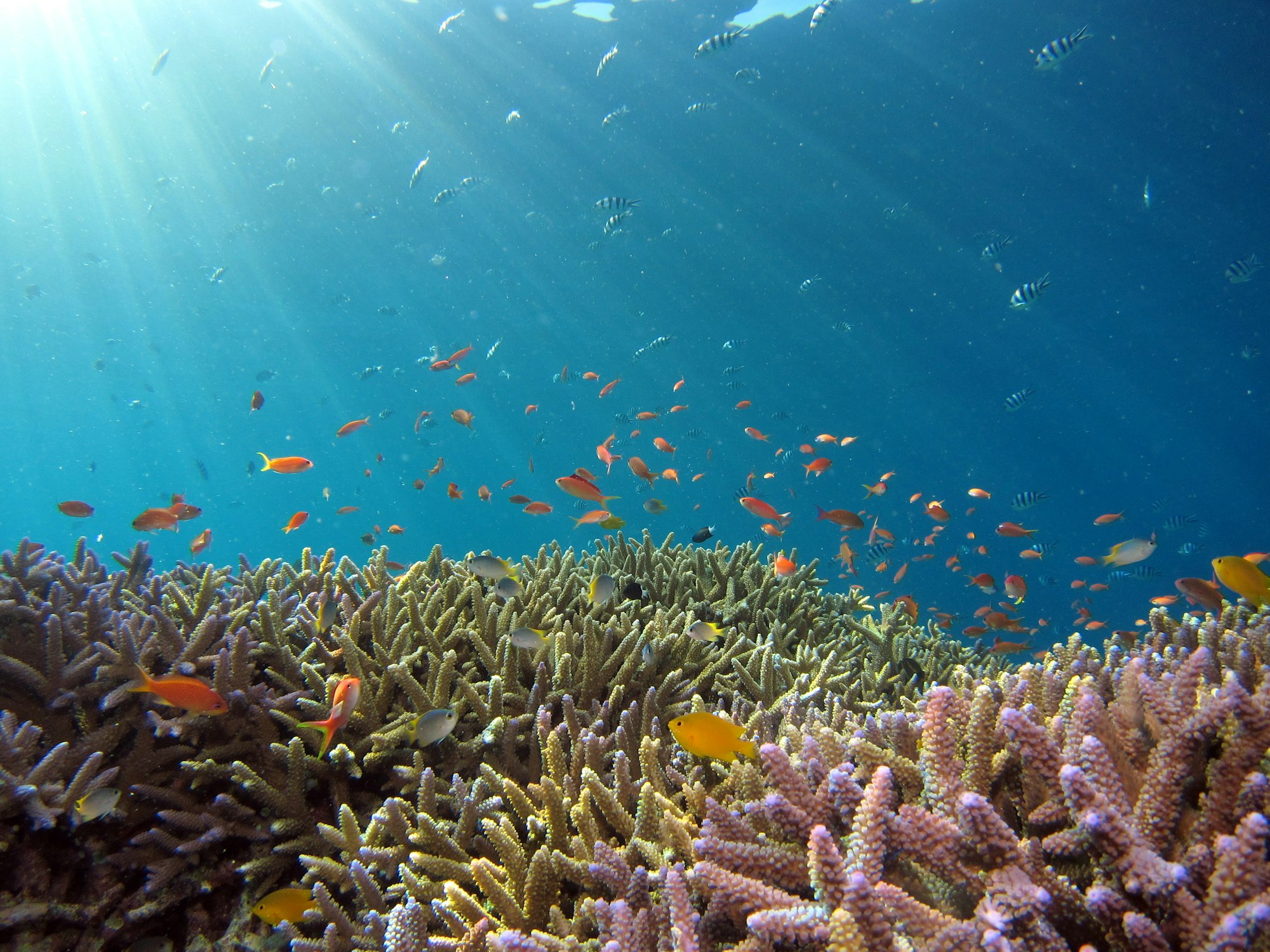
Bird Islet Wall drops off the northern edge of Tubbataha’s North Atoll in a sheer curtain draped with gorgonian fans and dense soft corals, with visibility regularly reaching 30-40 meters in the UNESCO World Heritage park’s pristine Sulu Sea waters. The wall starts shallow at the reef top and plunges beyond recreational limits, drawing grey reef sharks, hammerheads, and the occasional whale shark cruising in the blue alongside schools of trevally and barracuda. This liveaboard-only site is accessible just three months a year, from mid-March to mid-June, when seas flatten and the park opens its gates.
Site Information
- Location: Philippines Tubbataha Reefs, Asia
- Entry Type: liveaboard
- Site Type: Wall dive
- Difficulty Level: Advanced
- Maximum Depth: 35 meters
Marine Life
Bird Islet Wall is a classic Tubbataha pelagic site, with grey reef sharks and hammerheads patrolling the blue beyond the wall and whale sharks occasionally cruising past in the Sulu Sea’s famously clear water. Dense schools of trevally and barracuda work the wall edge where the current runs, while hawksbill turtles and napoleon wrasse are steady fixtures on the gorgonian-draped wall face. The pristine hard coral reef top, protected as part of the UNESCO World Heritage park, supports dense populations of reef fish with high species diversity.
Sources: Bluewater Dive Travel Tubbataha Reef, Divehappy Tubbataha Reef Guide, Dive The World Tubbataha Philippines, WWF Tubbataha Reef Diving, Guide to the Philippines Tubbataha Diving. Last updated 2026-04-04.
Sea-surface temperature and wave height from Open-Meteo Marine (ERA5 reanalysis, monthly averages).
108991 verified species observations (67 species) logged within ~11 km of this site between 2023 and 2023, from the Ocean Biodiversity Information System.
- Chordata
- Actinopteri
- Mammalia
- Chrysiptera
- Chlorurus
- Caesio lunaris
- Lutjanus
- Lutjanus bohar
- Parupeneus indicus
- Oxycheilinus bimaculatus
- Chrysiptera brownriggii
- Cephalopholis
Scientific survey records skew toward sampled taxa (molluscs, corals) and do not reflect what you are guaranteed to see on a dive.
Source: OBIS (obis.org), aggregated Darwin Core occurrence records.
Conditions change with the tide and the season. If you have dived this site, share what it was actually like — date, visibility, current, and what you saw. Real, recent reports from divers are exactly what this guide is built to collect.
Send a conditions report ›