Black Rock
8.8333°N 119.8500°E · reef
Black Rock is a dramatic diving site in the Tubbataha Reefs Natural Park — a UNESCO World Heritage Site in the Sulu Sea — where a distinctive dark rock formation breaks the surface of one of the world’s most remote and pristine reef ecosystems.
Overview
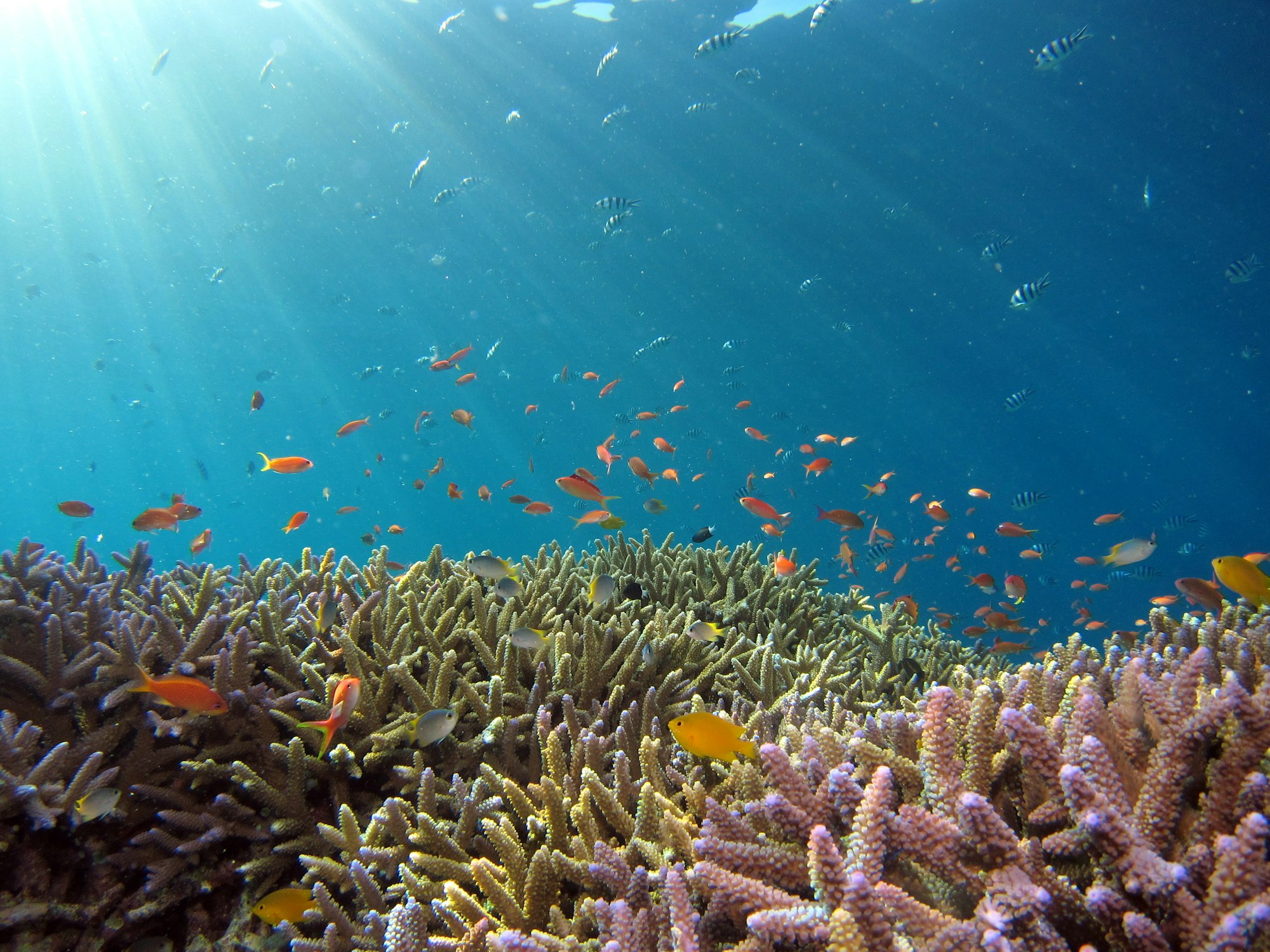
Tubbataha Reefs Natural Park protects two large coral atolls and a smaller reef in the Sulu Sea, accessible only by liveaboard during the March to June season when conditions permit. Black Rock sits within this protected area, its dark basaltic appearance contrasting with the surrounding turquoise water. The underwater structure drops steeply from the surface to 35 meters, with encrusted walls supporting dense sea fan growth, soft corals, and sponge communities. The site’s position within the UNESCO park means it benefits from complete commercial fishing exclusion and strict visitor management — the result is marine life density that divers describe as among the highest in the world.
Site Information
- Location: Tubbataha Reefs Natural Park, Sulu Sea, Philippines
- Entry Type: liveaboard
- Site Type: Reef
- Difficulty Level: Advanced
- Maximum Depth: 35 meters
- Typical Visibility: 20-40 meters
- Current: Variable; can be strong on exposed rock faces
- Best Time: March to June (only time park is open to liveaboards)
Marine Life
Tubbataha is celebrated for exceptional shark diversity and density. Whitetip reef sharks are ubiquitous and often congregate around rock formations like Black Rock. Grey reef sharks patrol the deeper sections. Hammerhead sharks are possible in the Tubbataha area. Sea turtles nest on the atolls and are commonly seen underwater. Napoleon wrasse in large sizes, rarely seen at more visited sites, are common. Giant trevally, dogtooth tuna, and schools of barracuda occupy the open water around the rock. Manta rays visit seasonally.
Dive Profile
Descend along the rock face, keeping it on one side as you work down to 30–35 meters along the wall. The sea fan and soft coral growth is densest in the 15–30 meter range. Work back up the wall on the return, taking time in the shallow sections where light penetration creates excellent visibility across the reef. A safety stop at 5 meters on the shallow rock ledge provides additional time with the abundant life.
Entry and Exit
Access exclusively by liveaboard vessel with Tubbataha permits. Dinghy deployment from the liveaboard; entry by giant stride from the dinghy. SMB deployment for return to the dinghy. All diving in Tubbataha must follow park ranger protocols.
Tips and Recommendations
- Tubbataha liveaboards are booked many months in advance — plan your trip well ahead
- The park’s six-week accessible season (March to June) is non-negotiable; don’t plan otherwise
- Bring a reliable dive computer — the wall diving and shark activity at Tubbataha encourages depth creep
- Wide-angle photography is the priority at Tubbataha; sharks, mantas, and reef panoramas dominate
- The UNESCO status means strict no-touch, no-collect rules; violations are taken extremely seriously
Safety Considerations
Tubbataha’s remote location (180 km from Puerto Princesa) means medical evacuation would take many hours. Dive conservatively. The park rangers are thorough in their enforcement of safety protocols. Current can be strong on exposed rock faces; be prepared for changing conditions. Always carry an SMB.
Photography
Black Rock offers spectacular wide-angle shooting with wall structure, sea fans, and shark encounters as primary subjects. The exceptional clarity of Tubbataha water (20–40 meters visibility is normal) allows capturing the full scale of the reef structure. Dawn dives in the park have particularly beautiful light quality.
Sources: Bluewater Dive Travel Tubbataha Reef, Divehappy Tubbataha Reef Guide, Dive The World Tubbataha Philippines, WWF Tubbataha Reef Diving, Guide to the Philippines Tubbataha Diving. Last updated 2026-04-04.
Sea-surface temperature and wave height from Open-Meteo Marine (ERA5 reanalysis, monthly averages).
108991 verified species observations (67 species) logged within ~11 km of this site between 2023 and 2023, from the Ocean Biodiversity Information System.
- Chordata
- Actinopteri
- Mammalia
- Chrysiptera
- Chlorurus
- Caesio lunaris
- Lutjanus
- Lutjanus bohar
- Parupeneus indicus
- Oxycheilinus bimaculatus
- Chrysiptera brownriggii
- Cephalopholis
Scientific survey records skew toward sampled taxa (molluscs, corals) and do not reflect what you are guaranteed to see on a dive.
Source: OBIS (obis.org), aggregated Darwin Core occurrence records.
Conditions change with the tide and the season. If you have dived this site, share what it was actually like — date, visibility, current, and what you saw. Real, recent reports from divers are exactly what this guide is built to collect.
Send a conditions report ›