Jesse Beazley Reef
9.0466°N 119.8143°E · reef
Jesse Beazley Reef is an isolated submerged atoll in the Tubbataha Reefs Natural Park system, the northernmost feature of the UNESCO World Heritage Site and separated from the main North and South Atolls by open Sulu Sea, creating a uniquely remote and pristine diving location.
Overview
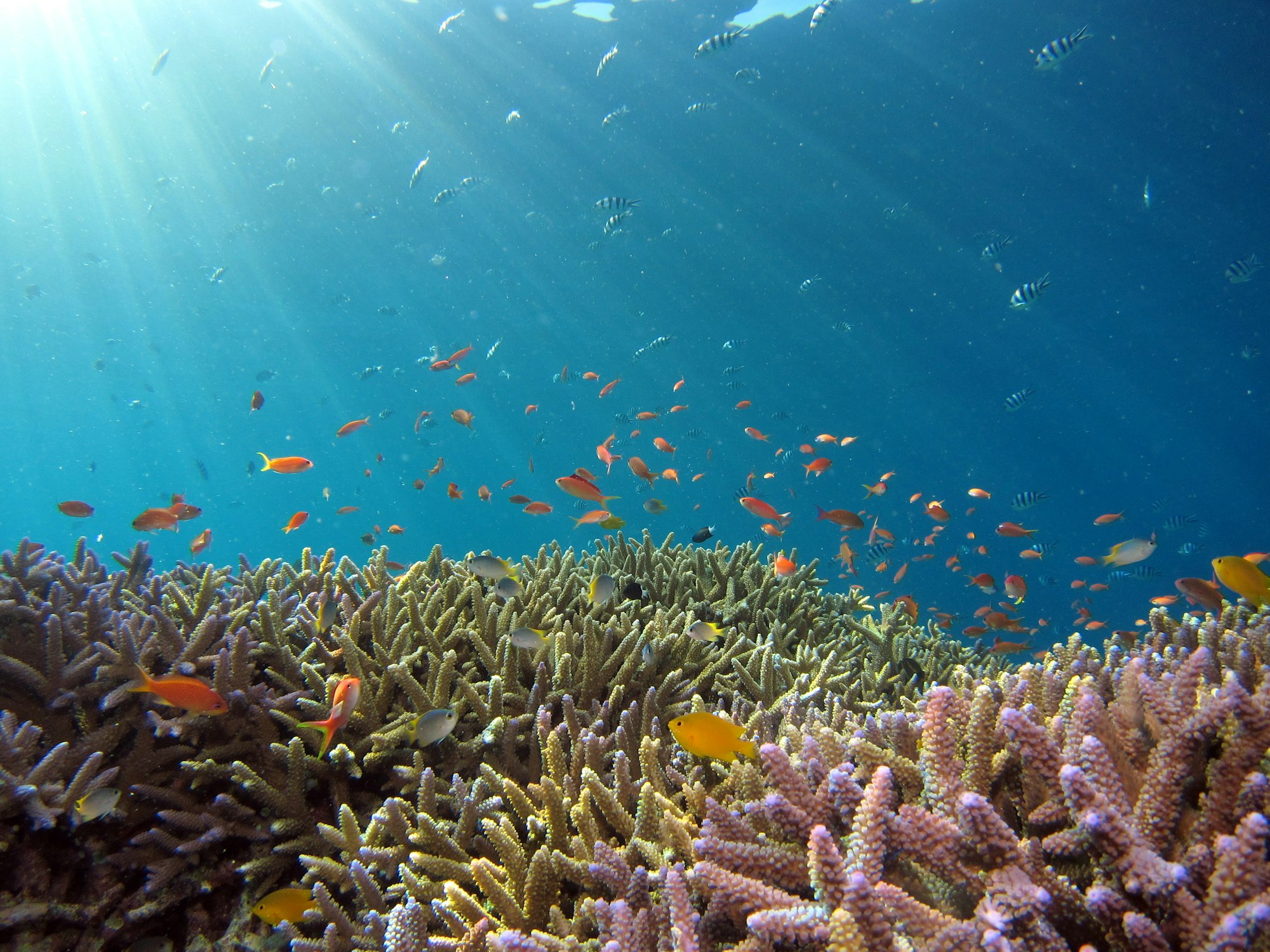
Jesse Beazley Reef sits alone in the Sulu Sea, a submerged circular atoll whose rim supports spectacular coral growth while the interior lagoon provides relatively sheltered conditions compared to the park’s exposed outer walls. The reef’s isolation — even within the remote Tubbataha park — means it receives the fewest diver visits of any site in the area, and the marine life has an undisturbed character that even regular Tubbataha visitors describe as exceptional. The outer reef walls drop steeply from near the surface to deep water, with the accessible zone to 30 meters encompassing the densest coral and fish life. The atoll’s complete enclosure within the UNESCO park has allowed reef shark populations to reach remarkable densities.
Site Information
- Location: Jesse Beazley Atoll, Tubbataha Reefs Natural Park, Sulu Sea, Philippines
- Entry Type: liveaboard
- Site Type: Reef
- Difficulty Level: Advanced
- Maximum Depth: 30 meters
- Typical Visibility: 20-40 meters
- Current: Variable; atoll creates complex current patterns
- Best Time: March to June
Marine Life
The isolation of Jesse Beazley creates truly exceptional marine life encounters. Grey reef sharks and whitetip reef sharks are present in unusual numbers, often forming aggregations on the reef slope. Large napoleon wrasse inhabit the reef confidently. Sea turtles are abundant — both green and hawksbill species. The atoll’s interior lagoon supports different species from the outer wall, including cleaning station activity. Manta rays use the atoll as a feeding and cleaning stop. Whale sharks occasionally circle the structure.
Dive Profile
The atoll’s circular structure allows diving either the outer wall or the interior rim. The outer wall offers the most dramatic drop-off diving with the best shark activity. The interior reef is calmer and excellent for sea turtle observation. Most liveaboard programmes dedicate multiple dives to Jesse Beazley to cover both environments.
Entry and Exit
Liveaboard access only; Jesse Beazley is the most remote site in the Tubbataha system and may not be included on all itineraries depending on weather and passage time from the main atolls. Entry from dinghy by giant stride; SMB for ascent. Park ranger briefings apply to all dives.
Tips and Recommendations
- Request Jesse Beazley inclusion when booking your Tubbataha liveaboard — not all operators visit it
- Multiple dives are needed to appreciate both the outer wall and interior rim; plan accordingly
- The shark aggregations here can be stunning — maintain calm, neutral buoyancy and don’t panic or flee
- The interior lagoon is excellent for relaxed turtle photography in calmer water
- This is one of a very small number of places in the world where the reef is visibly more pristine than any memory of “baseline” reef health
Safety Considerations
The most remote dive site in the Tubbataha system. Current patterns around atolls can be complex and changeable. Always carry an SMB and follow ranger guidance on entry timing. Medical evacuation from Jesse Beazley would take longer than from the main park areas.
Photography
Jesse Beazley offers exceptional photography on both walls. Shark aggregations are the standout subject — multiple sharks in one wide-angle frame is achievable here when it would be difficult elsewhere. Sea turtle portraits in the lagoon and manta ray encounters add to the photographic diversity.
Sources: Bluewater Dive Travel Tubbataha Reef, Divehappy Tubbataha Reef Guide, Dive The World Tubbataha Philippines, WWF Tubbataha Reef Diving, Guide to the Philippines Tubbataha Diving. Last updated 2026-04-04.
Sea-surface temperature and wave height from Open-Meteo Marine (ERA5 reanalysis, monthly averages).
266 verified species observations (259 species) logged within ~11 km of this site between 1984 and 1995, from the Ocean Biodiversity Information System.
- Rhopalaea fusca
- Naso vlamingii
- Chaetodon kleinii
- Halichoeres chrysus
- Parupeneus trifasciatus
- Chaetodon adiergastos
- Lutjanus fulvus
- Thalassoma hardwicke
- Ctenochaetus cyanocheilus
- Acanthurus nigricans
- Pterois antennata
- Chlorurus microrhinos
Scientific survey records skew toward sampled taxa (molluscs, corals) and do not reflect what you are guaranteed to see on a dive.
Source: OBIS (obis.org), aggregated Darwin Core occurrence records.
Conditions change with the tide and the season. If you have dived this site, share what it was actually like — date, visibility, current, and what you saw. Real, recent reports from divers are exactly what this guide is built to collect.
Send a conditions report ›