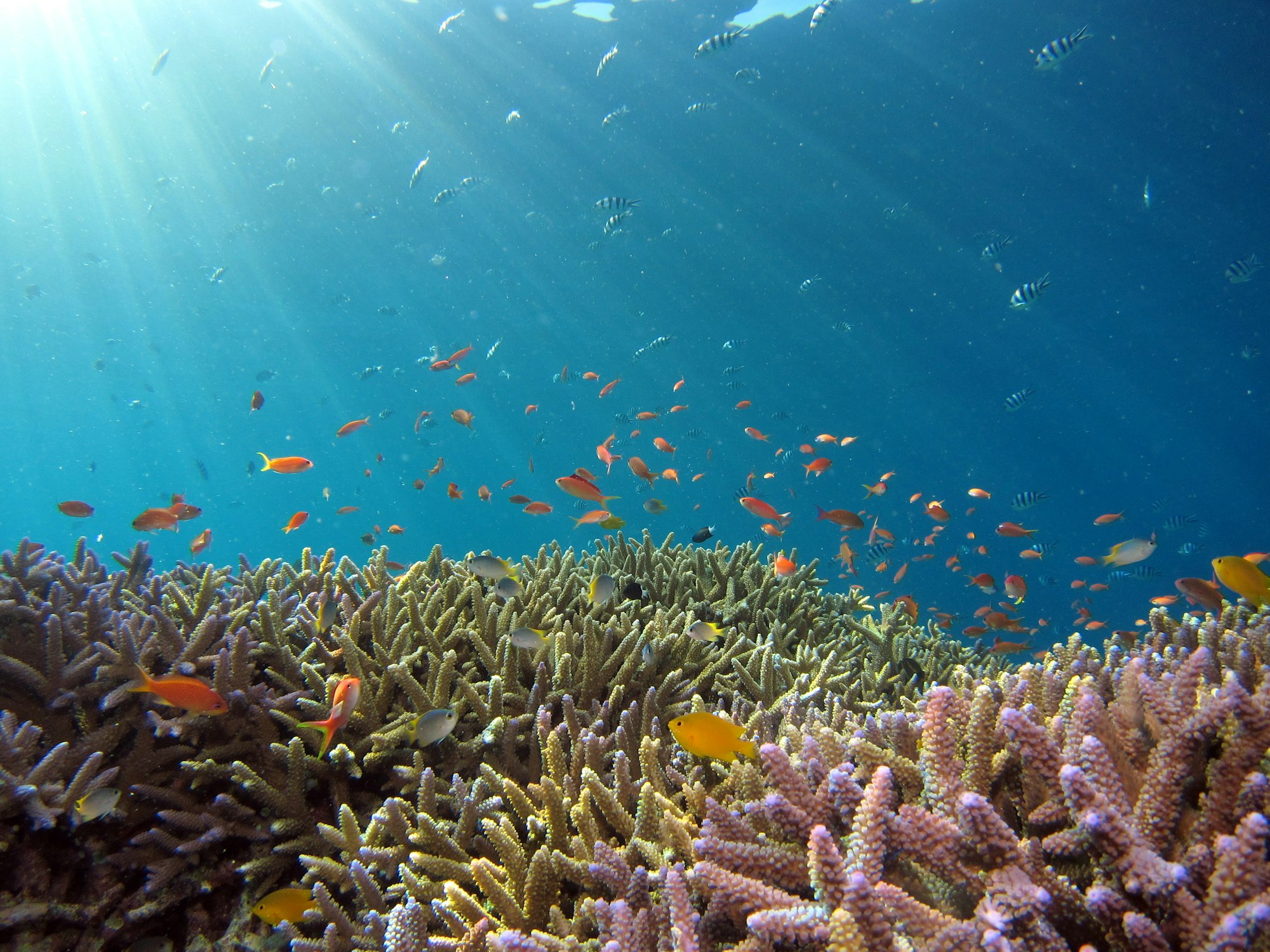
Barracuda Wall
8.3442°S 115.6751°E · wall
Barracuda Wall
A current-assisted drift dive starting off the eastern end of Bunutan Beach and heading east-southeast, featuring thousands of barrel sponges, hundreds of gorgonias, and some of the largest garden eel colonies in the region.
Overview
Barracuda Wall is a drift dive site near Amed on Bali’s northeast coast. The dive begins off the eastern end of Bunutan Beach and follows the current east-southeast along a wall densely covered in marine growth. The site is named for the barracuda that frequent the area, but the real draw is the sheer density of barrel sponges and gorgonia fans along the wall, along with an exceptional garden eel colony. The current typically carries divers along the wall, making this an effortless and visually spectacular drift dive.
Site Information
- Location: Bunutan Beach, Amed, East Bali, Indonesia
- Entry Type: Boat dive
- Site Type: Wall dive
- Difficulty Level: Intermediate
- Maximum Depth: 30 meters
- Typical Visibility: 15-25 meters
- Water Temperature: 27-29°C
- Current: Current-assisted drift (moderate to strong)
- Best Time: April to November (dry season)
Marine Life
The wall at Barracuda is covered with thousands of barrel sponges and hundreds of gorgonia fans, creating one of the most densely covered walls in the Amed area. The sandy bottom adjacent to the wall supports some of the largest garden eel colonies described in the area — dense fields of eels swaying in the current. Ribbon eels and moray eels inhabit crevices in the wall. Very large brain corals are present among the sponge and gorgonia coverage.
Dive Profile
Enter the water off the eastern end of Bunutan Beach and descend to the wall. Allow the current to carry you east-southeast along the wall face. The current does the work — simply maintain your depth and enjoy the scenery. Spend time scanning the wall for ribbon eels and morays in the crevices, and look toward the sandy bottom for the garden eel colonies. The wall extends to considerable depth, so monitor your depth gauge and avoid being carried deeper than planned by the current’s downward component.
Entry and Exit
Access is by boat from Amed-area operators. Enter by giant stride and descend to the wall. The drift carries you along the site, so the boat follows your bubbles or SMB for pickup. Deploy an SMB during your safety stop so the boat can locate you for collection.
Tips and Recommendations
- Carry an SMB and deploy it before your safety stop — this is a drift dive and the boat needs to track your position
- Let the current do the work; fighting it wastes air and energy
- Look down toward the sand for the garden eel colonies — they retract as you approach, so observe from a distance
- Morning dives often have the most predictable current direction
Safety Considerations
This is a current-assisted drift dive, so experience with drift diving technique is required. Carry an SMB and whistle. Stay with your group and guide, as separation in current can be difficult to recover from. The wall drops to significant depth — watch your depth gauge carefully, as the current can push divers deeper than intended. Brief with your boat crew on pickup procedures before entering the water.
Photography
Wide-angle photography excels here. The density of barrel sponges and gorgonias along the wall provides spectacular reef-scape compositions. The garden eel colony is an excellent wide-angle subject if you can approach slowly enough to avoid spooking them. Ribbon eels in the wall crevices are a rewarding macro target, though shooting macro on a drift dive requires skill and quick reflexes.
Sources: Michael McFadyen’s Scuba Diving Web Site, Amed Dive Explorer - Dive Sites, Jukung Dive Bali - Amed Dive Sites. Note: some operators market this same stretch of wall as “Bunutan Drift” or “Amed Wall” rather than “Barracuda Wall” — naming varies by shop. Last updated 2026-07-17.
Sea-surface temperature and wave height from Open-Meteo Marine (ERA5 reanalysis, monthly averages).
3687 verified species observations (250 species) logged within ~11 km of this site between 1987 and 2025, from the Ocean Biodiversity Information System.
- Scolecenchelys macroptera · Narrow Worm Eel
- Pteropsaron
- Abantennarius coccineus
- Callionymidae · Dragonets
- Trimma unisquame · Blackmargin Pygmy Goby
- Trimma stobbsi
- Plectranthias longimanus · Longfin Perchlet
- Scolopsis affinis
- Limnichthys nitidus · Donaldson's Sandburrower
- Gymnothorax pseudoherrei · False Brown Moray
- Trimma okinawae · Orange Spot Goby
- Eviota shimadai
Scientific survey records skew toward sampled taxa (molluscs, corals) and do not reflect what you are guaranteed to see on a dive.
Source: OBIS (obis.org), aggregated Darwin Core occurrence records.
Conditions change with the tide and the season. If you have dived this site, share what it was actually like — date, visibility, current, and what you saw. Real, recent reports from divers are exactly what this guide is built to collect.
Send a conditions report ›