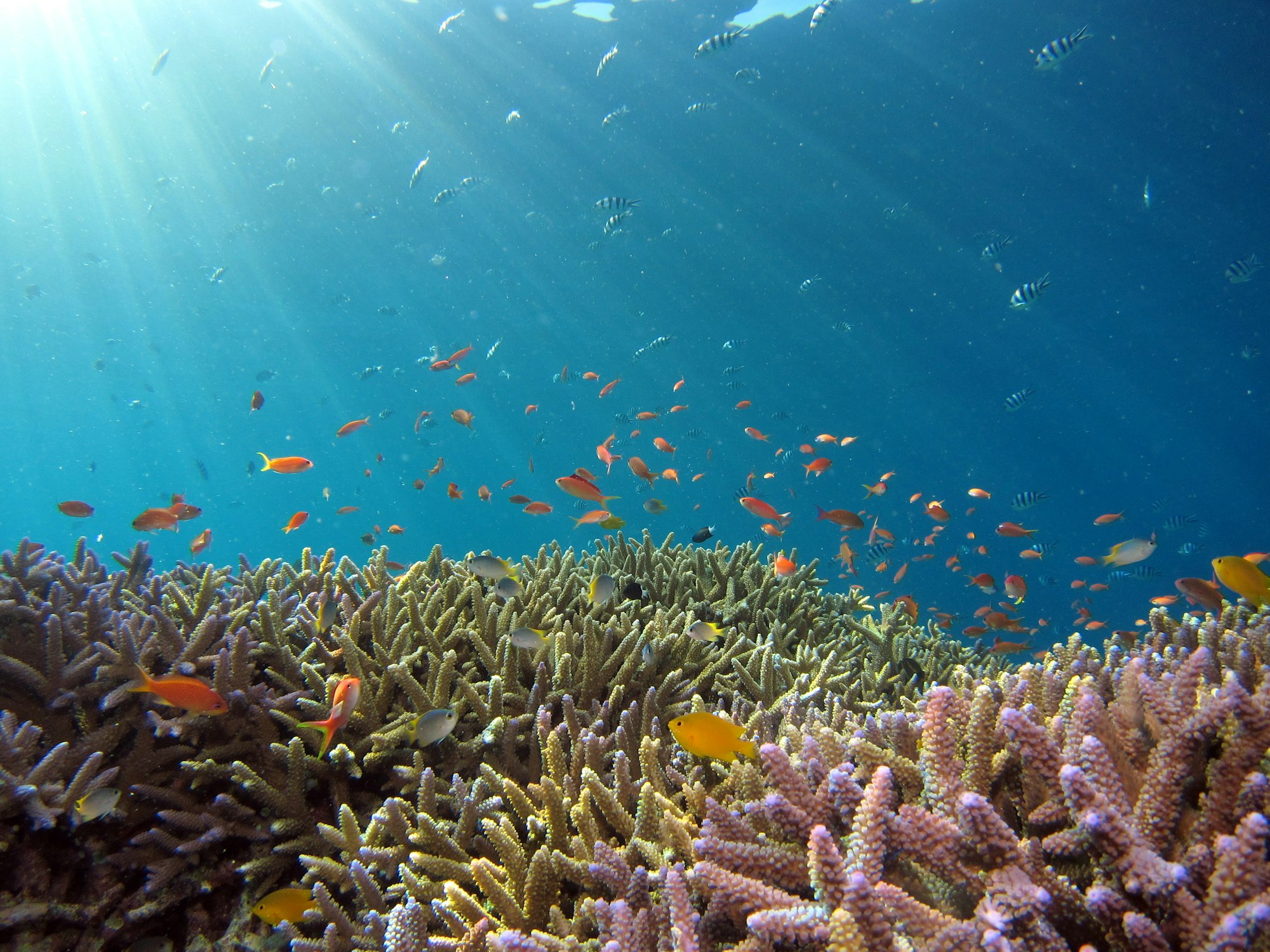
Blue Lagoon
8.5179°S 115.5098°E · reef
Padangbai’s most popular shore dive — crystal-clear, calm water with colourful coral bommies and rich marine life at beginner-friendly depths.
Overview
Blue Lagoon is Padangbai’s signature dive site, set in a sheltered bay just east of the ferry port on Bali’s east coast. The site starts at 3–5 m over a white sandy bottom scattered with coral bommies and transitions to a deeper wall section on the right side (Tanjung Sari, max 15–18 m). The calm, protected conditions make it the go-to site for Open Water certification training and introductory dives, yet the reef is rich enough to satisfy experienced divers. The crystal-clear water earns the site its name, and visibility regularly exceeds 15 m. It is commonly paired with Gili Tepekong or Gili Mimpang for divers wanting a contrast between gentle and challenging dives.
Site Information
- Location: Padangbai, east Bali
- Entry Type: Shore entry
- Site Type: Reef
- Difficulty Level: Beginner
- Maximum Depth: 20 meters
- Typical Visibility: 10–20 m
- Current: Minimal inside the bay
- Best Time: April to November
Marine Life
Clownfish in anemones are abundant throughout the bommies. Moray eels occupy coral crevices, and lionfish rest under overhangs. Sweetlips, butterflyfish, parrotfish, and triggerfish are commonly seen. Occasional turtles graze on the reef, and reef sharks have been sighted on the wall section. Nudibranchs and small crustaceans reward patient macro searchers.
Dive Profile
Enter from the beach and swim out to the bommies at 5–10 m. Follow the coral heads exploring the sandy channels between them before heading right to the Tanjung Sari wall section (15–18 m). Return via the shallow bommies for a relaxed final portion of the dive. Total dive time typically 50–60 minutes. Safety stop at 5 m.
Entry and Exit
Shore entry from the Blue Lagoon beach. Walk to waist depth and submerge. The beach is a short walk or 5-minute drive from Padangbai town. Boat dives are also available from local operators for a shorter surface swim to the reef.
Tips and Recommendations
- An ideal site for the first ocean dive of a certification course or a checkout dive
- The right-hand wall at Tanjung Sari offers more depth and variety for experienced divers
- Night dives are excellent here — octopus, cuttlefish, and lobster are active after dark
- Visit on a weekday morning to avoid the peak snorkel tour crowds
- Combine with Gili Tepekong or Gili Mimpang for a varied diving day from Padangbai
Safety Considerations
The bay is very calm, but boat traffic enters and exits the area — be visible when surfacing and deploy an SMB if returning from the wall. Lionfish are present under overhangs; do not touch. Sea urchins inhabit the rocky shore entry; wear booties and shuffle-step near rocks.
Photography
Excellent natural light in the shallows suits wide-angle reef shots and fish portraits. Clownfish in anemones are predictable subjects. Night dives add octopus, cuttlefish, and nudibranchs. The white sand bottom reflects light beautifully for macro shots.
Sources: PADI - Diving in Bali, Bali AQua - Amed Diving, Neptune Scuba Diving - Bali Dive Sites. Last updated 2026-07-17.
Sea-surface temperature and wave height from Open-Meteo Marine (ERA5 reanalysis, monthly averages).
169 verified species observations (92 species) logged within ~11 km of this site between 1982 and 2022, from the Ocean Biodiversity Information System.
- Apogon · three-saddle cardinalfish
- Scolopsis bilineata · Bridled Monocle Bream
- Scolopsis monogramma · Barred-face Spine-cheek
- Scolopsis trilineata · Three-lined Monocle Bream
- Halichoeres · Wrasses
- Ostorhinchus aureus · Golden Cardinalfish
- Siphamia tubifer · Sea-urchin Cardinalfish
- Pempheris
- Scolopsis aurata
- Lepidochelys olivacea · Olive ridley
- Ostorhinchus monospilus · Moluccan Cardinalfish
- Scolopsis affinis · Bridled Monocle Bream
Scientific survey records skew toward sampled taxa (molluscs, corals) and do not reflect what you are guaranteed to see on a dive.
Source: OBIS (obis.org), aggregated Darwin Core occurrence records.
Conditions change with the tide and the season. If you have dived this site, share what it was actually like — date, visibility, current, and what you saw. Real, recent reports from divers are exactly what this guide is built to collect.
Send a conditions report ›