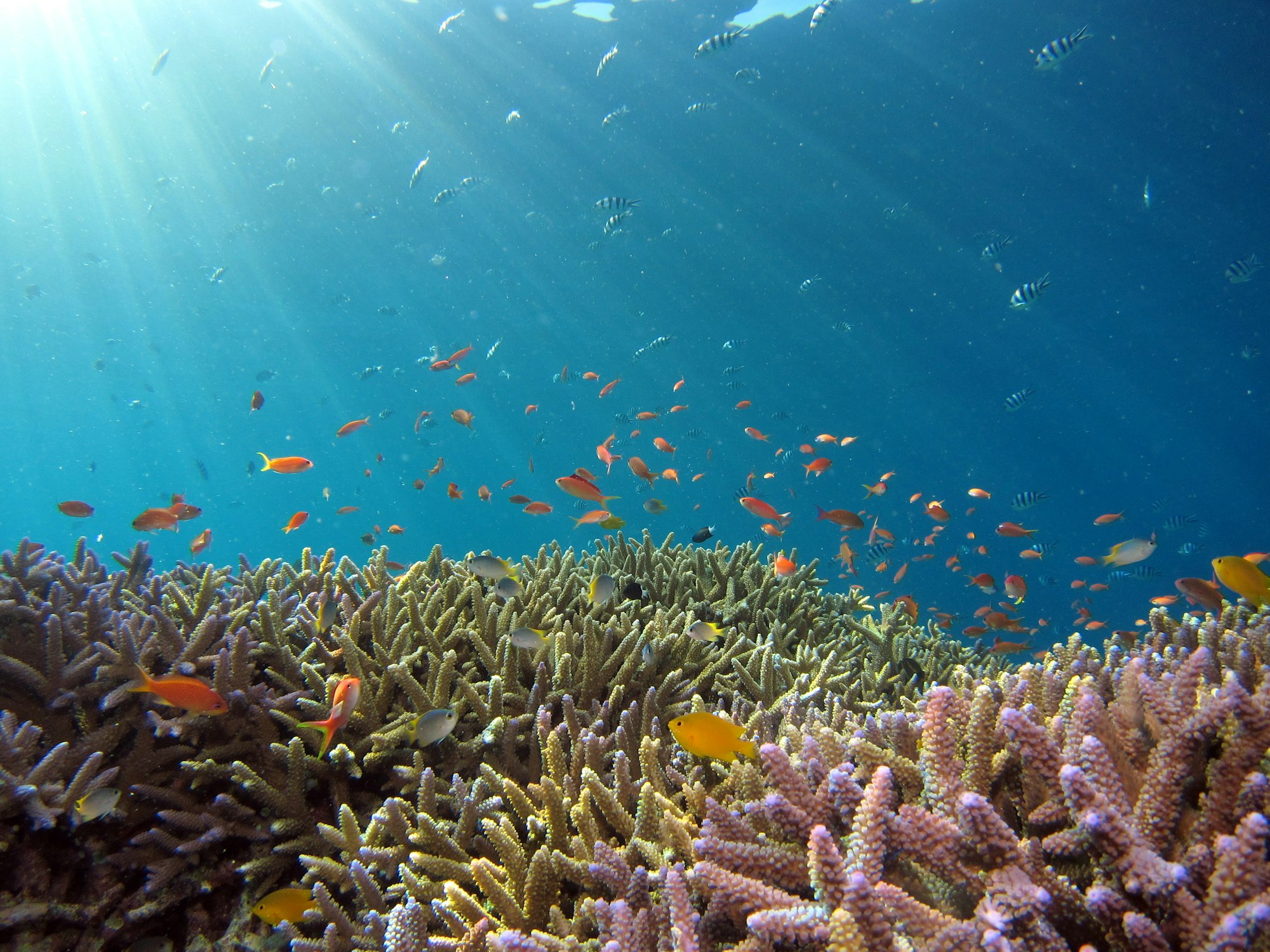
Coral Garden
8.0918°S 114.5224°E · reef
A vibrant shallow reef on the north side of Menjangan Island, rich with hard and soft corals and suited to all experience levels.
Overview
Coral Garden occupies the northern coastline of Menjangan Island within West Bali National Park, beginning at 5 m and sloping steeply to over 40 m. The reef is celebrated for the density and health of its hard and soft corals — colourful gorgonian fans, table corals, and large barrel sponges create a kaleidoscopic underwater landscape. Cleaning stations attract larger fish, while shallow sections between 5–12 m host clownfish in their anemones alongside titan triggerfish and scorpionfish. The protected location within the national park means the reef has been largely undisturbed, making it one of the most pristine coral environments in Bali.
Site Information
- Location: Menjangan Island, West Bali National Park, northwest Bali
- Entry Type: Boat dive
- Site Type: Reef
- Difficulty Level: Beginner
- Maximum Depth: 20 meters
- Typical Visibility: 15–30 m
- Current: Generally mild; occasional light current
- Best Time: April to November
Marine Life
Clownfish and their host anemones are found throughout the shallows. Bigeye trevally, titan triggerfish, and scorpionfish are common. Deeper sections host stingrays, sea turtles, garden eels in sandy patches, and large grouper. Nudibranchs are plentiful on the reef rubble, and pygmy seahorses have been found in the gorgonians. Sharks — particularly whitetip reef sharks — are occasionally seen below 20 m.
Dive Profile
Most divers stay between 5–18 m, following the sloping reef as it transitions from hard coral plateau to steep wall. The shallow cleaning station areas between 5–12 m offer the densest fish life. Beginners should follow the slope; more experienced divers can drop to the wall section below 20 m. Allow adequate air for a 5-minute safety stop before ascending.
Entry and Exit
Reach Menjangan Island by boat from Labuhan Lalang, northwest Bali. Entry via back roll or giant stride from the dive boat. The site is sheltered with minimal current, making it easy to manage. Follow the boat crew’s instructions for SMB deployment and surface pickup.
Tips and Recommendations
- An excellent site for new divers and underwater photographers at any experience level
- The shallow reef between 5–12 m is ideal for beginners and snorkellers
- Look for scorpionfish resting motionless on coral heads — they are well camouflaged
- Check sandy patches at the base of the slope for garden eels and stingrays
- Pair with a dive at Bat Cave or Pos 2 for a full-day Menjangan experience
Safety Considerations
Titan triggerfish nest in the shallow sections — give them a wide berth, especially from June to August. Currents are usually mild but can pick up on the wall sections below 20 m. Maintain neutral buoyancy to avoid damaging delicate coral structures. Dive within your certification limits.
Photography
Coral Garden is one of Bali’s best underwater photography sites. The shallow, bright reef provides excellent natural light for wide-angle shots of coral formations and fish schools. Look for clownfish portrait opportunities in the anemones, and explore the deeper gorgonians for pygmy seahorses and nudibranchs with a macro lens.
Sources: Menjangan Island Trip - Diving, Geko Dive Bali - Menjangan, PADI - Menjangan Island, Bali Fun Diving - Menjangan. Last updated 2026-07-17.
Sea-surface temperature and wave height from Open-Meteo Marine (ERA5 reanalysis, monthly averages).
344 verified species observations (127 species) logged within ~11 km of this site between 1982 and 2025, from the Ocean Biodiversity Information System.
- Trimma erdmanni
- Eviota bifasciata
- Trimma halonevum
- Caesio cuning · Red-bellied Fusilier
- Chaetodon octofasciatus · Eight-banded Butterfly-fish
- Eviota storthynx
- Corythoichthys haematopterus · Reef-top Pipefish
- Pseudanthias tuka · Purple Anthias
- Amphiprion ocellaris · False Clown Anemonefish
- Actitis hypoleucos · Common Sandpiper
- Chromis alpha · Yellow-speckled Chromis
- Pentapodus
Scientific survey records skew toward sampled taxa (molluscs, corals) and do not reflect what you are guaranteed to see on a dive.
Source: OBIS (obis.org), aggregated Darwin Core occurrence records.
Conditions change with the tide and the season. If you have dived this site, share what it was actually like — date, visibility, current, and what you saw. Real, recent reports from divers are exactly what this guide is built to collect.
Send a conditions report ›