Crystal Bay
8.7154°S 115.4562°E · reef
Crystal Bay
Nusa Penida’s most famous site — world-class mola mola encounters and powerful currents.
Overview
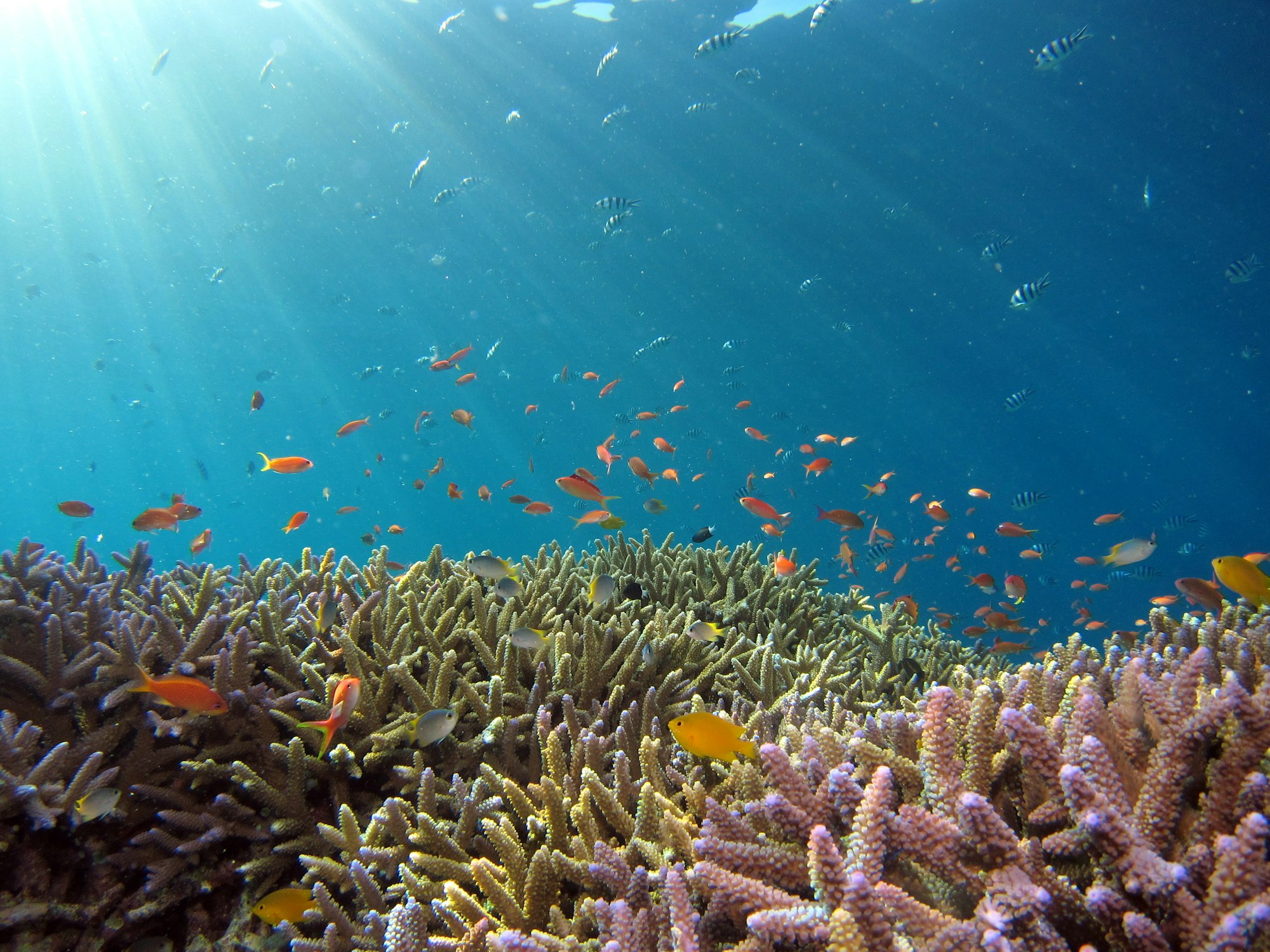
Crystal Bay is Bali’s premier site for encountering the ocean sunfish (mola mola), which visits cleaning stations here between July and October. Located off the northwest tip of Nusa Penida, the bay offers a protected anchor point, but the dive itself exposes you to powerful downwellings and upwellings generated by the channel between Nusa Penida and Nusa Ceningan. The reef is dramatic, with steep slopes and boulders dropping well beyond recreational limits. Water temperatures fluctuate wildly — the cold upwellings that attract mola mola can drop water to 16–18°C, making this a challenging cold-thermocline dive despite being in tropical Indonesia. Visibility averages 15–30 meters when conditions cooperate.
Site Information
- Location: Northwest Nusa Penida, Bali, Indonesia
- Entry Type: Boat dive
- Site Type: Reef
- Difficulty Level: Advanced
- Maximum Depth: 40 meters
- Typical Visibility: 15–30 meters (can drop to 5 m in algae blooms)
- Current: Strong to very strong; downwellings possible
- Best Time: July–October for mola mola; April–June for calmer conditions
Marine Life
Mola mola (ocean sunfish) are the signature attraction, typically seen at 20–30 meters near cleaning stations from July to October. Reef whitetip and blacktip sharks patrol the deeper sections. Large schools of bumphead parrotfish visit the reef along with giant trevally and barracuda. The reef is carpeted with hard corals, sea fans, and crinoids. Hawksbill turtles are regularly encountered on the shallower reef top. During non-mola season, the site still offers excellent macro subjects including nudibranchs and pygmy seahorses in sea fans.
Dive Profile
Descend quickly from the boat through the current to reach the reef. Most productive diving is between 20–35 meters where mola mola cleaning stations are located on the deeper boulders. A typical dive runs 40–50 minutes; be alert for sudden downwellings that can push you beyond planned depth. The safety stop can be challenging — use a reef hook if current is running. Surface with SMB deployed.
Entry and Exit
Dive boats moor at Crystal Bay during calmer conditions; in stronger currents boats drift nearby. Enter via back roll or giant stride and descend immediately on the anchor line or reef. Exit can be challenging in current — coordinate with the boat for pickup. Always deploy an SMB for ascent. Liveaboard boats often provide the safest platform for this site.
Tips and Recommendations
- Bring a 5mm wetsuit or drysuit liner — cold upwellings regularly drop temperatures to 16°C
- Carry a reef hook to hold position at cleaning stations without damaging coral
- Descend quickly to the 20–25 m depth band to avoid missing mola mola in cleaner water
- Book with an operator experienced specifically with Nusa Penida currents — site knowledge is critical
- July to August offers the highest mola mola encounter probability; October adds manta ray sightings nearby
Safety Considerations
Downwellings at Crystal Bay can pull divers deep rapidly — this is a documented cause of diving accidents here. Never exceed your planned depth and maintain strict buoyancy control. Cold thermoclines cause rapid heat loss; watch for signs of nitrogen narcosis at depth. The current can make returning to the boat difficult — always surface with a deployed SMB. This site is not suitable for divers below Advanced certification.
Photography
The mola mola is one of diving’s most iconic and difficult photographic subjects. Use a wide-angle lens and approach slowly from below or to the side — never block the sunfish’s path to the surface. Ambient light is usually sufficient at cleaning station depths. The reef boulders and sea fans provide dramatic backdrops for wide-angle reef shots. A macro lens is productive for nudibranchs and pygmy seahorses on the shallower sections.
Sources: Nusa Penida.org - Diving Crystal Bay, ScubaBoard - Crystal Bay Safety, Scuba Diver Life - Crystal Bay, Purple Dive Penida - Crystal Bay. Last updated 2026-07-17.
Sea-surface temperature and wave height from Open-Meteo Marine (ERA5 reanalysis, monthly averages).
407 verified species observations (101 species) logged within ~11 km of this site between 1984 and 2021, from the Ocean Biodiversity Information System.
- Acanthurus olivaceus · Orangeband Surgeonfish
- Cephalopholis argus · Peacock groups
- Caesio cuning
- Eviota algida
- Amphiprion perideraion
- Mobula alfredi · Reef manta ray
- Triaenodon obesus
- Lagocephalus sceleratus · Giant Toadfish
- Scarus psittacus
- Amioides polyacanthus
- Abantennarius coccineus · Freckled Anglerfish
- Priolepis cincta · Banded Reef Goby
Scientific survey records skew toward sampled taxa (molluscs, corals) and do not reflect what you are guaranteed to see on a dive.
Source: OBIS (obis.org), aggregated Darwin Core occurrence records.
Conditions change with the tide and the season. If you have dived this site, share what it was actually like — date, visibility, current, and what you saw. Real, recent reports from divers are exactly what this guide is built to collect.
Send a conditions report ›