Gili Biaha
8.5087°S 115.6145°E · wall
The most remote of the three Amuk Bay islands — famous for its Shark Cave and strong currents that attract advanced divers seeking white-tip reef sharks and seasonal mola mola.
Overview
Gili Biaha is a small crescent-shaped island approximately 4 km northeast of Gili Tepekong, making it the outermost of the three islands off Padangbai in Amuk Bay. The island is surrounded by a dramatic black volcanic wall dropping to 40 meters, with a signature cave feature at around 10 meters where white-tip reef sharks rest. The site is exposed to open ocean swells and the Indonesian Throughflow, creating strong and unpredictable currents including downcurrents. Dense coral coverage on the wall includes hard and soft corals, gorgonians, and sponges. Best visibility and conditions are from June to October, which also coincides with mola mola season.
Site Information
- Location: Amuk Bay, east of Padangbai, east Bali
- Entry Type: Boat dive
- Site Type: Wall dive
- Difficulty Level: Advanced
- Maximum Depth: 40 meters
- Typical Visibility: 10–25 m
- Current: Strong and unpredictable; downcurrents possible
- Best Time: June to October
Marine Life
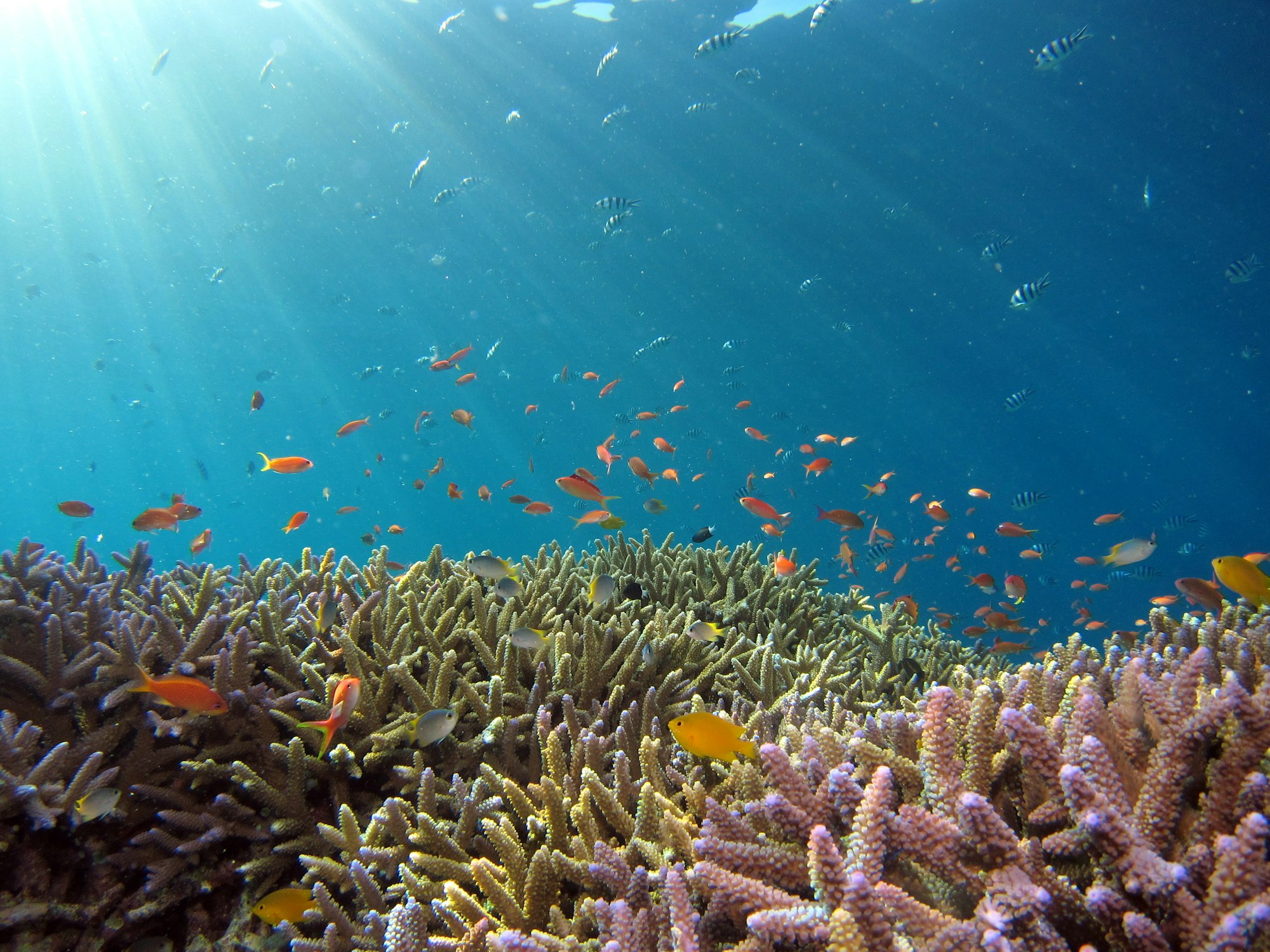
White-tip reef sharks are the main attraction, frequently found resting inside the Shark Cave at around 10 meters. Schools of glass fish fill the cave entrance. Outside the cave, lobsters, octopuses, nudibranchs, pufferfish, turtles, barracuda, and tuna patrol the wall. From June to October, mola mola (oceanic sunfish) may be encountered in the thermocline. The site shares many of the same pelagic visitors as neighboring Gili Tepekong and Gili Mimpang.
Dive Profile
Descend along the wall on the sheltered side. The Shark Cave is located at approximately 10 meters on the western face. After visiting the cave, follow the wall along the reef slope from 15–30 meters where gorgonians and larger marine life are concentrated. Allow the current to drift you along the wall. Ascend gradually and deploy an SMB well away from the island.
Safety Considerations
This is one of Bali’s most demanding dive sites. Strong, unpredictable currents and downcurrents are the primary hazards. Cold thermoclines can drop water temperature to 20°C without warning. Advanced Open Water certification and significant drift diving experience are required. Always dive with a local operator who knows the current conditions at Biaha.
Sources: OK Divers - Gili Biaha, Nico Dives Cool Bali - Gili Biaha, PADI - Gili Biaha. Last updated 2026-07-17.
Sea-surface temperature and wave height from Open-Meteo Marine (ERA5 reanalysis, monthly averages).
89 verified species observations (33 species) logged within ~11 km of this site between 1990 and 2011, from the Ocean Biodiversity Information System.
- Scolopsis trilineata · Three-lined Monocle Bream
- Halichoeres · Wrasses
- Pempheris
- Saurida gracilis · Slender Lizardfish
- Stethojulis trilineata · Blue-ribbon Wrasse
- Chaetodon baronessa · Baroness Butterflyfish
- Heteropriacanthus cruentatus · Blotched Bigeye
- Scolopsis bilineata · Bridled Monocle Bream
- Cirrhilabrus · Orange-striped Wrasse
- Lutjanus fulviflamma
- Limnichthys nitidus · Donaldson's Sandburrower
- Scorpaenopsis
Scientific survey records skew toward sampled taxa (molluscs, corals) and do not reflect what you are guaranteed to see on a dive.
Source: OBIS (obis.org), aggregated Darwin Core occurrence records.
Conditions change with the tide and the season. If you have dived this site, share what it was actually like — date, visibility, current, and what you saw. Real, recent reports from divers are exactly what this guide is built to collect.
Send a conditions report ›