Gili Mimpang
8.5262°S 115.5758°E · reef
Also known as Shark Point and Batu Tiga — Candidasa’s premier dive site for whitetip reef sharks, wobbegong sharks, and seasonal mola mola.
Overview
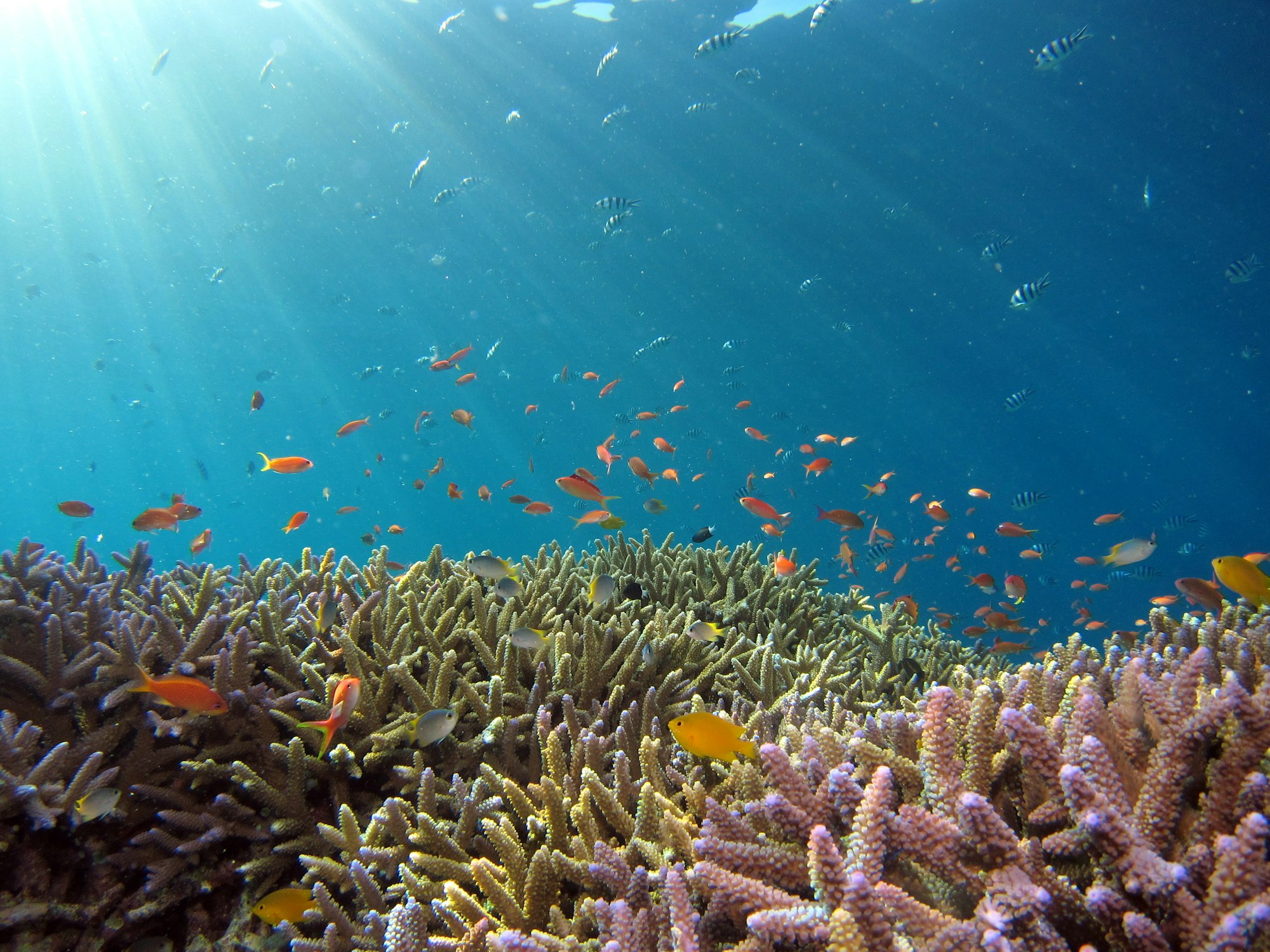
Gili Mimpang (Batu Tiga, meaning “three rocks”) is a series of three large rocks followed by six smaller ones off the coast of Candidasa, a 10-minute boat ride from Padangbai. The site is widely acknowledged as one of the best places in Bali to see whitetip reef sharks, wobbegong sharks, and the rare coral catshark. The reef is exceptionally well-preserved — highly alive with hard and soft corals, gorgonians, and barrel sponges — and the Indonesian Throughflow brings cooler, nutrient-rich water that feeds abundant fish life. Between July and October, mola mola appear at this site, sometimes in groups, dancing in the current rather than presenting at cleaning stations.
Site Information
- Location: Amuk Bay, Candidasa area, east Bali
- Entry Type: Boat dive
- Site Type: Reef
- Difficulty Level: Advanced
- Maximum Depth: 25 meters
- Typical Visibility: 10–25 m
- Current: Strong and variable; unpredictable
- Best Time: May to October (mola mola season July–October)
Marine Life
Whitetip reef sharks are the flagship species, often seen in groups resting on sandy patches. Wobbegong sharks and coral catsharks are rare finds that Gili Mimpang is known for. On the shallow eastern reef (5–15 m), turtles, large barrel sponges, giant trevally, and hawksbill turtles are reliable sightings. Mola mola are possible from July to October. Pygmy seahorses hide in the gorgonians.
Dive Profile
Descend on the upcurrent side and follow the sloping reef from 5–25 m. The eastern shallow reef is productive for sharks and turtles. Deeper sections hold the larger gorgonians and are where sharks are most commonly found at rest. Allow the drift to carry you along the reef system. Ascend away from the rocks to open water for the safety stop and SMB deployment.
Entry and Exit
Boat access from Padangbai or Candidasa (approximately 10 minutes). Entry via back roll. Currents are strong and variable — this site requires experience with unpredictable drift conditions. Down-currents are possible near the rock faces.
Tips and Recommendations
- A minimum of 25 logged dives and Advanced Open Water certification is strongly recommended
- Time dives for neap tides when currents are most manageable
- Watch open water carefully — mola mola and pelagics appear suddenly in the blue
- Dive with a local operator who regularly dives this site and knows the current patterns
- The shallow eastern reef at 5–12 m rewards slow, careful swimming near the bommies
Safety Considerations
Strong, variable, and unpredictable currents are the primary hazard. Down-currents have been recorded near the rock faces. Do not attempt if you are not comfortable with drift conditions. Always carry an SMB. Be aware of depth as the wall deepens rapidly beyond recreational limits.
Photography
Whitetip reef sharks resting on sand between coral heads provide some of the most photogenic shark shots in Bali. Wide-angle suits the coral formations and shark encounters. Mola mola in open water require fast shooting; use wide angle and be ready for sudden appearances. Macro opportunities on the reef include pygmy seahorses and nudibranchs.
Sources: Geko Dive Bali - Gili Mimpang, Atlantis Bali Diving - Gilis, Bali AQua - Gili Tepekong, Mimpang & Biaha, PADI - Gili Mimpang. Last updated 2026-07-17.
Sea-surface temperature and wave height from Open-Meteo Marine (ERA5 reanalysis, monthly averages).
170 verified species observations (93 species) logged within ~11 km of this site between 1982 and 2022, from the Ocean Biodiversity Information System.
- Apogon · three-saddle cardinalfish
- Scolopsis bilineata · Bridled Monocle Bream
- Scolopsis monogramma · Barred-face Spine-cheek
- Scolopsis trilineata · Three-lined Monocle Bream
- Halichoeres · Wrasses
- Ostorhinchus aureus · Golden Cardinalfish
- Siphamia tubifer · Sea-urchin Cardinalfish
- Pempheris
- Scolopsis aurata
- Lepidochelys olivacea · Olive ridley
- Ostorhinchus monospilus · Moluccan Cardinalfish
- Scolopsis affinis · Bridled Monocle Bream
Scientific survey records skew toward sampled taxa (molluscs, corals) and do not reflect what you are guaranteed to see on a dive.
Source: OBIS (obis.org), aggregated Darwin Core occurrence records.
Conditions change with the tide and the season. If you have dived this site, share what it was actually like — date, visibility, current, and what you saw. Real, recent reports from divers are exactly what this guide is built to collect.
Send a conditions report ›