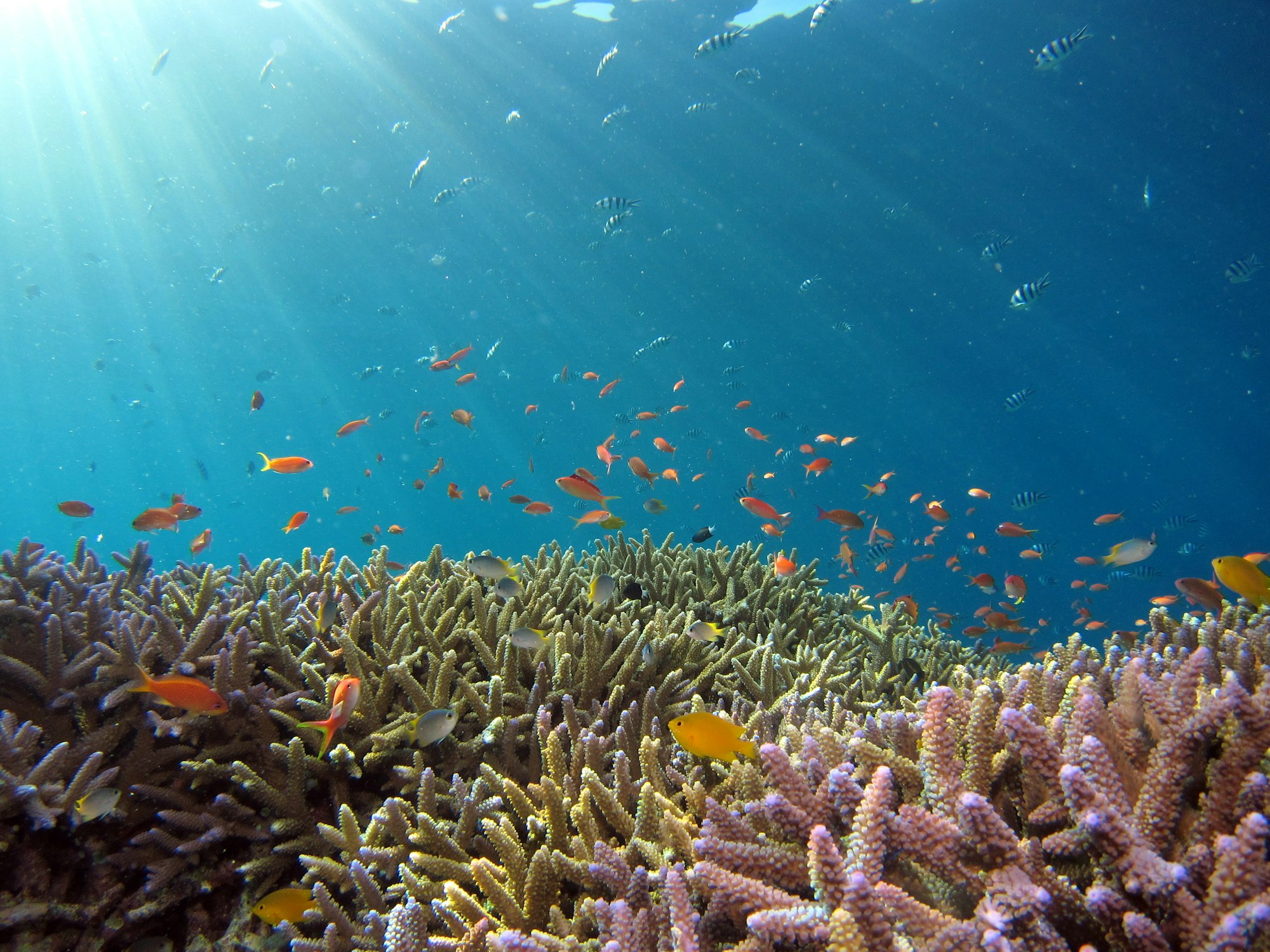
Gili Tepekong North
8.5326°S 115.5842°E · reef
The more accessible face of Gili Tepekong — healthy hard and soft corals, turtles, and whitetip reef sharks with manageable current.
Overview
Gili Tepekong is the largest of the three volcanic islets in Amuk Bay off Candidasa, and its north face offers a more sheltered diving experience compared to the exposed southern sections. The northern reef features steep drop-offs, swim-throughs, and walls covered in blood-red sea fans, table corals, and various sponge species. Schools of sweetlips, bannerfish, and grouper are resident, and whitetip reef sharks are commonly found resting among the coral bommies. The site is accessible to intermediate divers on most days, though currents can still be significant and require monitoring throughout the dive.
Site Information
- Location: Amuk Bay, Candidasa area, east Bali
- Entry Type: Boat dive
- Site Type: Reef
- Difficulty Level: Intermediate
- Maximum Depth: 25 meters
- Typical Visibility: 10–20 m
- Current: Moderate; can increase significantly
- Best Time: May to October
Marine Life
Whitetip reef sharks, turtles, octopus, and cuttlefish are regular sightings. Schools of sweetlips, jacks, and grouper gather in the current-swept areas. Bargibanti pygmy seahorses are found nestled in the pink and yellow gorgonians, taking on their host’s colour for camouflage. Nudibranchs, crabs, and shrimps inhabit the reef rubble. The cooler water occasionally brings mola mola in season (July–October).
Dive Profile
Descend on the north face and follow the reef slope from 5–25 m. Swim-throughs between 10–18 m add variety to the dive. Spend time on the reef crest examining gorgonians for pygmy seahorses before dropping to the deeper sections. Ascend gradually and complete a 3-minute safety stop at 5 m, watching for current changes during ascent.
Entry and Exit
Boat from Padangbai or Candidasa (approximately 20–25 minutes). Entry via back roll. Currents are more predictable on the north face than the south, but monitor throughout. SMB deployment essential for drift ascent.
Tips and Recommendations
- Gili Tepekong North suits intermediate divers; save Tepekong South for when conditions and experience align
- Look methodically at pink gorgonians for Bargibanti pygmy seahorses
- The canyon and swim-throughs between boulders are a highlight — follow your guide
- Mola mola are possible July–October on the current-swept sections
- Combine with Gili Mimpang for a full Candidasa diving day
Safety Considerations
Currents can intensify quickly and may reverse without warning near the island. Down-currents are possible near rock faces. Always carry an SMB. Maintain sight of your buddy and guide throughout. Abort the dive and surface in a sheltered location if current exceeds your ability to control depth.
Photography
The swim-throughs provide dramatic frame shots with divers silhouetted against the light. Pygmy seahorses in gorgonians require macro lens and careful focus. Wide-angle captures the schools of sweetlips and the coral wall character.
Sources: Bali AQua - Gili Tepekong, Mimpang & Biaha, Indopacific Images - Gili Tepekong, PADI - Gili Tepekong. Last updated 2026-07-17.
Sea-surface temperature and wave height from Open-Meteo Marine (ERA5 reanalysis, monthly averages).
196 verified species observations (96 species) logged within ~11 km of this site between 1982 and 2022, from the Ocean Biodiversity Information System.
- Apogon · three-saddle cardinalfish
- Scolopsis bilineata · Bridled Monocle Bream
- Scolopsis monogramma · Barred-face Spine-cheek
- Scolopsis trilineata · Three-lined Monocle Bream
- Halichoeres · Wrasses
- Ostorhinchus aureus · Golden Cardinalfish
- Siphamia tubifer · Sea-urchin Cardinalfish
- Pempheris
- Scolopsis aurata
- Lepidochelys olivacea · Olive ridley
- Ostorhinchus monospilus · Moluccan Cardinalfish
- Scolopsis affinis · Bridled Monocle Bream
Scientific survey records skew toward sampled taxa (molluscs, corals) and do not reflect what you are guaranteed to see on a dive.
Source: OBIS (obis.org), aggregated Darwin Core occurrence records.
Conditions change with the tide and the season. If you have dived this site, share what it was actually like — date, visibility, current, and what you saw. Real, recent reports from divers are exactly what this guide is built to collect.
Send a conditions report ›