Gili Tepekong South
8.5316°S 115.5861°E · wall
An adrenaline dive on Tepekong’s exposed south face — the site known as “The Toilet” for its powerful currents, and home to Black Hole canyon and resident whitetip reef sharks.
Overview
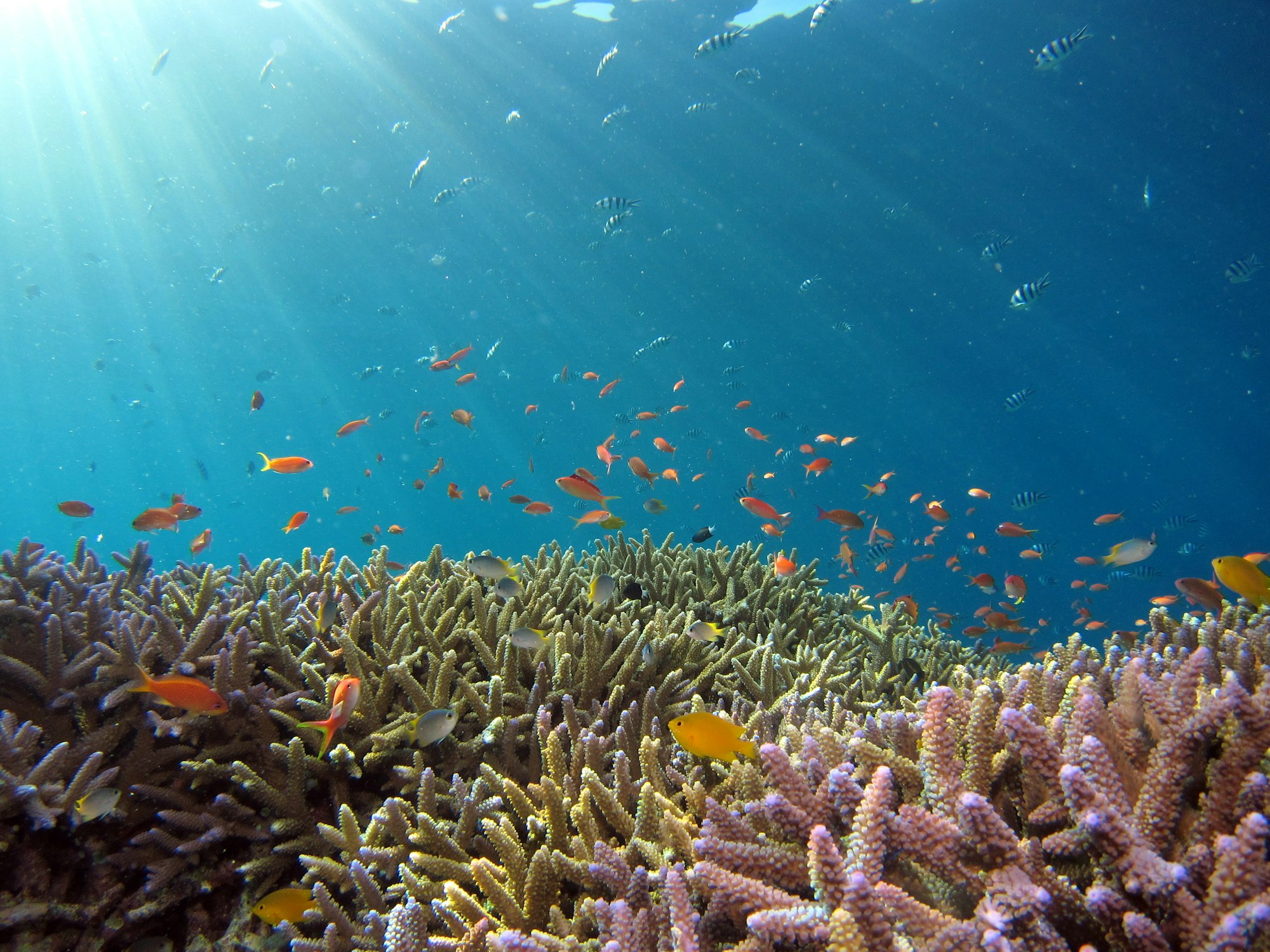
Gili Tepekong South is the dramatic, exposed face of the largest island in Amuk Bay off Candidasa. The canyon section — colloquially called “The Toilet” because of the swirling downcurrents it generates — is one of the most challenging dive environments in Bali, reserved for advanced divers with significant current experience. The wall drops to beyond 35 m and is covered in hard and soft corals, sea fans, and sponges. Schools of sweetlips, jacks, and large grouper congregate in the current-swept canyon, and whitetip and blacktip reef sharks are frequently observed. The Blue Hole, a distinctive chimney formation on the south face, adds to the dramatic topography.
Site Information
- Location: Amuk Bay, Candidasa area, east Bali
- Entry Type: Boat dive
- Site Type: Wall dive
- Difficulty Level: Advanced
- Maximum Depth: 35 meters
- Typical Visibility: 10–20 m
- Current: Strong to very strong; powerful down-currents possible
- Best Time: May to October (slack tide only)
Marine Life
Whitetip and blacktip reef sharks are the signature species on the south face. Large schools of sweetlips, jacks, fusiliers, and grouper gather in the canyon. Mola mola appear on the exposed south wall during the July–October season. Turtles and barracuda are regular sightings. The walls host nudibranchs, pygmy seahorses in gorgonians, and large moray eels.
Dive Profile
Enter on the upcurrent side and descend quickly to the canyon opening at approximately 15–20 m. Time the canyon entry for manageable current — dive briefings will specify conditions for the day. Explore the Blue Hole chimney if conditions allow. Ascend on the sheltered side of the island and conduct a 3-minute safety stop in calmer water.
Entry and Exit
Boat from Padangbai or Candidasa. Entry timing is critical — experienced guides will select the entry point based on current direction and strength. Only dive with operators who have recent knowledge of the site conditions. SMB deployment mandatory.
Tips and Recommendations
- This site is for experienced advanced divers with a minimum of 50 logged dives and recent drift experience
- Only attempt The Toilet / canyon section on neap tides with slack current
- Listen carefully to the dive briefing — conditions dictate the entire dive plan
- If down-currents are present in the canyon, ascend immediately along the wall
- The Blue Hole is worth the effort — an extraordinary chimney formation with clear water
Safety Considerations
Down-currents in the canyon are the primary hazard and have caused incidents. Never enter the canyon alone. Follow your guide’s instructions precisely regarding depth and exit timing. If swept deep, maintain neutral buoyancy and swim horizontally to exit the down-current zone. Always carry an SMB and a safety sausage.
Photography
The canyon walls create dramatic frame shots. Schools of sweetlips in the current produce action shots that require fast shutter speeds. Reef sharks at rest on the wall are excellent subjects with wide-angle. The Blue Hole chimney with divers backlit by the opening is a signature image of Bali diving.
Sources: Bali AQua - Gili Tepekong, Mimpang & Biaha, Indopacific Images - Gili Tepekong, OK Divers - Gili Tepekong, PADI - Gili Tepekong. Last updated 2026-07-17.
Sea-surface temperature and wave height from Open-Meteo Marine (ERA5 reanalysis, monthly averages).
196 verified species observations (96 species) logged within ~11 km of this site between 1982 and 2022, from the Ocean Biodiversity Information System.
- Apogon · three-saddle cardinalfish
- Scolopsis bilineata · Bridled Monocle Bream
- Scolopsis monogramma · Barred-face Spine-cheek
- Scolopsis trilineata · Three-lined Monocle Bream
- Halichoeres · Wrasses
- Ostorhinchus aureus · Golden Cardinalfish
- Siphamia tubifer · Sea-urchin Cardinalfish
- Pempheris
- Scolopsis aurata
- Lepidochelys olivacea · Olive ridley
- Ostorhinchus monospilus · Moluccan Cardinalfish
- Scolopsis affinis · Bridled Monocle Bream
Scientific survey records skew toward sampled taxa (molluscs, corals) and do not reflect what you are guaranteed to see on a dive.
Source: OBIS (obis.org), aggregated Darwin Core occurrence records.
Conditions change with the tide and the season. If you have dived this site, share what it was actually like — date, visibility, current, and what you saw. Real, recent reports from divers are exactly what this guide is built to collect.
Send a conditions report ›