Mangrove Point
8.0979°S 114.5089°E · reef
A sheltered wall and reef dive on the western end of Menjangan Island where morning light filters through corals to spectacular effect.
Overview
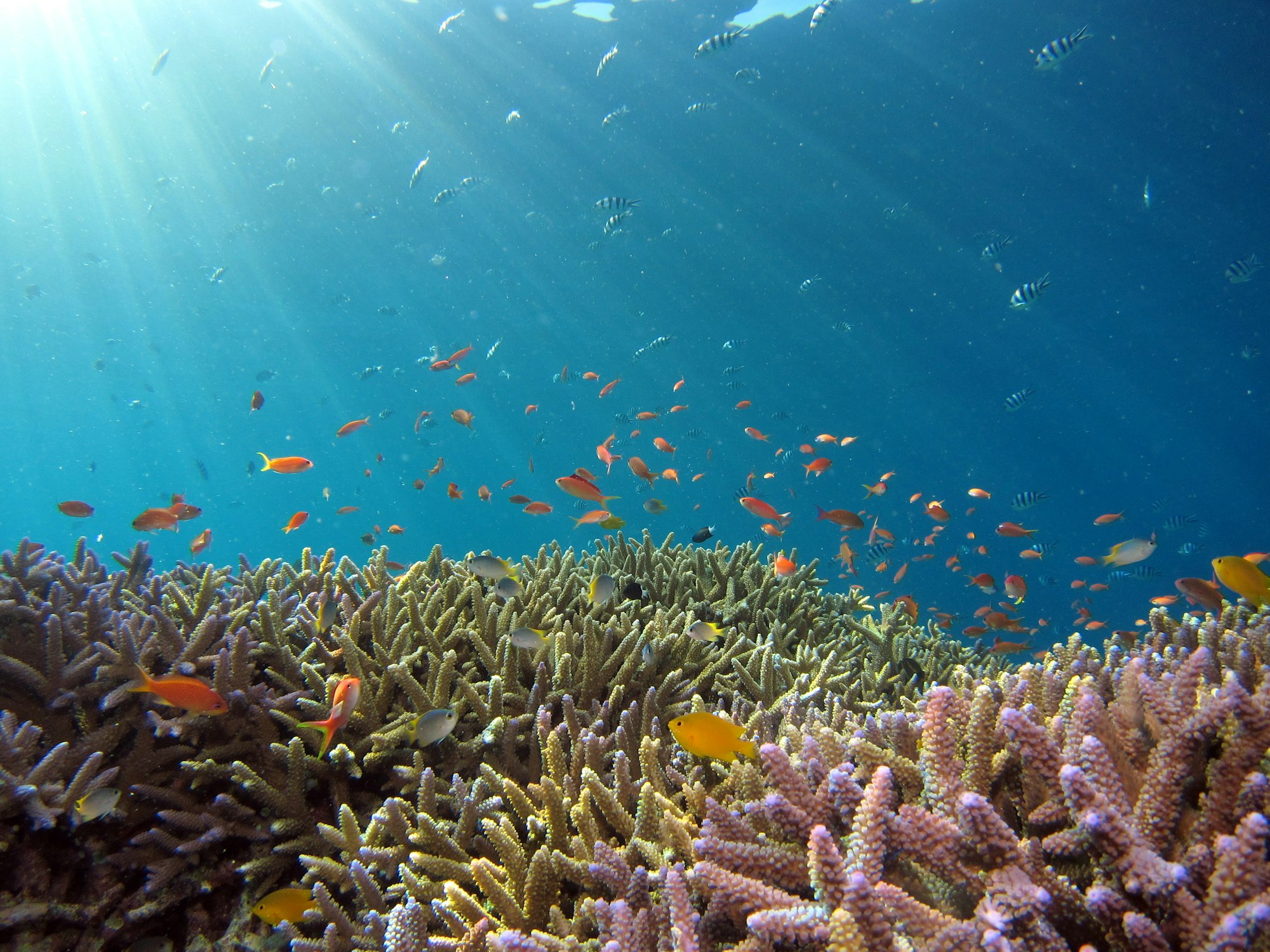
Mangrove Point is located at the western tip of Menjangan Island, where the reef turns a corner and the light conditions in the morning are particularly striking — sunshine penetrates the shallow corals and illuminates the wall with a vivid blue glow. The reef here is full of life from top to bottom, with fish nurseries in the shallow corals making the mandatory safety stop genuinely enjoyable rather than routine. The wall drops to around 30 m and hosts the same diversity of gorgonians, sponges, and corals characteristic of the rest of Menjangan, but with a slightly more sheltered character than the eastern wall sites.
Site Information
- Location: Menjangan Island, West Bali National Park, northwest Bali
- Entry Type: Boat dive
- Site Type: Reef
- Difficulty Level: Beginner
- Maximum Depth: 20 meters
- Typical Visibility: 15–30 m
- Current: Generally light to moderate
- Best Time: April to November
Marine Life
The shallow nursery areas host dense clouds of juvenile fish — anthias, chromis, and basslets — around branching corals. Lionfish, ornate ghost pipefish, and moray eels inhabit the wall. Turtles are frequently seen feeding along the reef crest. Reef sharks and trevally patrol the deeper sections, and batfish are often seen at mid-depth.
Dive Profile
Descend to 10–15 m and follow the reef wall westward. Spend the bulk of the dive between 8–18 m where fish density and coral quality are highest. The shallow section at 3–5 m near the mooring is a wonderful spot to spend the safety stop watching the fish nurseries at the reef edge. Total dive time 45–60 minutes.
Entry and Exit
Jukung boat from Labuhan Lalang. Entry via back roll or giant stride from the gunwale. Currents are usually manageable. Ascend slowly up the wall for the safety stop and signal the boat with an SMB.
Tips and Recommendations
- Dive in the morning to make the most of the beautiful light filtering through the corals
- Spend your safety stop in the shallows watching the fish nurseries — it rivals the deeper reef
- Look for ornate ghost pipefish near the gorgonian bases
- Pair with Eel Garden or Pos 2 for a full Menjangan day
- Suitable for Open Water certified divers and snorkellers
Safety Considerations
Currents are usually mild but can increase at the point. Stay within recreational depth limits. Lionfish in coral overhangs are venomous — observe from a safe distance. Maintain good buoyancy to protect the reef structure. Always dive with a buddy.
Photography
Morning dives offer exceptional natural light for shooting the shallow reef and fish schools. Wide-angle works well for the wall sections, while macro shooters will find ghost pipefish, nudibranchs, and juvenile fish in the corals. The safety stop in the shallows often yields some of the most colourful shots of the day.
Sources: Menjangan Island Trip - Diving Sites, Geko Dive Bali - Menjangan, PADI - Menjangan Island. Last updated 2026-07-17.
Sea-surface temperature and wave height from Open-Meteo Marine (ERA5 reanalysis, monthly averages).
344 verified species observations (127 species) logged within ~11 km of this site between 1982 and 2025, from the Ocean Biodiversity Information System.
- Trimma erdmanni
- Eviota bifasciata
- Trimma halonevum
- Caesio cuning · Red-bellied Fusilier
- Chaetodon octofasciatus · Eight-banded Butterfly-fish
- Eviota storthynx
- Corythoichthys haematopterus · Reef-top Pipefish
- Pseudanthias tuka · Purple Anthias
- Amphiprion ocellaris · False Clown Anemonefish
- Actitis hypoleucos · Common Sandpiper
- Chromis alpha · Yellow-speckled Chromis
- Pentapodus
Scientific survey records skew toward sampled taxa (molluscs, corals) and do not reflect what you are guaranteed to see on a dive.
Source: OBIS (obis.org), aggregated Darwin Core occurrence records.
Conditions change with the tide and the season. If you have dived this site, share what it was actually like — date, visibility, current, and what you saw. Real, recent reports from divers are exactly what this guide is built to collect.
Send a conditions report ›