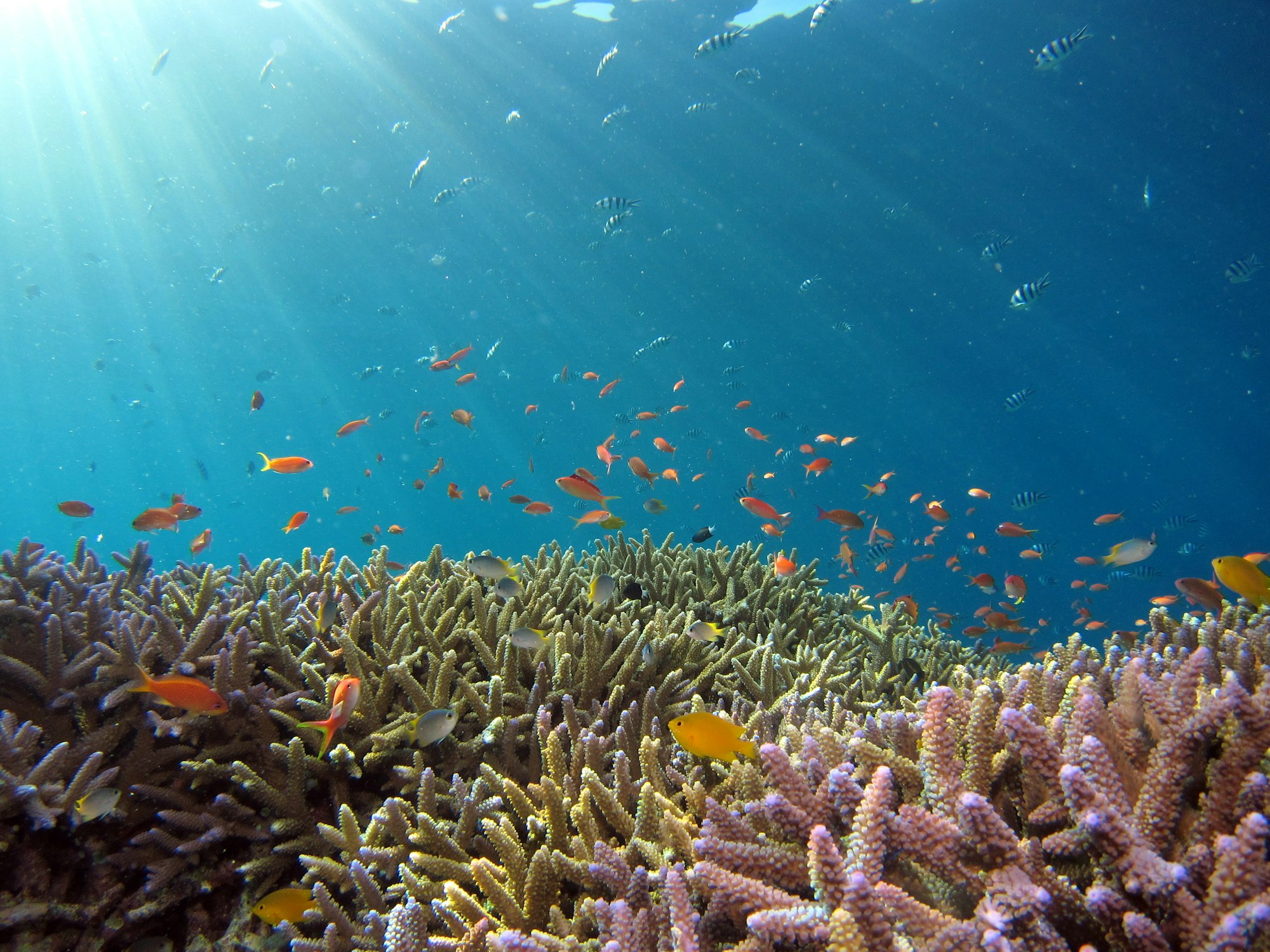
Menjangan - Pos 2
8.0965°S 114.5279°E · wall
The signature wall dive at Menjangan Island — spectacular gorgonians, pygmy seahorses, and the occasional passing manta ray.
Overview
Pos 2 (Post 2) sits on the southeast point of Menjangan Island and is one of the most renowned wall dives in Bali. The wall begins at 12 m and drops vertically to beyond 35 m, with the most spectacular coral growth concentrated between 15–25 m. This section is home to some of the largest sea fans in Bali, as well as forests of whip corals and multi-coloured sponges. Cold water upwellings from depth bring pelagic life close to the reef, including turtles and occasional manta rays and mola mola (oceanic sunfish). The site connects naturally to Bat Cave Point to the west, allowing for a long drift dive along the entire eastern wall.
Site Information
- Location: Menjangan Island, West Bali National Park, northwest Bali
- Entry Type: Boat dive
- Site Type: Wall dive
- Difficulty Level: Beginner
- Maximum Depth: 30 meters
- Typical Visibility: 15–35 m
- Current: Moderate; direction varies with tides
- Best Time: April to November
Marine Life
Between 20–25 m, enormous sea fans host Denise pygmy seahorses — considered one of the best pygmy seahorse spots in Bali. Spotted eagle rays cruise past in mid-water. Fusiliers, triggerfish, and trevally form dense schools along the wall. Turtles feed on the corals, and sharks are occasionally seen at depth. During the right season (July–October), mola mola have been sighted in this area.
Dive Profile
Descend along the wall from the dive boat and follow it at 15–25 m for the best coral life. Scan the large gorgonians carefully for pygmy seahorses. Watch into the blue for eagle rays and pelagics. Ascend the wall slowly and transition to a drift toward Bat Cave Point if conditions permit. Safety stop at 5 m for 3 minutes.
Entry and Exit
Jukung boat from Labuhan Lalang, approximately 40 minutes. Entry via back roll. Current direction varies — follow your dive guide’s briefing for correct orientation along the wall. SMB deployment during safety stop for boat pickup.
Tips and Recommendations
- Scan the large pink and yellow gorgonians methodically for pygmy seahorses
- Alternate attention between the wall and the open blue — eagle rays appear suddenly
- Nitrox is worth using to extend bottom time at 20–25 m
- Drift into Bat Cave for a two-site experience in one dive
- Mornings offer the most settled current and clearest water
Safety Considerations
Currents are moderate but can increase around the point. Stay aware of depth when studying the wall — it is easy to sink deeper than planned while focused on critters. Triggerfish can be territorial near nesting areas — give them space. Always carry an SMB for ascent signalling.
Photography
Pos 2 is superb for both wide-angle and macro work. The enormous sea fans and clear water suit wide-angle with strobes. Pygmy seahorses require a macro lens and patience to photograph among the gorgonian polyps. Eagle rays in blue water make dramatic wide-angle subjects on clear days.
Sources: Dive Concepts - Pos 2 Menjangan, Geko Dive Bali - Menjangan, PADI - Menjangan Island, Bali Fun Diving - Menjangan. Last updated 2026-07-17.
Sea-surface temperature and wave height from Open-Meteo Marine (ERA5 reanalysis, monthly averages).
344 verified species observations (127 species) logged within ~11 km of this site between 1982 and 2025, from the Ocean Biodiversity Information System.
- Trimma erdmanni
- Eviota bifasciata
- Trimma halonevum
- Caesio cuning · Red-bellied Fusilier
- Chaetodon octofasciatus · Eight-banded Butterfly-fish
- Eviota storthynx
- Corythoichthys haematopterus · Reef-top Pipefish
- Pseudanthias tuka · Purple Anthias
- Amphiprion ocellaris · False Clown Anemonefish
- Actitis hypoleucos · Common Sandpiper
- Chromis alpha · Yellow-speckled Chromis
- Pentapodus
Scientific survey records skew toward sampled taxa (molluscs, corals) and do not reflect what you are guaranteed to see on a dive.
Source: OBIS (obis.org), aggregated Darwin Core occurrence records.
Conditions change with the tide and the season. If you have dived this site, share what it was actually like — date, visibility, current, and what you saw. Real, recent reports from divers are exactly what this guide is built to collect.
Send a conditions report ›