Pyramids
8.3342°S 115.6537°E · reef
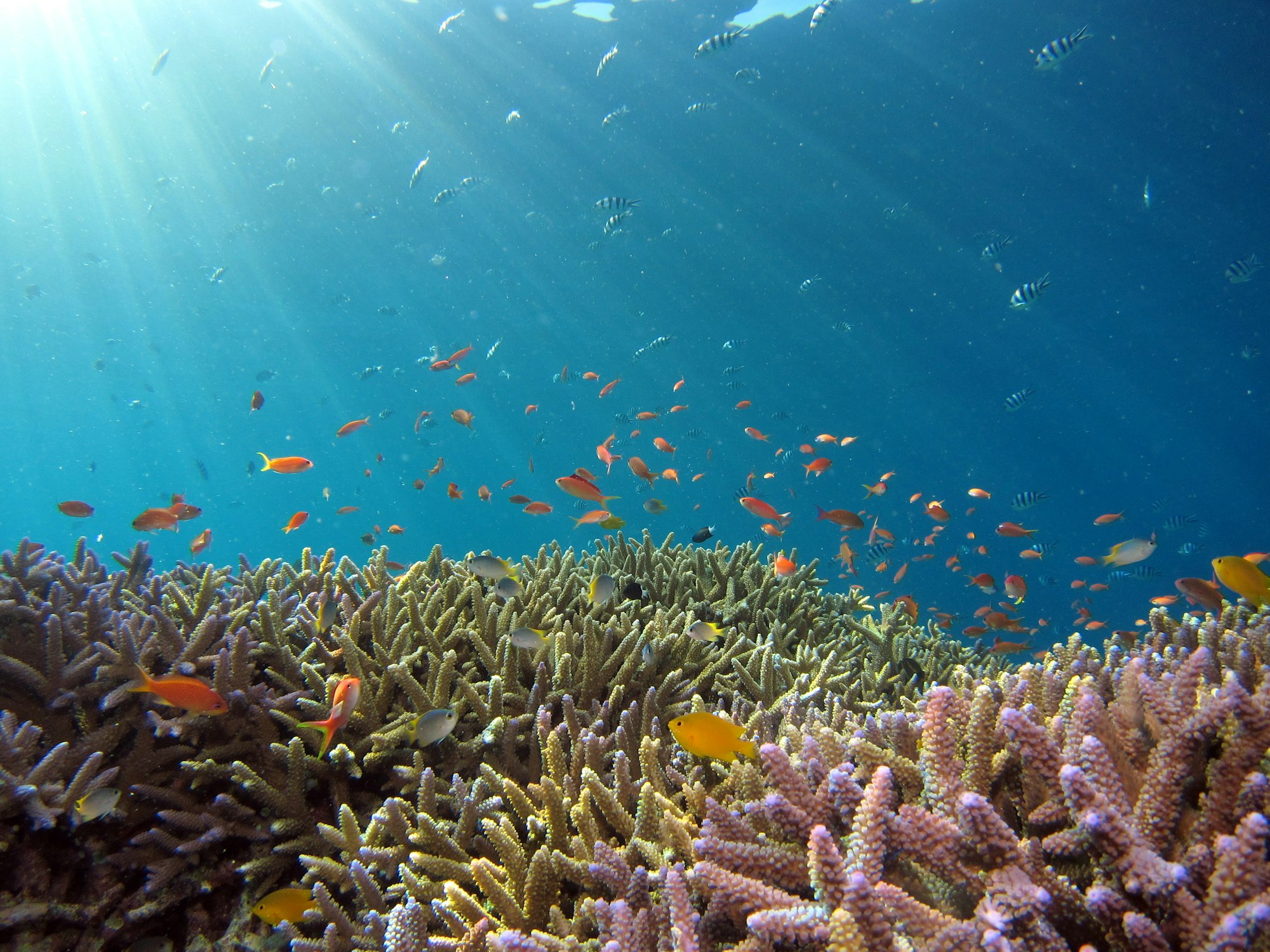
Amed’s iconic artificial reef — hollow concrete pyramid structures placed by local fishermen in the early 1990s, now fully encrusted with soft corals, sea fans, and teeming with reef fish.
Overview
The Pyramids dive site near Jemeluk Bay in Amed was created when local fishermen placed more than 20 hollow concrete pyramid structures on the black sand bottom at approximately 18–22 metres as a reef enhancement effort in the early 1990s. Three decades on, they are covered in soft corals, pink sea fans, and hard coral growth, and are teeming with reef fish. The site functions as a reliable turtle cleaning station where hawksbill and green turtles visit the structures regularly. Blue-spotted stingrays rest on the surrounding sandy floor. Moderate to strong current can sweep through the area on some days, enabling drift-style dives with excellent visibility.
Site Information
- Location: Near Jemeluk Bay, Amed, northeast Bali
- Entry Type: Shore or boat entry
- Site Type: Reef
- Difficulty Level: Intermediate
- Maximum Depth: 22 meters
- Typical Visibility: 20–30+ m (current-swept)
- Current: Moderate to strong; drift possible
- Best Time: April to November
Marine Life
Hawksbill and green turtles visit the cleaning station on the pyramids regularly. Blue-spotted stingrays carpet the sandy floor between structures. Frogfish, leaf scorpionfish, and large stonefish reside in and around the pyramid structures. Pygmy seahorses have been found on the pink sea fans. Moray eels, angelfish, pufferfish, butterflyfish, and lionfish are common. Nudibranchs are numerous in the rubble around the base of each pyramid.
Dive Profile
The site spans 5–20 m with different pyramid clusters at various depths. Begin in the shallower zone at 5–10 m and work progressively deeper across the site. Spend time at each pyramid examining its micro-habitats. Nitrox extends bottom time significantly at 18–20 m where the main clusters are located. Drift dives are possible when current is running — start at the east end and drift west.
Entry and Exit
Boat dive with local Amed operators (under 5 minutes from the dive centre). Can also be dived as a shore dive with a swim-out. Entry via giant stride or back roll. Follow the guide’s current direction briefing for correct orientation.
Tips and Recommendations
- Nitrox is highly recommended — the pyramids reward slow, thorough exploration at 20 m
- Check every pyramid structure systematically; each is its own micro-ecosystem with different critters
- The sandy floor between pyramids hosts blue-spotted stingrays in remarkable numbers
- Come at low tide if possible — clearer, faster current improves visibility
- Night dives on the pyramids reveal completely different critters including crabs, shrimps, and hunting octopus
Safety Considerations
Strong current can make it difficult to hold position at the deeper pyramids. Be prepared to drift if current is running and avoid fighting it. Stonefish on the sandy floor are well-camouflaged — do not stand on the sand. Blue-spotted stingrays have venomous tails; observe without disturbing them. Always carry an SMB for drift dive pickups.
Photography
The pyramids are a macro photographer’s paradise — soft corals, frogfish, pygmy seahorses, and nudibranchs all on a single geometric structure. Wide-angle shots capturing turtles on the coral-covered pyramids are the signature image. Blue-spotted stingrays in groups on the black sand are striking wide-angle subjects.
Sources: Bali Dive Cove - Amed Pyramids, Bali AQua - Amed Diving, Amed Dive Explorer - Dive Sites. Last updated 2026-07-17.
Sea-surface temperature and wave height from Open-Meteo Marine (ERA5 reanalysis, monthly averages).
4065 verified species observations (239 species) logged within ~11 km of this site between 1987 and 2025, from the Ocean Biodiversity Information System.
- Scolecenchelys macroptera · Narrow Worm Eel
- Pteropsaron
- Abantennarius coccineus
- Callionymidae · Dragonets
- Trimma unisquame · Blackmargin Pygmy Goby
- Trimma stobbsi
- Plectranthias longimanus · Longfin Perchlet
- Scolopsis affinis
- Limnichthys nitidus · Donaldson's Sandburrower
- Gymnothorax pseudoherrei · False Brown Moray
- Trimma okinawae · Orange Spot Goby
- Eviota shimadai
Scientific survey records skew toward sampled taxa (molluscs, corals) and do not reflect what you are guaranteed to see on a dive.
Source: OBIS (obis.org), aggregated Darwin Core occurrence records.
Conditions change with the tide and the season. If you have dived this site, share what it was actually like — date, visibility, current, and what you saw. Real, recent reports from divers are exactly what this guide is built to collect.
Send a conditions report ›