Fujikawa Maru
7.3446°N 151.8849°E · wreck
Fujikawa Maru
The crown jewel of Chuuk Lagoon — a 133-meter refrigerated cargo vessel sitting upright on sand, her holds containing nine disassembled WWII aircraft and her superstructure draped in 80 years of coral growth.
Overview
The Fujikawa Maru was a 133-meter (437 ft), 6,938-ton refrigerated cargo vessel built in 1938 by Mitsubishi Zosensho in Nagasaki for Toyo Kaiun Kisen Kaisha. Requisitioned by the Imperial Japanese Navy, she was reclassified as an auxiliary armed aircraft transport and ferry. She was already damaged before Operation Hailstone — torpedoed by USS Permit in September 1943 and again hit by aircraft from USS Yorktown in December 1943. Anchored at Truk Lagoon for repairs, she was struck repeatedly by U.S. bombers and torpedo planes on February 17—18, 1944, finally sinking upright onto a sandy bottom at 33 meters in the early hours of February 18. She remains today the single most popular wreck dive in Chuuk Lagoon.
The wreck is remarkably intact. Her bow gun still points skyward, the bridge structure is accessible, and the masts and king posts rise to within 6 meters of the surface, covered in spectacular hard and soft coral growth. The forward holds are the main attraction, containing nine disassembled Mitsubishi fighter aircraft: eight A6M Zero fighters and one A5M Claude — the sole known surviving example of the A5M type. Parts include wings, fuselages, propeller blades, wheels, and cockpit sections. The midships and aft holds contain additional war cargo including ammunition, machine parts, and supplies.
Site Information
- Location: Chuuk Lagoon, Chuuk State, Micronesia
- Entry Type: Boat dive
- Site Type: Wreck dive
- Difficulty Level: Intermediate
- Maximum Depth: 33 meters
- Typical Visibility: 15-30 meters (50-100 feet)
- Current: Generally mild inside the lagoon
- Best Time: Year-round; December to April offers calmest conditions
Marine Life
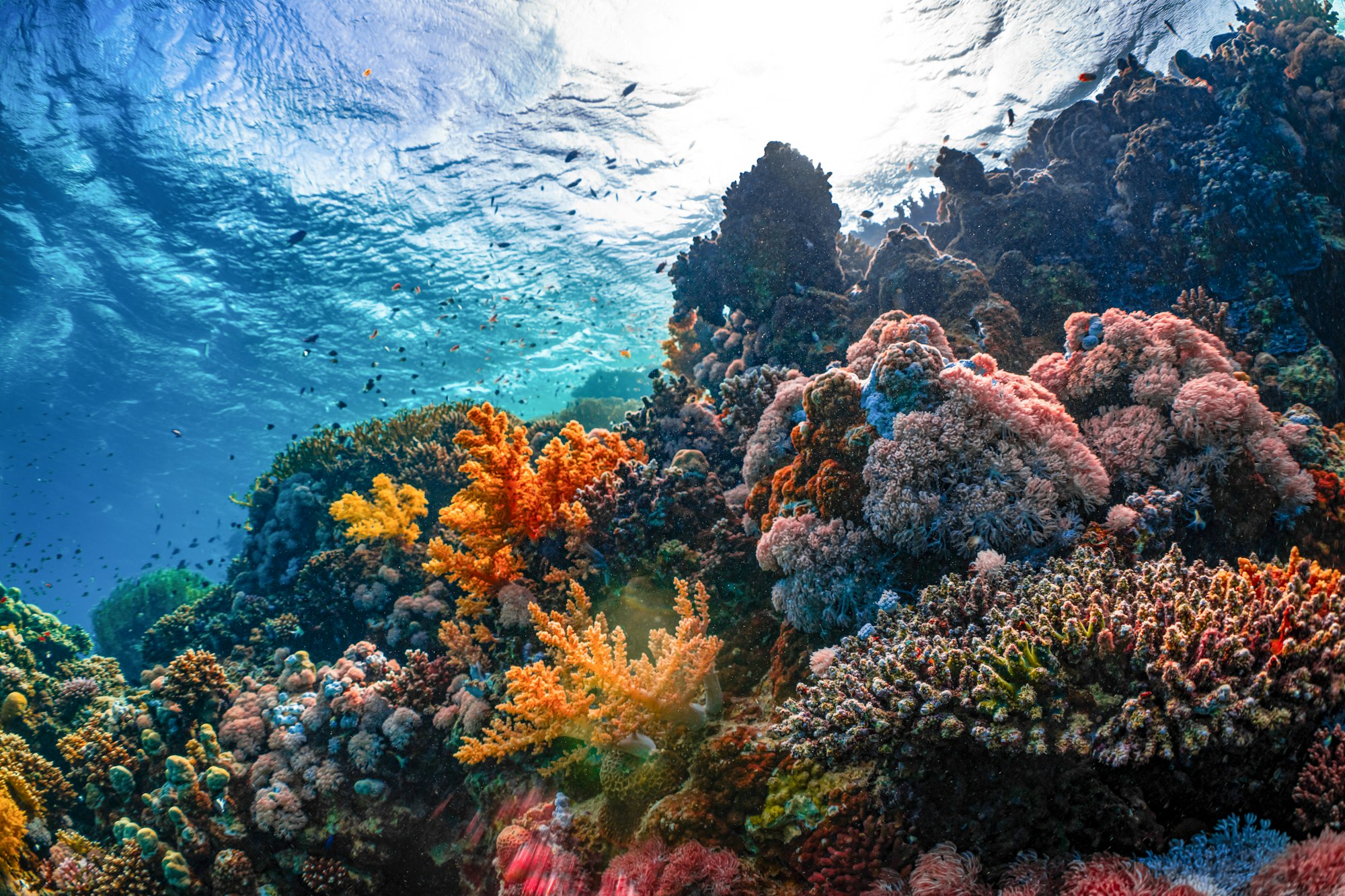
The Fujikawa Maru is a thriving artificial reef after eight decades of coral colonization. The masts and superstructure support massive formations of hard corals, sea fans, and vibrant soft corals in orange, red, and purple. Anemones with resident clownfish cluster along railings and davits. The exterior hull is encrusted with sponges and tunicates.
Schools of fusiliers, batfish, and jacks patrol the mid-water around the wreck. Inside the holds, glassy sweepers form shimmering clouds in torch beams. Lionfish and scorpionfish lurk in shadowed recesses. Grey reef sharks and whitetip reef sharks are seen in the surrounding lagoon waters. Chuuk Lagoon supports hawksbill turtles as regional fauna; the wrecks’ coral-covered superstructures provide resting habitat. No site-specific species lists have been confirmed by independent sources for this wreck beyond the reef fish typical of well-encrusted Chuuk wrecks.
Dive Profile
Most dives begin at the permanent mooring line attached near the bow. Descend along the line to the foredeck at approximately 18 meters (the main deck level). The bow gun is immediately forward — an iconic photo stop. Move aft to Hold No. 1 and No. 2, where the aircraft parts are stacked in the lower levels. Hold 2 contains a Zero cockpit still fitted with instruments. The holds are large and well-lit from above, making them accessible to divers with a guide, though formal wreck penetration training is strongly recommended.
Continue aft along the deck past the bridge superstructure, which can be entered at multiple levels. The engine room is accessible but dark and silty — for experienced wreck divers only. The aft holds contain additional cargo. On the return, ascend the masts for the coral garden at 6-9 meters, which serves as an excellent extended safety stop. Bottom time at 33 meters is limited, so most divers spend the deeper portion in the forward holds and the remaining time on the shallower superstructure.
Entry and Exit
Access is by dive boat from Blue Lagoon Resort or other Weno-based operators, with a 20-30 minute ride depending on departure point. A permanent mooring buoy marks the site. Entry is by giant stride. Descend along the mooring line directly to the wreck. Surface at the mooring line or deploy an SMB if current has carried you off the wreck. The sheltered lagoon location means surface conditions are typically calm.
Tips and Recommendations
- Dedicate at least two dives to this wreck — one focused on the forward holds and Zero parts, another on the superstructure, engine room, and coral-covered masts
- Carry a primary torch and backup light for hold exploration; the Zero fighter parts are in the lower holds where ambient light is limited
- Visit the mast coral garden during your safety stop — it is one of the most photographed features in all of Chuuk
- Plan your deepest penetration first while air supply is full, then work shallower as the dive progresses
- Nitrox (EANx32) significantly extends bottom time at the 15-18 meter deck level and is available from most operators
Safety Considerations
The Fujikawa Maru is a war grave — removing any artifacts is strictly illegal under Chuuk State law and carries severe penalties. The holds contain live ordnance including ammunition and shells; do not touch or disturb any cargo. Silt accumulation inside the holds and engine room can reduce visibility to zero with careless fin kicks — maintain proper trim and buoyancy at all times. Overhead environments within the superstructure and engine room require wreck penetration training, a continuous guideline or clear exit plan, and redundant lights. The maximum depth of 33 meters limits bottom time on air; plan gas management carefully and always maintain adequate reserves for ascent and a 3-5 minute safety stop.
Photography
The Fujikawa Maru offers world-class wreck photography at every level. Wide-angle shots of the bow gun silhouetted against blue water are iconic Chuuk images. The Zero fighter parts in the forward holds reward careful lighting with strobes or video lights — the wing sections and engine cowlings are instantly recognizable. The coral-encrusted masts and king posts in shallow water provide spectacular wide-angle compositions with natural light. Macro subjects include nudibranchs on hull surfaces, coral polyps on railings, and the faces of resident lionfish. The relatively good visibility and calm conditions inside the lagoon make this one of the more forgiving wreck photography sites in Chuuk.
Sources: Wikipedia - Fujikawa Maru, Master Liveaboards - Fujikawa Maru, SS Thorfinn - Fujikawa Maru, Pacific Wrecks - A5M4 Claude (Fujikawa Maru), Dirty Dozen Expeditions - Wrecks Above 40m. Last updated 2026-05-22.
Sea-surface temperature and wave height from Open-Meteo Marine (ERA5 reanalysis, monthly averages).
1451 verified species observations (171 species) logged within ~11 km of this site between 1956 and 2014, from the Ocean Biodiversity Information System.
- Ctenochaetus striatus · Small-bodied acanthurid
- Scaridae · Small-bodied parrotfish
- Chlorurus sordidus · Small-bodied parrotfish
- Hipposcarus longiceps · Large-bodied parrotfish
- Scarus psittacus · Small-bodied parrotfish
- Chlorurus bleekeri · Small-bodied parrotfish
- Chordata
- Scarus rivulatus · Small-bodied parrotfish
- Monotaxis grandoculis · Large-bodied emperor
- Siganus doliatus · Rabbitfish
- Mulloidichthys flavolineatus · Goatfish
- Scarus globiceps · Small-bodied parrotfish
Scientific survey records skew toward sampled taxa (molluscs, corals) and do not reflect what you are guaranteed to see on a dive.
Source: OBIS (obis.org), aggregated Darwin Core occurrence records.
Conditions change with the tide and the season. If you have dived this site, share what it was actually like — date, visibility, current, and what you saw. Real, recent reports from divers are exactly what this guide is built to collect.
Send a conditions report ›