Gosei Maru
7.3112°N 151.8874°E · wreck
Gosei Maru
One of the smallest wrecks in Chuuk Lagoon, with her stern breaking the surface at just 2.5 meters — a compact, accessible dive with good visibility and warm water.
Overview
The Gosei Maru is one of the smallest wrecks in Chuuk Lagoon. She sank during the American attacks on Truk in February 1944 and now rests in relatively shallow water, with the stern section only 2.5 meters deep and visible from the surface on calm days. The vessel has almost completely rolled onto her port side, giving the wreck a pronounced list and creating a steep incline from stern to bow as the wreck descends to a maximum depth of 35 meters.
The Gosei Maru’s compact size means she can be thoroughly explored in a single dive. Visibility is typically good, ranging from 15 to 30 meters, and the warm lagoon water of 28 to 30 degrees Celsius makes this a comfortable dive. The shallow stern section provides an extended safety stop area with interesting wreck structure, while the deeper bow offers a more challenging excursion for those wanting to explore the full length.
Site Information
- Location: Chuuk Lagoon, Chuuk State, Micronesia
- Entry Type: Boat dive
- Site Type: Wreck dive
- Difficulty Level: Intermediate
- Maximum Depth: 35 meters
- Typical Visibility: 15-30 meters (50-100 feet)
- Current: Generally mild inside the lagoon
- Water Temperature: 28-30°C (82-86°F)
- Best Time: Year-round; December to April offers calmest conditions
Marine Life
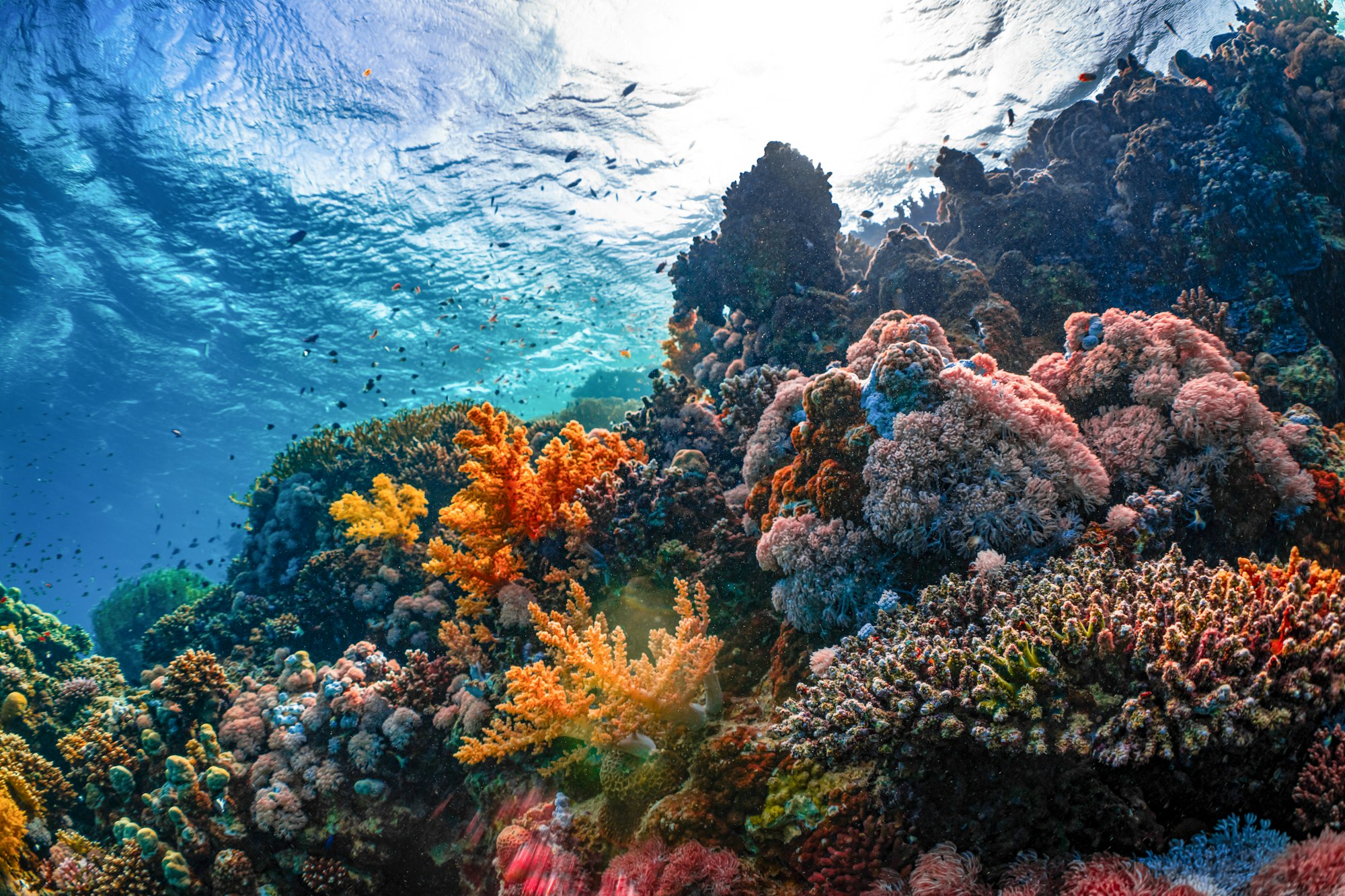
The Gosei Maru’s mix of shallow and deeper structure supports a range of marine life. The stern section near the surface is well-colonized with hard and soft corals, sea fans, and encrusting sponges that thrive in the abundant sunlight. Schools of reef fish patrol the shallows, and anemones with resident clownfish are found along the hull. Glassy sweepers occupy the darker interior spaces, while lionfish and scorpionfish lurk in overhangs. The warm, nutrient-rich lagoon water supports healthy coral growth across the entire wreck.
Dive Profile
The pronounced roll onto the port side and the steep incline from stern to bow define the dive profile. Beginning at the stern in just 2.5 meters of water, divers can work progressively deeper along the wreck toward the bow at 35 meters. The almost-complete roll means that the starboard side faces upward and the port side rests on the bottom — interior spaces are dramatically reoriented. The shallow stern section allows extended exploration and serves as an excellent area for the safety stop on ascent. Plan the deepest excursion to the bow area first, then work back toward the shallower stern.
Entry and Exit
Access is by dive boat from Weno-based operators. Entry is by giant stride. The stern is visible from the surface in calm conditions, making the wreck easy to locate. Descend directly to the wreck structure. Surface near the boat or at the shallow stern section. Lagoon conditions are generally calm.
Tips and Recommendations
- The wreck’s small size means a single dive covers the entire vessel — no need for multiple dives to see everything
- Start deep at the bow (35 meters) and work progressively shallower toward the stern to maximize bottom time
- The near-surface stern section makes an interesting extended safety stop with wreck structure to explore at 3-5 meters
- Good visibility and warm water (28-30°C) make this a comfortable dive suitable for intermediate-level divers
- Carry a torch to examine the interior spaces, which are reoriented by the severe roll
- An excellent wreck to combine with one of the deeper dives as a second dive of the day
Safety Considerations
The Gosei Maru’s shallow stern section and moderate maximum depth of 35 meters make this one of Chuuk’s more accessible wreck dives. However, the nearly complete roll onto the port side means interior spaces are disorienting — what were once walls are now floors and ceilings. Exercise caution in any enclosed space. The steep incline from 2.5 meters at the stern to 35 meters at the bow means depth can increase rapidly if divers are not monitoring their gauges. The wreck is a war grave — removing any artifacts is strictly illegal under Chuuk State law.
Photography
The Gosei Maru offers a range of photographic opportunities across its depth range. The shallow stern in 2.5 meters of water allows natural-light wide-angle shots with vibrant color. The dramatic roll angle creates unusual compositions with the wreck structure at unexpected orientations. The transition from near-surface to 35 meters along a single wreck provides varied lighting conditions in one dive. The good visibility (15-30 meters) supports clean wide-angle compositions of the overall wreck profile.
Sources: Michael McFadyen’s Scuba Diving - Gosei Maru, Scuba Diving Earth - Truk Lagoon Wrecks, Master Liveaboards - Truk Dive Sites. Exact vessel dimensions and sinking date not confirmed across 2+ independent sources; description based on confirmed diving characteristics. Last updated 2026-06-16.
Sea-surface temperature and wave height from Open-Meteo Marine (ERA5 reanalysis, monthly averages).
1009 verified species observations (193 species) logged within ~11 km of this site between 1960 and 2014, from the Ocean Biodiversity Information System.
- Ctenochaetus striatus · Small-bodied acanthurid
- Chlorurus bleekeri · Small-bodied parrotfish
- Siganus puellus · Rabbitfish
- Acanthurus thompsoni · Small-bodied acanthurid
- Scaridae · Small-bodied parrotfish
- Scarus rivulatus · Small-bodied parrotfish
- Chordata
- Monotaxis grandoculis · Large-bodied emperor
- Scarus oviceps · Small-bodied parrotfish
- Chlorurus sordidus · Small-bodied parrotfish
- Scarus dimidiatus · Small-bodied parrotfish
- Eviota
Scientific survey records skew toward sampled taxa (molluscs, corals) and do not reflect what you are guaranteed to see on a dive.
Source: OBIS (obis.org), aggregated Darwin Core occurrence records.
Conditions change with the tide and the season. If you have dived this site, share what it was actually like — date, visibility, current, and what you saw. Real, recent reports from divers are exactly what this guide is built to collect.
Send a conditions report ›