Hanakawa Maru
7.3345°N 151.6439°E · wreck
Hanakawa Maru
A 4,793-ton coal-powered freighter near remote Tol Island — the most distant regularly dived wreck in Chuuk Lagoon, with marine life rivalling the celebrated Shinkoku Maru.
Overview
The Hanakawa Maru was a 4,793-ton coal-powered freighter positioned near Tol Island when American torpedo bombers from USS Bunker Hill and USS Monterey struck on February 18, 1944, the second day of Operation Hailstone. The attacks destroyed the vessel, sending her to the lagoon floor at 34 meters, where she remains today.
Located approximately one hour by boat from Weno, the Hanakawa Maru is the most remote regularly dived wreck in Chuuk Lagoon. This remoteness means she receives far fewer visitors than the wrecks closer to Weno, and the reduced diver traffic has contributed to marine life growth that is reportedly comparable to the renowned Shinkoku Maru. The holds contain drums of aviation fuel, bags of cement, and possibly a torpedo. A 12cm Navy Short Gun remains mounted at the stern.
Site Information
- Location: Near Tol Island, Chuuk Lagoon, Chuuk State, Micronesia
- Entry Type: Boat dive
- Site Type: Wreck dive
- Difficulty Level: Intermediate
- Maximum Depth: 34 meters
- Typical Visibility: 15-30 meters (50-100 feet)
- Current: Generally mild inside the lagoon
- Best Time: Year-round; December to April offers calmest conditions
Marine Life
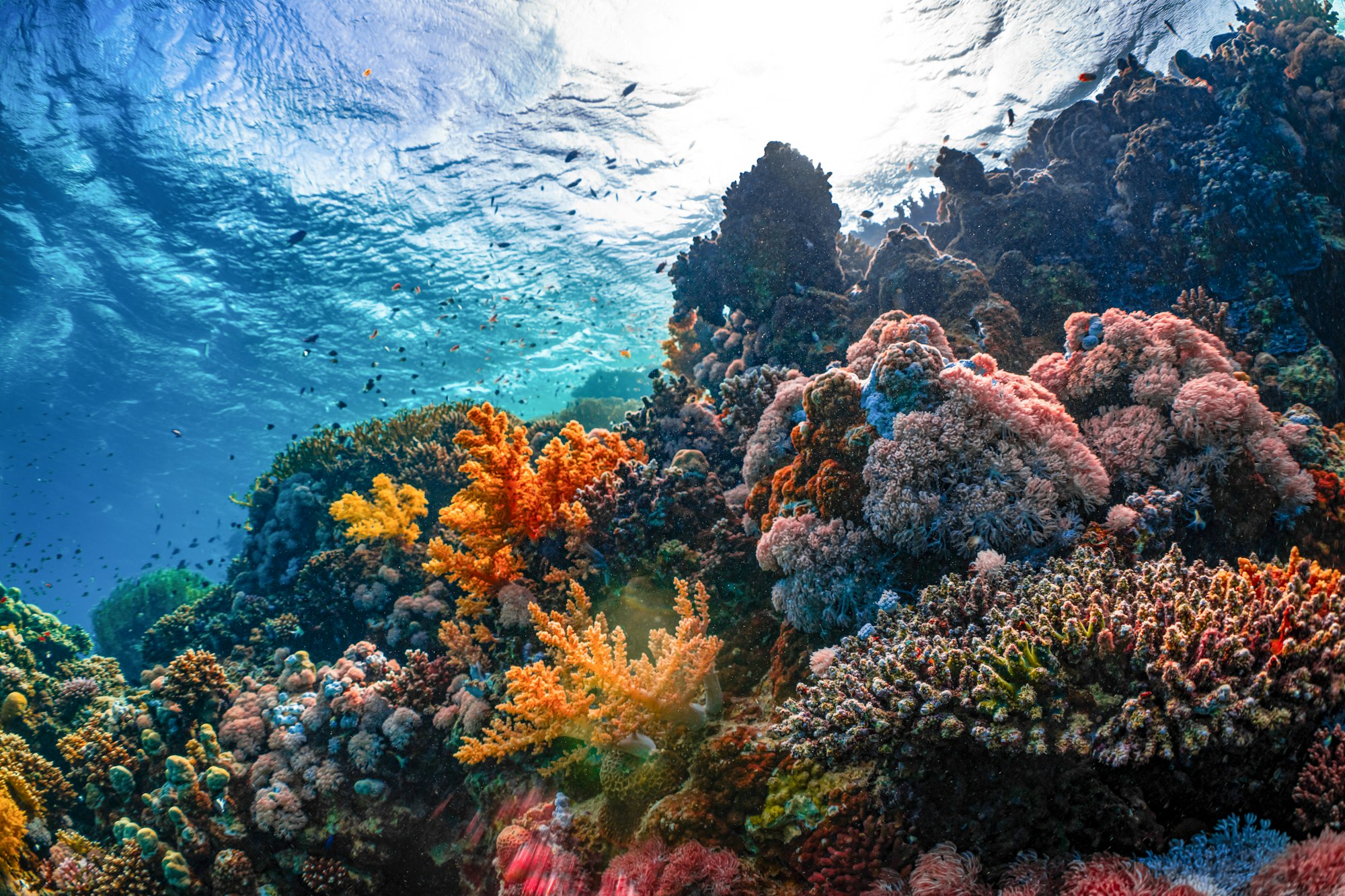
The Hanakawa Maru’s marine life is one of its primary attractions, with coral growth and fish populations reported to rival those of the Shinkoku Maru — one of the most biologically rich wrecks in Chuuk. The wreck’s remoteness and infrequent diver visits have allowed coral formations to develop undisturbed. Hard and soft corals, sea fans, and sponges cover the superstructure and hull. Schools of reef fish, fusiliers, and jacks are abundant. Glassy sweepers fill interior spaces, and lionfish hunt along overhangs. The stern gun mount is typically encrusted with coral growth.
Dive Profile
The wreck sits at 34 meters on the lagoon floor. Divers can explore the deck and superstructure, examining the holds that contain drums of aviation fuel, cement bags, and wartime cargo. The 12cm Navy Short Gun at the stern is a highlight — well-preserved and photogenic. The coal-powered nature of the vessel means the engine room has a different character from the oil-fired ships that make up most of Chuuk’s wreck fleet. At 34 meters maximum depth, bottom time is more generous than on the lagoon’s deeper wrecks, allowing a thorough exploration of the entire vessel on a single dive.
Entry and Exit
Access is by dive boat from Weno-based operators, with an approximately one-hour boat ride to the Tol Island area. The long transit means this wreck is typically dived as part of a full-day excursion, often combined with other remote sites. Entry is by giant stride. Descend along the mooring line to the wreck. Surface at the mooring line or deploy an SMB. Despite the distance, lagoon conditions are generally calm.
Tips and Recommendations
- Plan for a full-day boat trip — the one-hour transit each way means this is not a quick turnaround dive
- The marine life alone justifies the journey — bring a camera with both wide-angle and macro capabilities
- The 12cm Navy Short Gun at the stern is a standout feature; allocate time for photography here
- At 34 meters, bottom time is more generous than on deeper wrecks — take advantage of the opportunity to explore thoroughly
- Ask your operator to combine this dive with other Tol Island area sites to make the most of the long boat ride
- Nitrox extends bottom time usefully at this depth
Safety Considerations
The Hanakawa Maru’s primary safety consideration is its remoteness — approximately one hour from Weno, this is the most isolated regularly dived wreck in the lagoon. Ensure your operator carries appropriate surface support and emergency equipment for the distance involved. The holds contain drums of aviation fuel, which may still contain residual product — do not disturb. A potential torpedo in the cargo holds represents an unexploded ordnance risk. The wreck is a war grave — removing any artifacts is strictly illegal under Chuuk State law. At 34 meters maximum depth, standard recreational limits apply but gas management should account for the remote location.
Photography
The Hanakawa Maru’s outstanding marine life growth makes it one of Chuuk’s best wrecks for combining wreck and reef photography. The coral-encrusted hull and superstructure provide vibrant foreground subjects against blue water backgrounds. The 12cm Navy Short Gun at the stern, framed by coral growth, is an iconic subject. The drums of aviation fuel in the holds create evocative cargo compositions. At 34 meters, ambient light is moderate — strobes significantly enhance color and detail.
Sources: Michael McFadyen’s Scuba Diving - Hanakawa Maru, SS Thorfinn - Hanakawa Maru, Truk Wreck Diving - Hanakawa Maru, Scuba Diving Earth - Truk Lagoon Wrecks. Tonnage discrepancy: McFadyen gives 4,793 tons; Truk Stop wreck map gives 4,739 tons — unresolved. Last updated 2026-06-16.
Sea-surface temperature and wave height from Open-Meteo Marine (ERA5 reanalysis, monthly averages).
2005 verified species observations (151 species) logged within ~11 km of this site between 1949 and 2014, from the Ocean Biodiversity Information System.
- Ctenochaetus striatus · Small-bodied acanthurid
- Chlorurus bleekeri · Small-bodied parrotfish
- Hipposcarus longiceps · Large-bodied parrotfish
- Monotaxis grandoculis · Large-bodied emperor
- Chlorurus sordidus · Small-bodied parrotfish
- Lutjanus gibbus · Large-bodied snapper
- Macolor macularis · Large-bodied snapper
- Lutjanus bohar · Large-bodied snapper
- Siganus doliatus · Rabbitfish
- Scarus niger · Small-bodied parrotfish
- Scaridae · Small-bodied parrotfish
- Zanclus cornutus
Scientific survey records skew toward sampled taxa (molluscs, corals) and do not reflect what you are guaranteed to see on a dive.
Source: OBIS (obis.org), aggregated Darwin Core occurrence records.
Conditions change with the tide and the season. If you have dived this site, share what it was actually like — date, visibility, current, and what you saw. Real, recent reports from divers are exactly what this guide is built to collect.
Send a conditions report ›