Fujisan Maru
7.4216°N 151.8946°E · wreck
Fujisan Maru
A 9,527-ton oil tanker discovered in 1976 from an oil slick spotted by Air Micronesia pilots — an excellent deep wreck that sees few divers and rewards those who make the effort with outstanding visibility.
Overview
The Fujisan Maru was a 9,527-ton oil tanker that sank during the American attacks on Truk Lagoon. The wreck remained undiscovered for over three decades until 1976, when Air Micronesia pilots spotted an oil slick on the lagoon surface emanating from the wreck below. She lies on the lagoon floor at 58 meters, listing approximately 30 degrees to port, with the bridge at 38 meters.
As one of the less frequently dived wrecks in Chuuk, the Fujisan Maru offers an experience largely free of other dive groups. Visibility on this wreck is nearly always excellent, consistently 30 meters or more. The combination of a large, relatively intact tanker, superb water clarity, and solitude makes the Fujisan Maru one of the lagoon’s hidden gems for divers with the training and experience to reach her depth.
Site Information
- Location: Chuuk Lagoon, Chuuk State, Micronesia
- Entry Type: Boat dive
- Site Type: Wreck dive
- Difficulty Level: Advanced
- Maximum Depth: 58 meters
- Typical Visibility: 30+ meters (100+ feet)
- Current: Generally mild inside the lagoon
- Best Time: Year-round; December to April offers calmest conditions
Marine Life
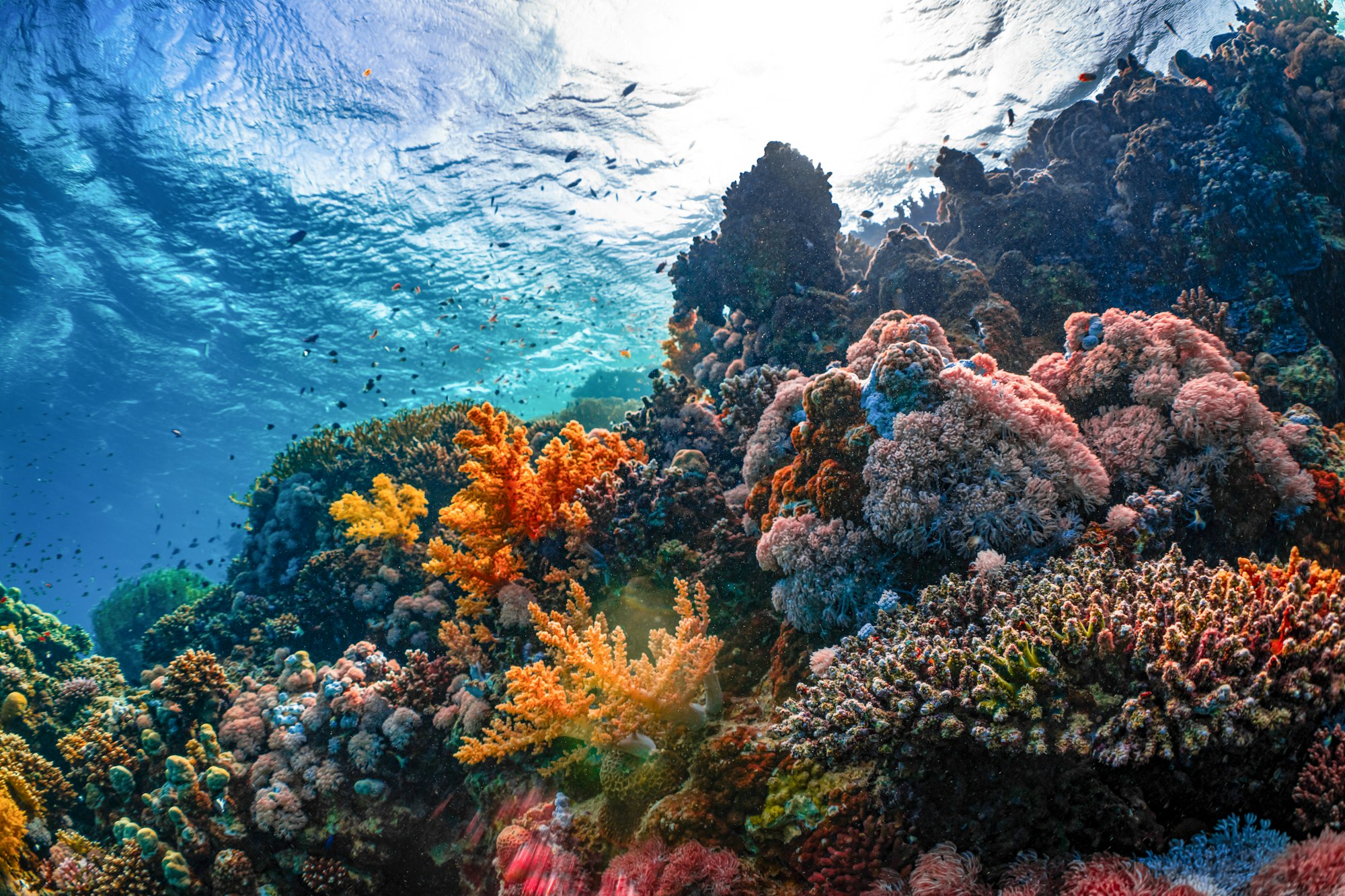
The Fujisan Maru’s superstructure and hull support coral growth, sea fans, and encrusting sponges. The infrequent diver traffic means marine life is less habituated to humans compared to popular wrecks. Schools of fusiliers and jacks are present in the water column around the wreck. Glassy sweepers occupy interior spaces, and lionfish hunt along overhangs and in shadowed recesses.
Dive Profile
The bridge at 38 meters offers the shallowest major structure and is the primary focus for most dives. The 30-degree list to port means that interior spaces are tilted but still navigable. From the bridge, divers can explore along the deck in either direction, though the depth increases rapidly toward the hull bottom at 58 meters. The excellent visibility allows the wreck’s overall form to be appreciated even from a distance. Bottom time is severely limited at these depths — most of the dive should be planned around the 38-meter bridge level, with only brief excursions deeper.
Entry and Exit
Access is by dive boat from Weno-based operators. As a less frequently visited site, advance arrangement with your operator is advisable. Entry is by giant stride. Descend along the mooring line to the wreck. The consistently excellent visibility makes orientation straightforward. Deploy an SMB for ascent if you drift from the mooring. Surface conditions inside the lagoon are typically calm.
Tips and Recommendations
- Advanced or technical diving certification is required for this depth
- The consistently superb visibility (30+ meters) makes this one of Chuuk’s most visually rewarding deep wrecks
- Focus your bottom time on the bridge area at 38 meters to maximize exploration within decompression limits
- Nitrox or trimix is strongly recommended; plan gas management carefully for the depth
- Request this wreck specifically from your operator — it is often overlooked in favor of shallower, more famous sites, but well worth the effort
- Carry primary and backup torches for any interior exploration
Safety Considerations
The Fujisan Maru is a war grave — removing any artifacts is strictly illegal under Chuuk State law. At 58 meters maximum depth, this wreck is firmly in technical diving territory and mandatory decompression stops will be required. The 30-degree list to port affects interior navigation — orient yourself carefully before any penetration. As an oil tanker, residual petroleum products may be present in some compartments. Maintain proper trim and buoyancy at all times. Carry adequate gas reserves for ascent and decompression, and always dive with a buddy.
Photography
The Fujisan Maru’s greatest photographic asset is its exceptional visibility. With 30+ meters of water clarity, wide-angle shots can capture substantial portions of the wreck in a single frame — a rarity at this depth in many dive destinations. The bridge structure at 38 meters provides the most accessible and compositionally interesting subject. Powerful strobes are essential to restore color at depth, where ambient light is significantly reduced. The lack of other dive groups means clean compositions without stray bubbles or divers in the background.
Sources: Michael McFadyen’s Scuba Diving - Fujisan Maru, Scuba Diving Earth - Truk Lagoon Deep Wrecks, Dirty Dozen Expeditions - Truk Lagoon Wrecks below 40m. Exact tonnage, sinking date, and 1976 Air Micronesia discovery story not confirmed to 2-source standard; description based on confirmed diving characteristics. Last updated 2026-06-16.
Sea-surface temperature and wave height from Open-Meteo Marine (ERA5 reanalysis, monthly averages).
1758 verified species observations (186 species) logged within ~11 km of this site between 1949 and 2014, from the Ocean Biodiversity Information System.
- Ctenochaetus striatus · Small-bodied acanthurid
- Scaridae · Small-bodied parrotfish
- Chlorurus sordidus · Small-bodied parrotfish
- Scarus psittacus · Small-bodied parrotfish
- Chlorurus bleekeri · Small-bodied parrotfish
- Hipposcarus longiceps · Large-bodied parrotfish
- Siganus doliatus · Rabbitfish
- Scarus globiceps · Small-bodied parrotfish
- Chordata
- Siganus vulpinus · Rabbitfish
- Mulloidichthys flavolineatus · Goatfish
- Chlorurus microrhinos · Large-bodied parrotfish
Scientific survey records skew toward sampled taxa (molluscs, corals) and do not reflect what you are guaranteed to see on a dive.
Source: OBIS (obis.org), aggregated Darwin Core occurrence records.
Conditions change with the tide and the season. If you have dived this site, share what it was actually like — date, visibility, current, and what you saw. Real, recent reports from divers are exactly what this guide is built to collect.
Send a conditions report ›