HIJMS Tachikaze
7.0972°N 151.8400°E · wreck
HIJMS Tachikaze
The only true warship commonly dived in Chuuk Lagoon — a 102.7-meter Minekaze-class destroyer with torpedo tubes, gun mounts, and depth charges still in place on a sleek naval hull built for speed.
Overview
HIJMS Tachikaze was a 102.6-meter, 1,215-ton (normal displacement) Minekaze-class destroyer built at Maizuru Naval Arsenal, laid down August 1920, launched March 1921, and commissioned December 1921. The Minekaze class were fast fleet destroyers capable of 39 knots, armed with four 120mm guns and triple 533mm torpedo tubes. Tachikaze served the Imperial Japanese Navy for over two decades. On February 4, 1944 — more than two weeks before Operation Hailstone — she ran aground on the reef at Kuop Atoll south of Truk Lagoon while returning from Rabaul. Efforts to free her failed, and she remained stranded. When Operation Hailstone struck on February 17—18, 1944, U.S. carrier aircraft attacked the grounded destroyer with strafing and a torpedo that hit the engine room, sinking the ship by the stern. She was removed from the Navy list on March 31, 1944.
The Tachikaze is unique among Chuuk’s commonly dived wrecks. While the lagoon is famous for its merchant fleet — oilers, transports, and cargo vessels — the Tachikaze is a purpose-built warship. Her narrow, streamlined hull, torpedo tube mounts, deck guns, and depth charge racks distinguish her immediately from the broader-beamed merchantmen. She sits upright and largely intact, her destroyer profile clearly recognizable. The wreck is located in the southern part of the lagoon, farther from Weno than most sites, which means she receives fewer visitors.
Site Information
- Location: Chuuk Lagoon, Chuuk State, Micronesia
- Entry Type: Boat dive
- Site Type: Wreck dive
- Difficulty Level: Advanced
- Maximum Depth: 40 meters
- Typical Visibility: 15-30 meters (50-100 feet)
- Current: Mild to moderate; occasionally stronger than inner lagoon sites
- Best Time: Year-round; December to April for calmest conditions
Marine Life
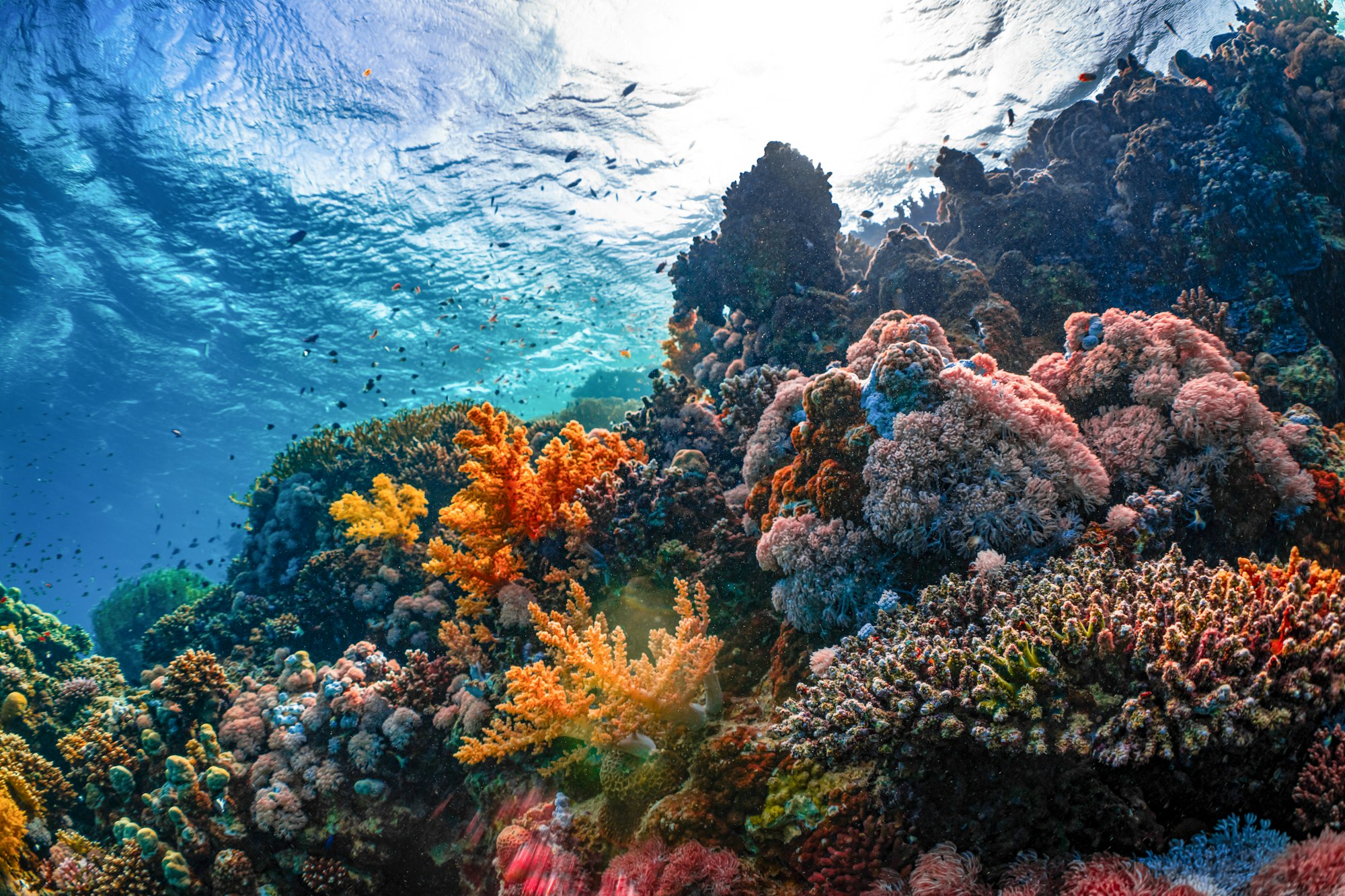
The Tachikaze’s narrow hull and deck hardware have developed healthy coral encrustation over eight decades. Hard corals and sea fans grow on the gun mounts, torpedo tubes, and railing structures. Soft corals add color to the bridge area and mast remnants. The destroyer’s sleek profile creates current shadows that attract aggregations of fish along the hull.
Reef sharks are more frequently encountered here than at many inner lagoon wrecks — the deeper depth and more exposed location in the southern lagoon contribute to this. Whitetip reef sharks rest under the hull. Schools of barracuda and jacks pass through. Batfish hover near the superstructure. Inside the hull, glassy sweepers and cardinalfish fill passageways. Lionfish are common. The surrounding sand flat sometimes yields garden eels and stingrays.
Dive Profile
This is a deep dive. The deck sits at 28-34 meters with the sand at 40 meters, meaning the entire dive takes place at or near the maximum recreational depth limit. Bottom time on air is severely limited — 10-15 minutes before mandatory decompression obligations begin.
Descend the mooring line to the amidships area. The torpedo tube mounts are located amidships on the centerline — the defining feature of a destroyer and an incredible sight at this depth. The forward gun mount and the aft gun mount are both accessible along the deck. Depth charge racks at the stern are visible and intact, a chilling reminder of the ship’s anti-submarine warfare role.
The bridge area is compact (this is a destroyer, not an ocean liner) and accessible for a quick look at ship’s instruments. The engine room can be entered but is extremely tight, dark, and deep — only for the most experienced wreck penetration divers.
Given the depth, a typical dive profile involves a quick descent, 10-15 minutes on the wreck to hit the key features (torpedo tubes, guns, depth charges), and a controlled ascent with an extended safety stop. Nitrox is strongly recommended; technical divers on trimix can extend bottom time significantly.
Entry and Exit
Boat dive from Weno-based operators. The Tachikaze lies in the southern part of the lagoon, requiring a longer boat ride of approximately 45-60 minutes. A mooring buoy marks the site. Enter by giant stride and descend immediately — there is no shallow structure, so the descent goes directly to depth. The more exposed location means surface conditions can be choppier than inner lagoon sites. Ascend via the mooring line with an extended safety stop of 5 minutes minimum at 5 meters. Deploy an SMB if conditions warrant.
Tips and Recommendations
- This is a deep dive demanding disciplined gas management — plan your bottom time before descending and stick to it
- Nitrox (EANx32) is essential to get reasonable bottom time; technical divers on trimix can truly explore this wreck
- Prioritize the torpedo tubes and depth charges — they are the features that make this wreck unique in Chuuk
- The longer boat ride means this dive is often scheduled only on request; ask your operator to include it in your itinerary
- Brief yourself on Minekaze-class destroyer layouts before the dive so you can navigate efficiently and maximize your limited bottom time
Safety Considerations
HIJMS Tachikaze is a war grave and removing artifacts is illegal. The 40-meter depth is the dominant safety concern. At this depth, nitrogen narcosis affects most divers and bottom time on air is approximately 8-10 minutes before decompression obligations. Gas planning must be conservative with generous reserves for ascent. The entire wreck is at depth — unlike the merchant wrecks with shallow masts and superstructure, there is no convenient shallow structure for extended stops on the wreck itself. The destroyer’s narrow interior spaces are tight, silty, and dark — penetration is only for advanced wreck divers with appropriate training and equipment. Depth charges and torpedo warheads are aboard; these are live ordnance that must never be touched. The more exposed southern lagoon location can produce stronger currents than inner lagoon sites — be prepared for current on descent and ascent.
Photography
The Tachikaze offers subjects found nowhere else in Chuuk. The torpedo tube mounts amidships are the iconic shot — wide-angle with a diver for scale emphasizes their size and purpose. The forward gun mount silhouetted against the blue water above makes a dramatic composition. The depth charge racks at the stern are a powerful subject rarely seen in recreational wreck diving. The challenge is the depth: at 30-40 meters, ambient light is significantly reduced. Powerful strobes or video lights are essential, and fast wide-angle lenses are preferred. The limited bottom time means planning your shots before descending — know what you want to photograph and set up efficiently. The sleek destroyer hull profile in wide-angle creates a shape immediately distinguishable from the boxy merchant wrecks.
Sources: Wikipedia - Japanese destroyer Tachikaze (1921), Wikipedia - Minekaze-class destroyer, Military-History Fandom - Japanese destroyer Tachikaze, Wikipedia - Operation Hailstone. Note: dive-specific details (deck depths, torpedo tube locations) are based on single diving sources; independent dive reports confirming exact features not located. Last updated 2026-06-16.
Sea-surface temperature and wave height from Open-Meteo Marine (ERA5 reanalysis, monthly averages).
43 verified species observations (31 species) logged within ~11 km of this site between 1949 and 1995, from the Ocean Biodiversity Information System.
- Chordata
- Didemnum
- Eudistoma reginum
- Didemnum moseleyi
- Pseudodistoma poculum
- Lobophyllia recta
- Goniastrea retiformis
- Telesto trichostemma
- Heliopora coerulea
- Distichopora
- Cnidaria
- Acanthogorgia
Scientific survey records skew toward sampled taxa (molluscs, corals) and do not reflect what you are guaranteed to see on a dive.
Source: OBIS (obis.org), aggregated Darwin Core occurrence records.
Conditions change with the tide and the season. If you have dived this site, share what it was actually like — date, visibility, current, and what you saw. Real, recent reports from divers are exactly what this guide is built to collect.
Send a conditions report ›