Hoyo Maru
7.3711°N 151.8445°E · wreck
Hoyo Maru
An 8,629-ton oil tanker lying upside down in two sections — her hull visible from the surface at just 3 to 4 meters, with a large four-bladed propeller and accessible oil tank interiors.
Overview
The Hoyo Maru was an 8,691-ton oil tanker (some sources give 8,629 tons; Thorfinn and Dive3D cite approximately 8,691-8,700 tons; the discrepancy has not been resolved across 2+ independent sources), approximately 143-150 meters long, that sank during the American attacks on Truk Lagoon on February 17, 1944. She was already damaged — torpedoed in November 1943 and undergoing repairs — when Operation Hailstone struck. Unlike most wrecks in Chuuk that rest upright or on their sides, the Hoyo Maru lies completely upside down, broken into two separate sections. The inverted hull is so shallow that it is visible from the surface at just 3 to 4 meters below the waterline.
The wreck’s inverted orientation creates a unique diving experience. The large four-bladed propeller is one of the most accessible and photogenic features, and the oil tanks can actually be entered by divers. The dive depth ranges from 12 to 24 meters, making it accessible to intermediate divers and even suitable for beginners on the shallowest sections. Visibility is typically 10 to 15 meters — lower than many Chuuk wrecks, likely influenced by the shallow position and residual oil still seeping from the wreck.
Site Information
- Location: Chuuk Lagoon, Chuuk State, Micronesia
- Entry Type: Boat dive
- Site Type: Wreck dive
- Difficulty Level: Intermediate
- Maximum Depth: 24 meters
- Typical Visibility: 10-15 meters (33-50 feet)
- Current: Generally mild inside the lagoon
- Best Time: Year-round; December to April offers calmest conditions
Marine Life
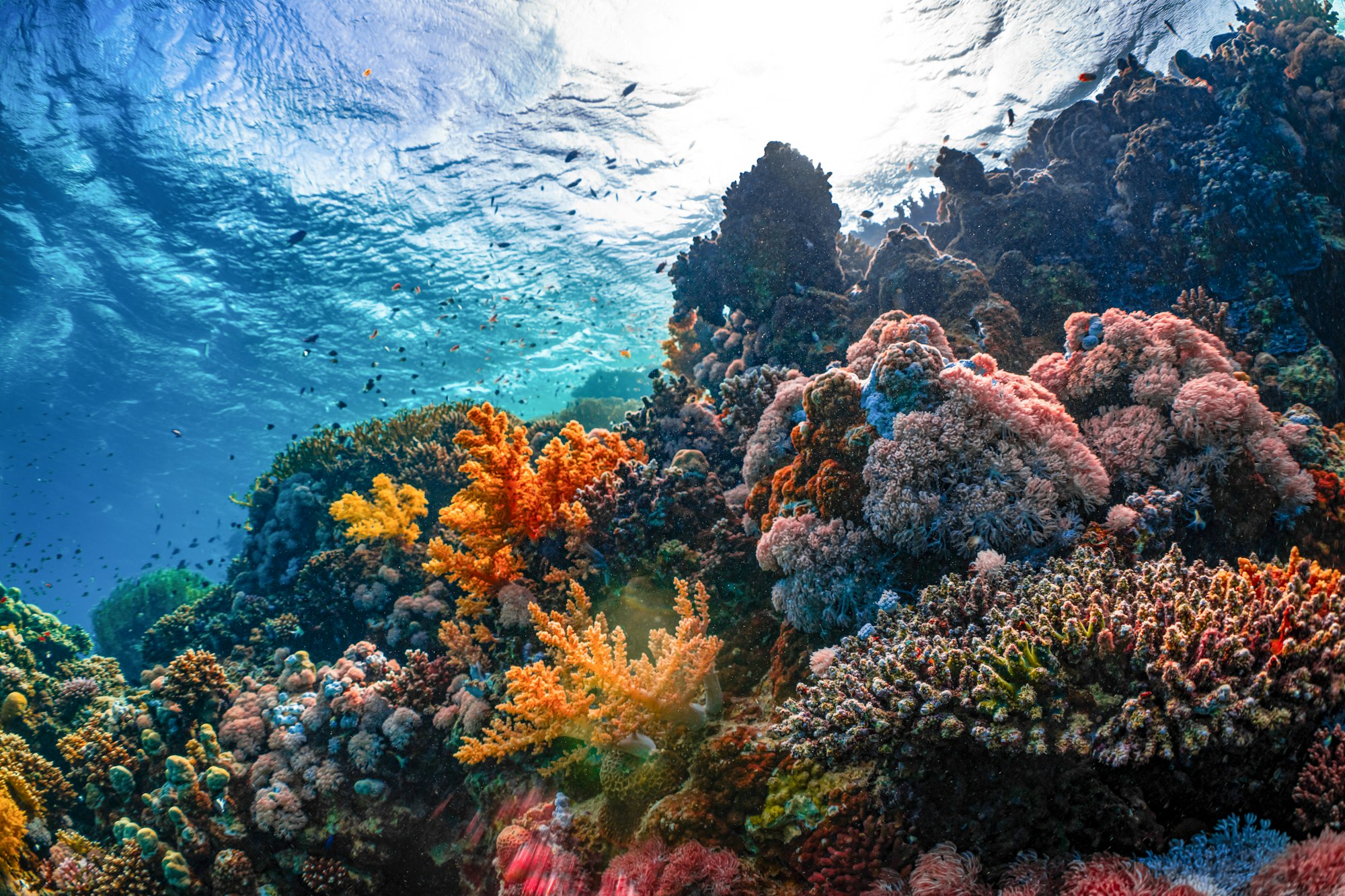
The Hoyo Maru’s inverted hull creates extensive hard surface area near the surface that supports prolific coral growth. Hard corals, sea fans, and encrusting sponges cover the exposed hull plates in the well-lit shallows. The gap between the two broken sections and the spaces around the hull edges shelter schools of reef fish. Lionfish occupy the shadowed underside of hull sections. The sandy bottom beside the wreck supports anemones and small bottom-dwelling species.
Dive Profile
The dive begins at the hull, which is visible from the surface at 3 to 4 meters. The inverted orientation means divers swim along the bottom of the ship, which is now the uppermost surface. The two sections of the wreck can be explored separately. The large four-bladed propeller at the stern section is a highlight and primary photo stop. The oil tanks can be entered — their interiors are cavernous spaces accessed through openings in the hull plates. The dive depth ranges from the surface down to approximately 24 meters at the deepest hull sections. Most of the dive takes place at shallower depths along the hull itself, allowing generous bottom times.
Entry and Exit
Access is by dive boat from Weno-based operators. The wreck’s hull is visible from the surface, making it easy to locate. Entry is by giant stride directly above the wreck. The shallow starting depth allows a gradual descent along the hull. Surface near the boat. The sheltered lagoon location means surface conditions are typically calm.
Tips and Recommendations
- The four-bladed propeller is the signature feature — allocate time for photography here
- Entering the oil tanks is a unique experience but constitutes overhead environment diving — proper training and equipment are essential
- The shallow hull (3-4 meters) makes an excellent extended safety stop area with interesting wreck structure to explore
- Visibility is lower than typical Chuuk standards (10-15 meters) — plan compositions accordingly and carry a torch
- The two separated sections each deserve exploration — plan your dive to cover both
- An excellent second dive of the day given the shallow starting depth and generous bottom times
Safety Considerations
The Hoyo Maru’s inverted position creates unusual diving conditions. The oil tanks, while accessible, are overhead environments that require wreck penetration training, redundant lights, and careful awareness of exits. Oil residue from the tanks may be present — avoid contact with skin and equipment where possible. The lower visibility (10-15 meters) compared to other Chuuk wrecks requires closer attention to buddy contact and navigation. The wreck is a war grave — removing any artifacts is strictly illegal under Chuuk State law. The maximum depth on the wreck is approximately 24 meters — this is one of the shallower accessible Chuuk wrecks and is accessible to intermediate and some beginner divers.
Photography
The Hoyo Maru’s inverted orientation provides photographic opportunities unlike any other wreck in Chuuk. The four-bladed propeller is a striking subject, accessible enough for careful composition. Wide-angle shots along the inverted hull create disorienting, dramatic images. The entrance points to the oil tanks frame interior shots with light coming through the hull openings. The lower visibility (10-15 meters) means tighter compositions work better than distant wide-angle shots. The shallow hull sections at 3-4 meters receive excellent ambient light for natural-light photography.
Sources: Michael McFadyen’s Scuba Diving - Hoyo Maru, SS Thorfinn - Hoyo Maru, Dive3D - Hoyo Maru, Scuba Diving Earth - Truk Lagoon Wrecks. Tonnage varies across sources (8,629–8,700 tons); exact figure unresolved. Correction 2026-06-16: maxDepth corrected from 36m to 24m per multiple sources; sinking date corrected to Feb 17 1944 per Thorfinn (was undergoing repairs after Nov 1943 torpedo damage). JSON depth also updated.
Sea-surface temperature and wave height from Open-Meteo Marine (ERA5 reanalysis, monthly averages).
2548 verified species observations (178 species) logged within ~11 km of this site between 1949 and 2014, from the Ocean Biodiversity Information System.
- Ctenochaetus striatus · Small-bodied acanthurid
- Scaridae · Small-bodied parrotfish
- Hipposcarus longiceps · Large-bodied parrotfish
- Chlorurus sordidus · Small-bodied parrotfish
- Scarus psittacus · Small-bodied parrotfish
- Chlorurus bleekeri · Small-bodied parrotfish
- Monotaxis grandoculis · Large-bodied emperor
- Chordata
- Siganus doliatus · Rabbitfish
- Scarus rivulatus · Small-bodied parrotfish
- Scarus dimidiatus · Small-bodied parrotfish
- Scarus globiceps · Small-bodied parrotfish
Scientific survey records skew toward sampled taxa (molluscs, corals) and do not reflect what you are guaranteed to see on a dive.
Source: OBIS (obis.org), aggregated Darwin Core occurrence records.
Conditions change with the tide and the season. If you have dived this site, share what it was actually like — date, visibility, current, and what you saw. Real, recent reports from divers are exactly what this guide is built to collect.
Send a conditions report ›