Kawanishi H8K Emily Flying Boat
7.3558°N 151.8730°E · wreck
Kawanishi H8K Emily Flying Boat
The wreck of the finest flying boat of World War II — the “Flying Porcupine” — broken into four major pieces on the lagoon floor off Dublon Island at just 16 meters.
Overview
The Kawanishi H8K, codenamed “Emily” by the Allies, was considered the finest flying boat produced by any nation during World War II. The Japanese aircraft earned the nickname “Flying Porcupine” from Allied pilots due to its bristling defensive armament, which made it exceptionally dangerous to intercept. This example lies off the southwest end of Dublon Island, near the site of the former Japanese seaplane base that once serviced these massive aircraft.
The Emily rests inverted, broken into four major pieces on the sandy lagoon floor at 16 meters. All four engines have fallen off their wing mounts and lie nearby. Despite the breakup, the wreck retains enough structure to clearly identify its aircraft form, and the sheer size of the flying boat — with a wingspan that originally exceeded 38 meters — is immediately impressive even in its fragmented state. The dive takes only 20 to 25 minutes to explore thoroughly, making it an easy and accessible site suitable for all experience levels.
Site Information
- Location: Off Dublon Island (SW end), Chuuk Lagoon, Chuuk State, Micronesia
- Entry Type: Boat dive
- Site Type: Wreck dive
- Difficulty Level: Beginner
- Maximum Depth: 16 meters
- Typical Visibility: 15-30 meters (50-100 feet)
- Current: Generally mild inside the lagoon
- Best Time: Year-round; December to April offers calmest conditions
Marine Life
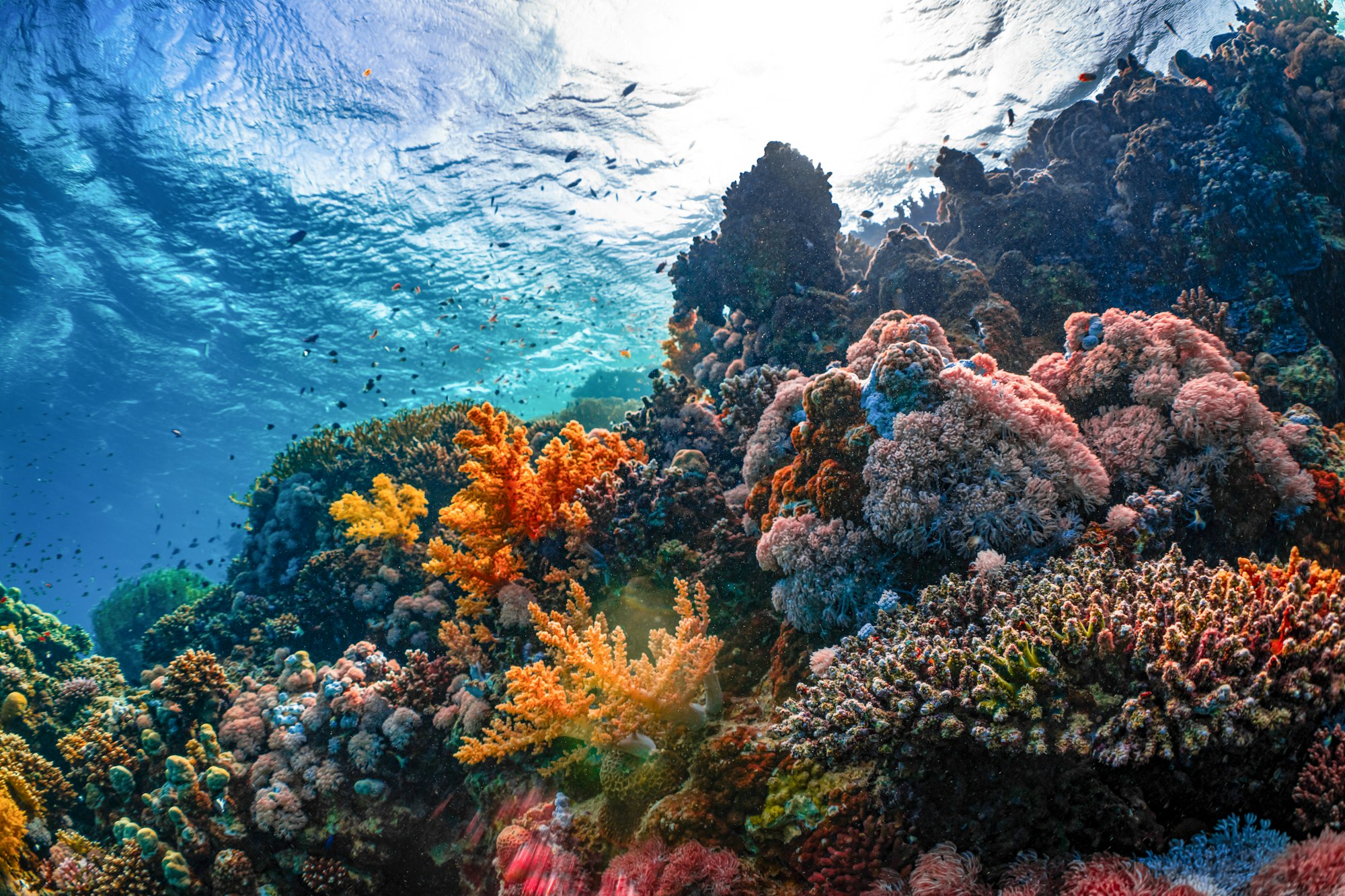
The Emily’s broken structure provides multiple habitats for marine life. Coral growth covers the major fuselage and wing sections, with hard corals and sponges encrusting the metal surfaces. Glassy sweepers congregate in the sheltered spaces beneath the inverted fuselage. Lionfish occupy the shadows around the engine mounts. The sandy bottom surrounding the wreck supports anemones with clownfish, and small reef fish dart among the coral-encrusted wing fragments.
Dive Profile
Descend to the wreck at 16 meters. The four major sections of the aircraft can be explored systematically, beginning with the main fuselage and working outward to the wing sections. The four detached engines are spread around the site and each is worth examination — the radial engine design is clearly visible. The inverted orientation means the upper surfaces of the wings and fuselage are now on the bottom, which provides an unusual perspective. A complete circuit of all four sections and the engines takes approximately 20 to 25 minutes, leaving ample bottom time for a return to highlights or for photography.
Entry and Exit
Access is by dive boat from Weno-based operators, with a ride to the southwest end of Dublon Island. Entry is by giant stride into calm lagoon water. The wreck is on a sandy bottom with no significant current concerns. Surface near the boat or deploy an SMB for pickup.
Tips and Recommendations
- An easy, shallow dive perfect for all certification levels and ideal for a second or third dive of the day
- The wreck can be fully explored in 20-25 minutes — consider combining with the nearby Betty Bomber for a full aircraft dive morning
- Bring a torch to examine the interior spaces beneath the inverted fuselage sections
- The four detached engines scattered around the site make excellent individual subjects — plan to visit each one
- The proximity to the former Japanese seaplane base on Dublon Island adds historical context to the dive
Safety Considerations
This is one of Chuuk’s most straightforward dives. The shallow depth of 16 meters allows extended bottom times well within no-decompression limits for all recreational divers. The wreck is broken apart with no significant overhead environments, minimizing entrapment risk. Maintain awareness of the sandy bottom — careless fin kicks can reduce visibility locally. The inverted sections have some spaces underneath where a diver could enter, but these are open-sided and well-lit. The wreck is a war artifact — removing any items is strictly illegal under Chuuk State law.
Photography
The Emily offers unique aircraft photography at a shallow, well-lit depth. The four separated sections and detached engines provide multiple distinct subjects. Wide-angle shots capturing a full wing section or engine against the blue water background work well with natural light at this depth. The inverted fuselage sections create interesting compositions with coral growth on what were originally the upper surfaces. Macro subjects include coral polyps, nudibranchs, and the small reef fish that shelter around the engine mounts.
Sources: Michael McFadyen’s Scuba Diving - Emily Flying Boat, Dirty Dozen Expeditions - Wrecks Above 40m, Scuba Diving Earth - Truk Lagoon Wrecks. Last updated 2026-05-22.
Sea-surface temperature and wave height from Open-Meteo Marine (ERA5 reanalysis, monthly averages).
1750 verified species observations (175 species) logged within ~11 km of this site between 1956 and 2014, from the Ocean Biodiversity Information System.
- Ctenochaetus striatus · Small-bodied acanthurid
- Scaridae · Small-bodied parrotfish
- Chlorurus sordidus · Small-bodied parrotfish
- Hipposcarus longiceps · Large-bodied parrotfish
- Chlorurus bleekeri · Small-bodied parrotfish
- Scarus psittacus · Small-bodied parrotfish
- Chordata
- Scarus dimidiatus · Small-bodied parrotfish
- Siganus doliatus · Rabbitfish
- Scarus rivulatus · Small-bodied parrotfish
- Monotaxis grandoculis · Large-bodied emperor
- Mulloidichthys flavolineatus · Goatfish
Scientific survey records skew toward sampled taxa (molluscs, corals) and do not reflect what you are guaranteed to see on a dive.
Source: OBIS (obis.org), aggregated Darwin Core occurrence records.
Conditions change with the tide and the season. If you have dived this site, share what it was actually like — date, visibility, current, and what you saw. Real, recent reports from divers are exactly what this guide is built to collect.
Send a conditions report ›