Kikukawa Maru
7.3574°N 151.9120°E · wreck
Kikukawa Maru
A 3,833-ton cargo vessel that sank months before Operation Hailstone, lying nearly upside down with holds packed with aircraft parts — one of Chuuk’s most underrated and rarely visited wrecks.
Overview
The Kikukawa Maru was a 3,833-ton cargo vessel that met a different fate from most of Chuuk’s ghost fleet. She sank on October 7, 1943, following an ammunition explosion — more than four months before Operation Hailstone devastated the anchorage in February 1944. The explosion destroyed the rear third of the vessel, and she now lies approximately three-quarters upside down on the lagoon floor at around 40 meters.
Despite the damage to her stern, the Kikukawa Maru’s holds contain a remarkable collection of aircraft parts. Radial engines, hundreds of propeller blades, propeller spinners, seaplane floats, and 200-litre drums fill the cargo spaces. The wreck is rarely visited — she sits in the shadow of more famous neighbors — but those who make the dive consistently rate her as underrated and well worth the effort. Human remains are present on the wreck, demanding appropriate respect from visiting divers.
Site Information
- Location: Chuuk Lagoon, Chuuk State, Micronesia
- Entry Type: Boat dive
- Site Type: Wreck dive
- Difficulty Level: Advanced
- Maximum Depth: 40 meters
- Typical Visibility: 15-30 meters (50-100 feet)
- Current: Generally mild inside the lagoon
- Best Time: Year-round; December to April offers calmest conditions
Marine Life
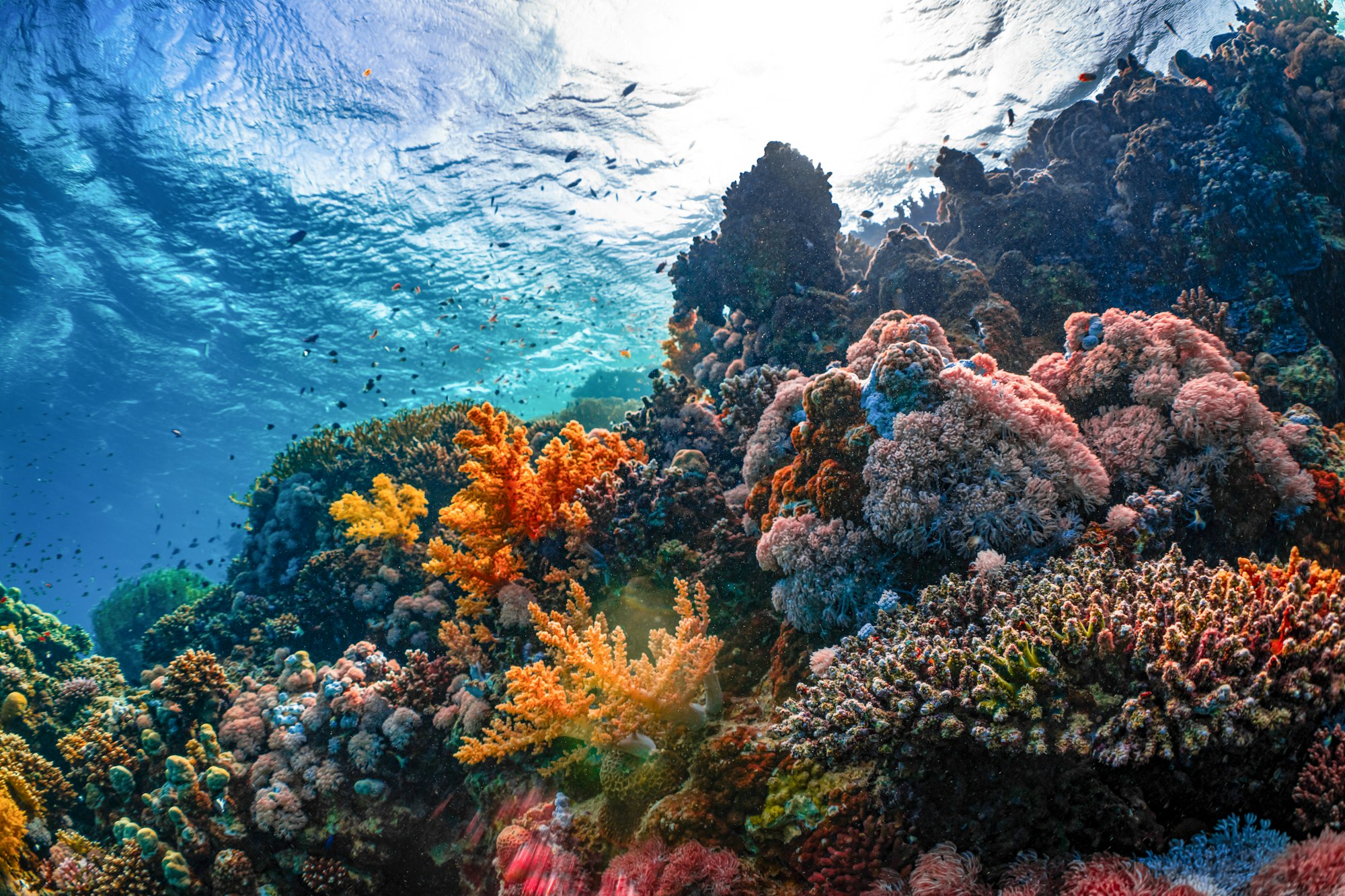
The Kikukawa Maru’s infrequent diver traffic has allowed marine life to flourish undisturbed. Coral growth covers the exposed hull surfaces, with hard corals, sea fans, and encrusting sponges colonizing the wreck structure. Schools of fusiliers patrol the surrounding water column. Glassy sweepers congregate in the interior spaces around the aircraft cargo. Lionfish and scorpionfish occupy overhangs and recesses along the hull.
Dive Profile
The near-inverted orientation of the Kikukawa Maru makes for a disorienting but fascinating dive. The destroyed rear third presents a debris field, while the forward and midships sections retain their hold structure despite the extreme roll. The aircraft parts in the holds are the primary attraction — radial engines, hundreds of propeller blades, propeller spinners, and seaplane floats are all identifiable. The 200-litre drums are stacked throughout the cargo spaces. At approximately 40 meters, bottom time is limited but sufficient for a focused exploration of the main cargo areas. The nearly inverted position means accessing the holds requires navigating through openings that are now oriented differently from their original configuration.
Entry and Exit
Access is by dive boat from Weno-based operators. The Kikukawa Maru is rarely requested by visiting divers, so advance arrangement with your operator is recommended. Entry is by giant stride. Descend along the mooring line to the wreck. Deploy an SMB for ascent if you drift from the mooring. Surface conditions inside the lagoon are typically calm.
Tips and Recommendations
- Request this wreck specifically — it is consistently described as underrated and well worth diving
- The aircraft parts in the holds are exceptional; hundreds of propeller blades and multiple radial engines create a remarkable collection
- The near-inverted position requires mental spatial adjustment — brief yourself thoroughly on the wreck’s orientation before descending
- Carry primary and backup torches; the inverted orientation means much of the interior receives limited ambient light
- Nitrox is recommended to extend bottom time at 40 meters
- Be aware that human remains are present on the wreck — conduct yourself with appropriate dignity and respect
Safety Considerations
The Kikukawa Maru is a war grave containing human remains — removing any artifacts is strictly illegal under Chuuk State law, and divers should treat the site with solemn respect. The near-inverted orientation (approximately three-quarters upside down) makes interior navigation disorienting and increases the risk of becoming lost in enclosed spaces. Do not enter hold or interior spaces without wreck penetration training, redundant lights, and a clear exit plan. The destroyed rear third presents loose debris and structural instability — approach with caution. At approximately 40 meters, mandatory decompression may be required on longer profiles. The wreck sank from an ammunition explosion — unexploded ordnance may be present.
Photography
The Kikukawa Maru’s aircraft cargo provides exceptional photographic subjects. The hundreds of propeller blades stacked in the holds create striking repetitive patterns, and individual radial engines are instantly recognizable subjects. The seaplane floats and propeller spinners add variety to the cargo portfolio. The near-inverted orientation creates unusual visual perspectives that differ from other Chuuk wrecks. Powerful strobes are essential at 40 meters to restore color and illuminate the interior spaces. The lack of other dive groups means clean compositions without interference.
Sources: Michael McFadyen’s Scuba Diving - Kikukawa Maru, Scuba Diving Earth - Truk Lagoon Deep Wrecks, Dirty Dozen Expeditions - Truk Lagoon Wrecks below 40m. Exact tonnage, precise sinking circumstances, and full cargo manifest not confirmed to 2-source standard; the Oct 7, 1943 sinking from ammunition explosion is from McFadyen (single source). Last updated 2026-06-16.
Sea-surface temperature and wave height from Open-Meteo Marine (ERA5 reanalysis, monthly averages).
1818 verified species observations (163 species) logged within ~11 km of this site between 1956 and 2014, from the Ocean Biodiversity Information System.
- Ctenochaetus striatus · Small-bodied acanthurid
- Scaridae · Small-bodied parrotfish
- Chlorurus sordidus · Small-bodied parrotfish
- Chlorurus bleekeri · Small-bodied parrotfish
- Scarus psittacus · Small-bodied parrotfish
- Siganus doliatus · Rabbitfish
- Hipposcarus longiceps · Large-bodied parrotfish
- Monotaxis grandoculis · Large-bodied emperor
- Scarus globiceps · Small-bodied parrotfish
- Scarus rivulatus · Small-bodied parrotfish
- Chordata
- Mulloidichthys flavolineatus · Goatfish
Scientific survey records skew toward sampled taxa (molluscs, corals) and do not reflect what you are guaranteed to see on a dive.
Source: OBIS (obis.org), aggregated Darwin Core occurrence records.
Conditions change with the tide and the season. If you have dived this site, share what it was actually like — date, visibility, current, and what you saw. Real, recent reports from divers are exactly what this guide is built to collect.
Send a conditions report ›